Are AI Toys Safe for Toddlers and Preschoolers? What Parents Should Know
Chatbot teddy bears and talking robots are marketed as screen-free learning companions for kids as young as 3. Here's what researchers and pediatric experts have found about privacy, attachment and play, plus a checklist to use before you buy any smart toy this holiday season.
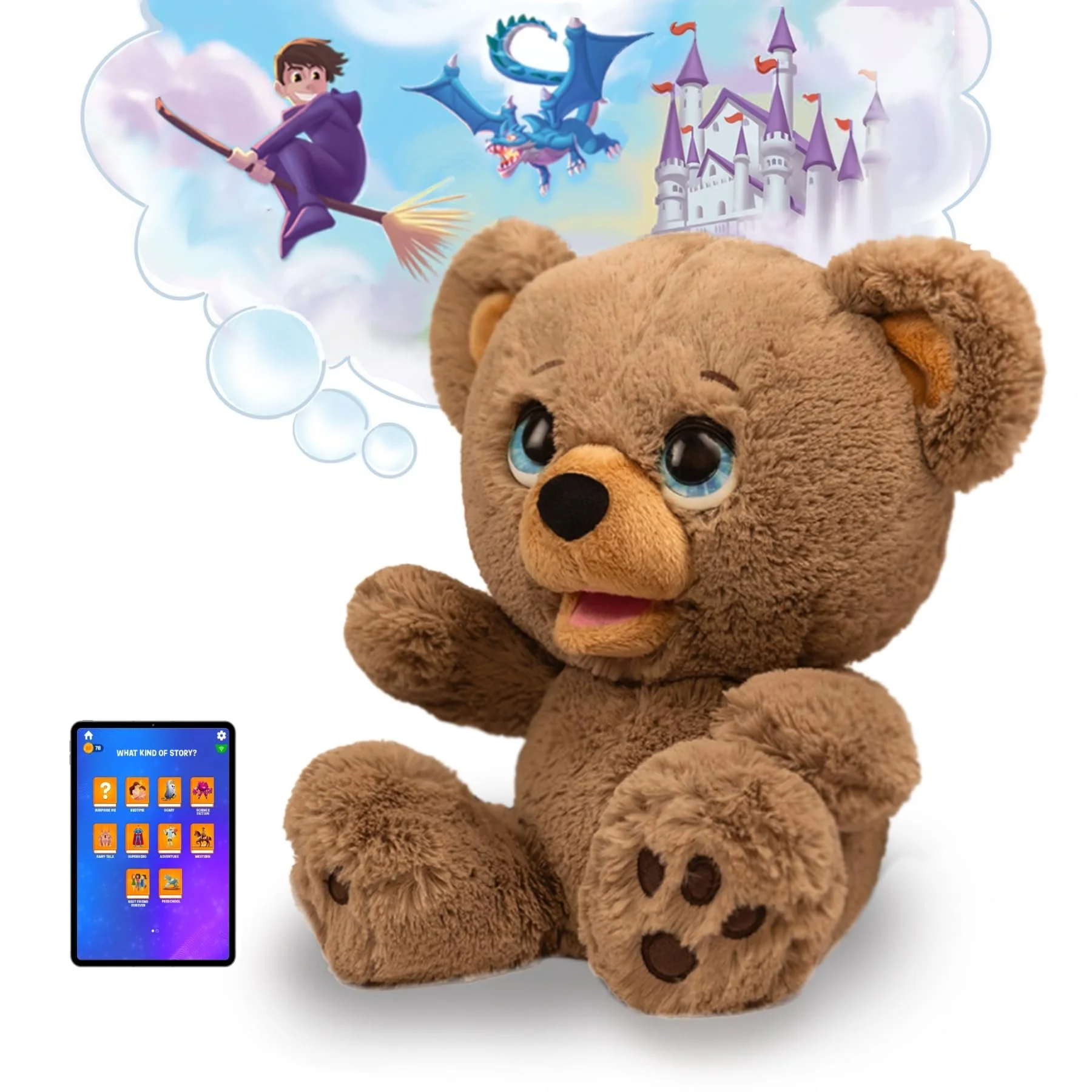
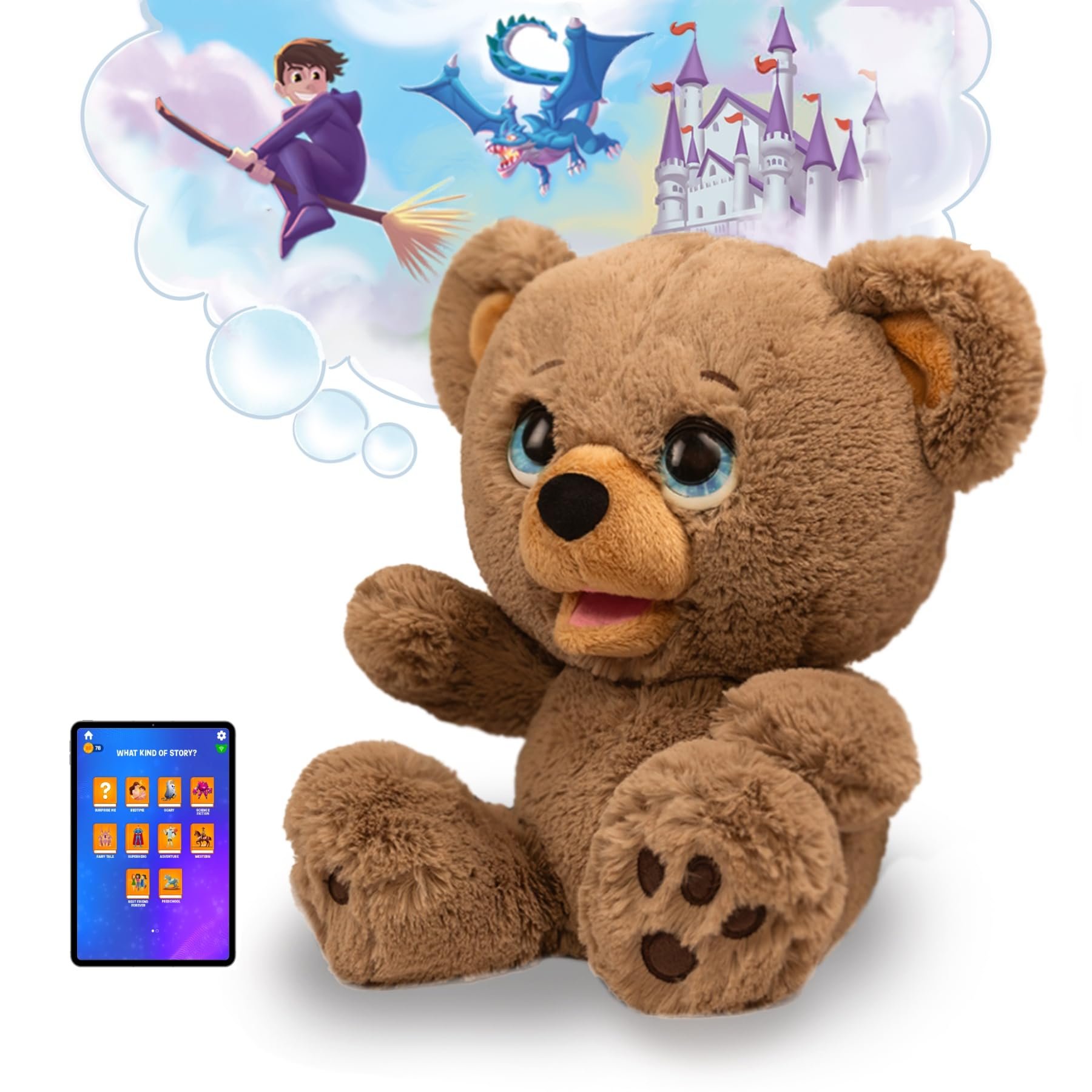
Poe the AI Teddy Bear is one of many AI-powered toy options becoming popular amongst toddlers and preschoolers. Source: Amazon
They look like any other plush bear. Squeeze one, though, and it answers your child's questions, tells stories and says it's their friend. AI-powered toys are showing up on holiday gift lists, often marketed as a screen-free way to help young children learn.
It's reasonable to wonder whether that's a good thing. Researchers and child development experts have raised real concerns about privacy, attachment and what these toys replace. Here's what the evidence says so far and how to decide what belongs in your home.
What researchers found when they tested AI toys
In 2026, researchers from Curtin University and Deakin University spent several months testing six AI teddy bears and toys. Writing in The Conversation, they raised three main concerns:
Confusion about what's alive: Young children may not understand that the toy isn't a living friend, and warm, flattering replies can build trust the toy hasn't earned.
Privacy: Children may assume their conversations are private, but most of the terms of use the researchers reviewed suggested otherwise, and recordings could be used to train AI systems.
Unverified safety claims: When asked to back up a claim of "safe, filtered content," one toy's maker didn't respond.
Consumer testing found more specific problems. In its 2025 "Trouble in Toyland" report, the U.S. PIRG Education Fund tested four AI chatbot toys marketed for ages 3 to 12. One discussed sexually explicit topics at length, some suggested where a child could find matches or knives, and two discouraged the tester from ending the conversation. One toy listened continuously and joined a nearby conversation.
How AI toys can affect attachment and relationships
Young children are wired to attach to the people who respond to them. That's how healthy development works. Harvard's Center on the Developing Child explains that serve and return, the back-and-forth between a child and a responsive adult, helps build the brain connections behind communication and social skills.
The advocacy group Fairplay issued an advisory urging families to avoid AI toys, signed by about 80 experts and 80 organizations. Pediatrician Dr. Jenny Radesky, one of the signers, notes that young children may see these toys as alive and trustworthy. The advisory also warns that AI toys can crowd out creative play and collect sensitive family data. It's an advocacy statement, so treat it as expert caution while research catches up.
The OECD's AI monitoring project classifies AI toys as a hazard, meaning a plausible future risk, and notes that no actual harm has been reported yet.
What young children learn from simple toys
The American Academy of Pediatrics has guidance on choosing toys for young children. The AAP explains that early toy play matters most for building bonds between children and caregivers, and that the best toys get adults and children playing together. It also warns that many educational claims for high-tech toys haven't been proven.
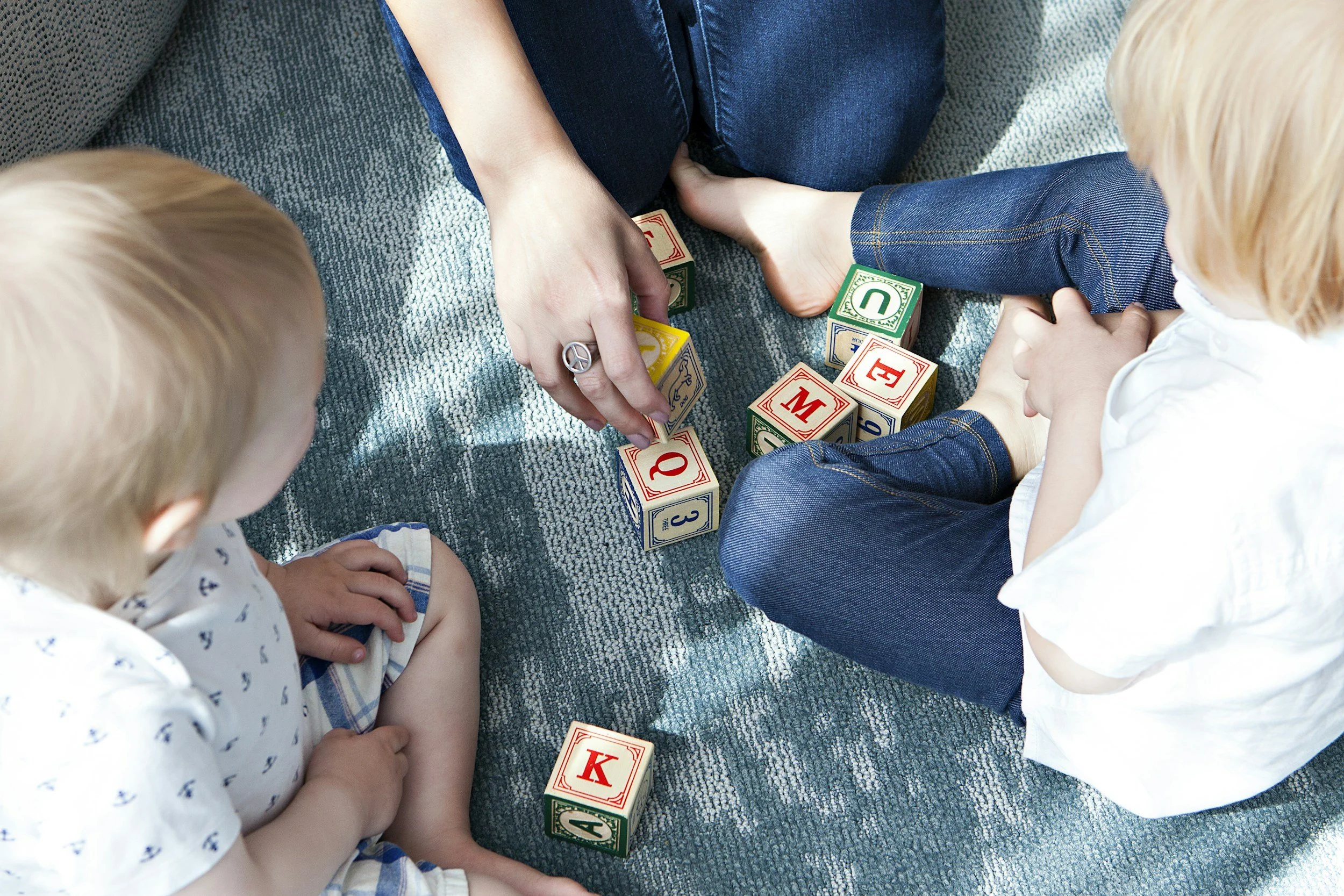
ZERO TO THREE puts it plainly in its tips for choosing toddler toys: the more a toy does, the less your child has to do. Blocks, stacking cups, dolls, play kitchens and art supplies ask your child to imagine, build and talk. That effort is where the learning happens.
A checklist before you buy any smart toy
If an AI or connected toy is already on a wish list, ask these questions first:
Where do the recordings go: Read the privacy policy and look for whether voice data is stored, shared or used to train AI.
Can you turn the microphone off: Look for a physical switch and clear parental controls.
Who answers your child: Find out whether replies come from an open-ended chatbot or from a fixed set of scripted responses.
Does it encourage play with people: Choose toys that bring you and your child together.
Is the age rating real: Check whether the maker explains how content is filtered for young children.
If you do bring one home, the researchers recommend exploring it together, supervising its use and teaching your child to "reality check" what the toy says. A simple script helps: "That bear is a computer that talks. It doesn't know you the way your family does."
Gift ideas that build play and connection
Some of the best gifts for toddlers and preschoolers are the simplest. Consider:
Open-ended building toys: Blocks, magnetic tiles and stacking cups grow with your child.
Pretend play sets: A play kitchen, doctor kit or dress-up bin invites storytelling.
Art supplies: Chunky crayons, washable paint and play dough build fine motor skills.
Books: Read-alouds give you and your child built-in conversation.
Experiences: A class you take together gives your child something no toy can, which is your full attention.
For more on the research behind screens and young children, read what new research says about toddler screen time.
Screen-free play at Happy Day Play
Our Grown-Up & Me classes are screen-free by design, with music, movement and sensory play that put the grown-up at the center. Walk-in classes are one price per family, with no commitment, and siblings are included. To learn more about why hands-on play matters, read why play-based learning works.
Key takeaways
- Researchers who tested six AI teddy bears in 2026 raised concerns about privacy, unverified safety claims and young children's confusion about whether the toy is alive.
- Consumer testing in 2025 found AI toys that discussed inappropriate topics and discouraged children from ending conversations.
- Pediatric guidance says the best toys get adults and children playing together, and many high-tech learning claims are unproven.
- Before buying a smart toy, check where recordings go, whether the microphone can be turned off and whether the toy encourages play with people.
Sources & further reading 7
- Leaver, T., Langton, K., & Srdarov, S. (2026, June 3). Chatbot teddies for three-year-olds? Why AI toys are risky for kids. The Conversation. Read the article
- U.S. PIRG Education Fund. (2025, Nov. 13). Trouble in Toyland 2025: A.I. bots, toxics present hidden dangers. PIRG. Read the report summary
- Fairplay. (2025, Nov. 20). AI toys unsafe for kids this holiday season, advisory warns. Fairplay. Read the advisory
- OECD.AI Incidents and Hazards Monitor. (2026, June 2). Experts warn of risks from AI-powered toys for children. OECD.AI. Read the entry
- American Academy of Pediatrics. The best toys go back to the basics. HealthyChildren.org. Based on Healey, A., & Mendelsohn, A. (2019). Selecting appropriate toys for young children in the digital era. Pediatrics. Read the summary
- ZERO TO THREE. Tips for choosing toys for toddlers. ZERO TO THREE. Read the tips
- Center on the Developing Child at Harvard University. Serve and return. Harvard University. Read the key concept
About this article
Every article on Happy Day Play is written by Kaitlynn Blyth herself, then checked against our published standards before it goes live. You can read exactly how we research, verify, and fact-check our work, and how we use and limit AI, in the policies below.
Last fact-checked Oct. 8, 2026
Read More About Play