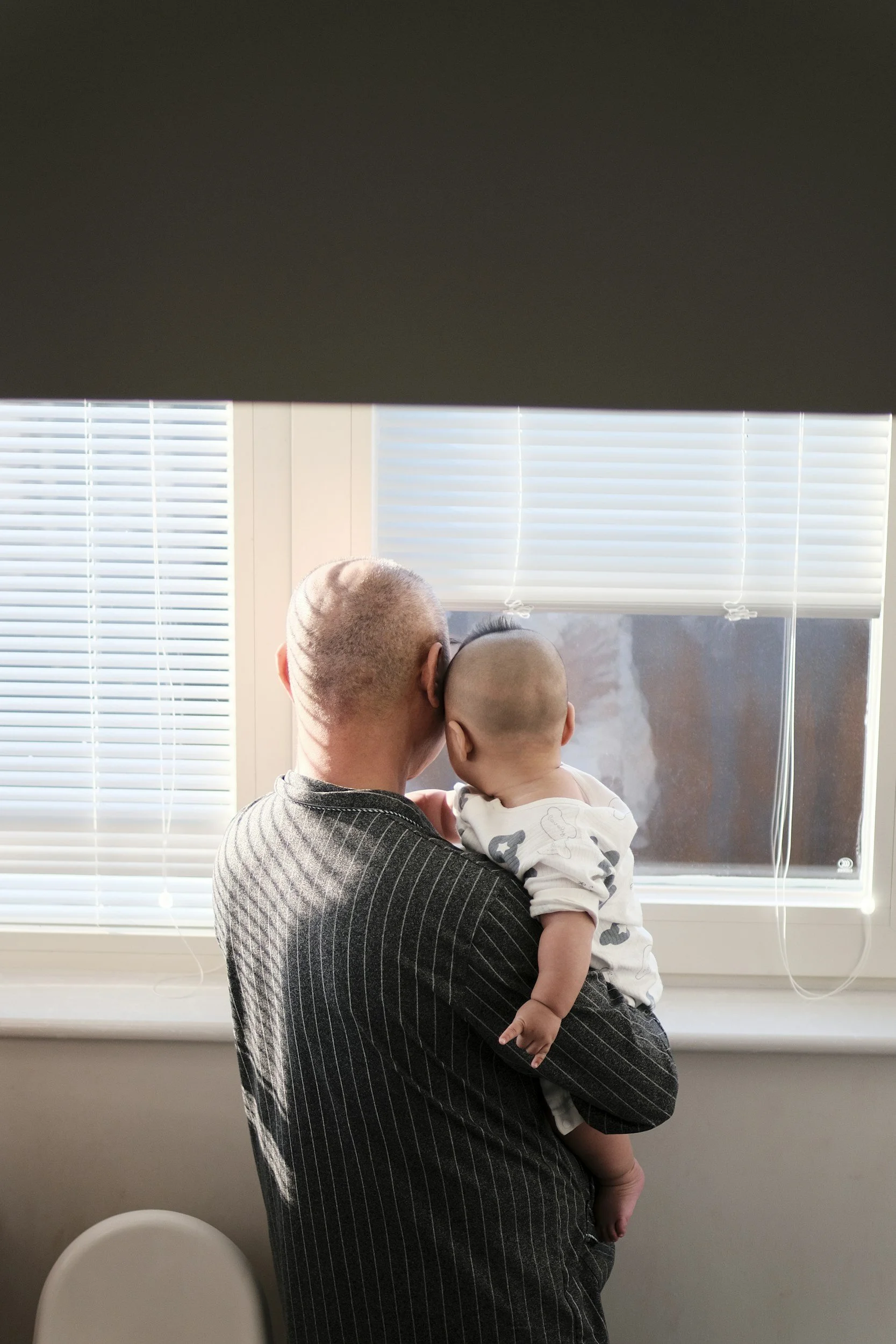
Postpartum Depression in Fathers: Why the Risk Can Rise a Year After Baby
A new study of more than 1 million fathers found that depression and stress-related diagnoses climbed more than 30% by a child's first birthday. Learn the signs of paternal postpartum depression, why it often shows up later and where new dads and partners can find support.
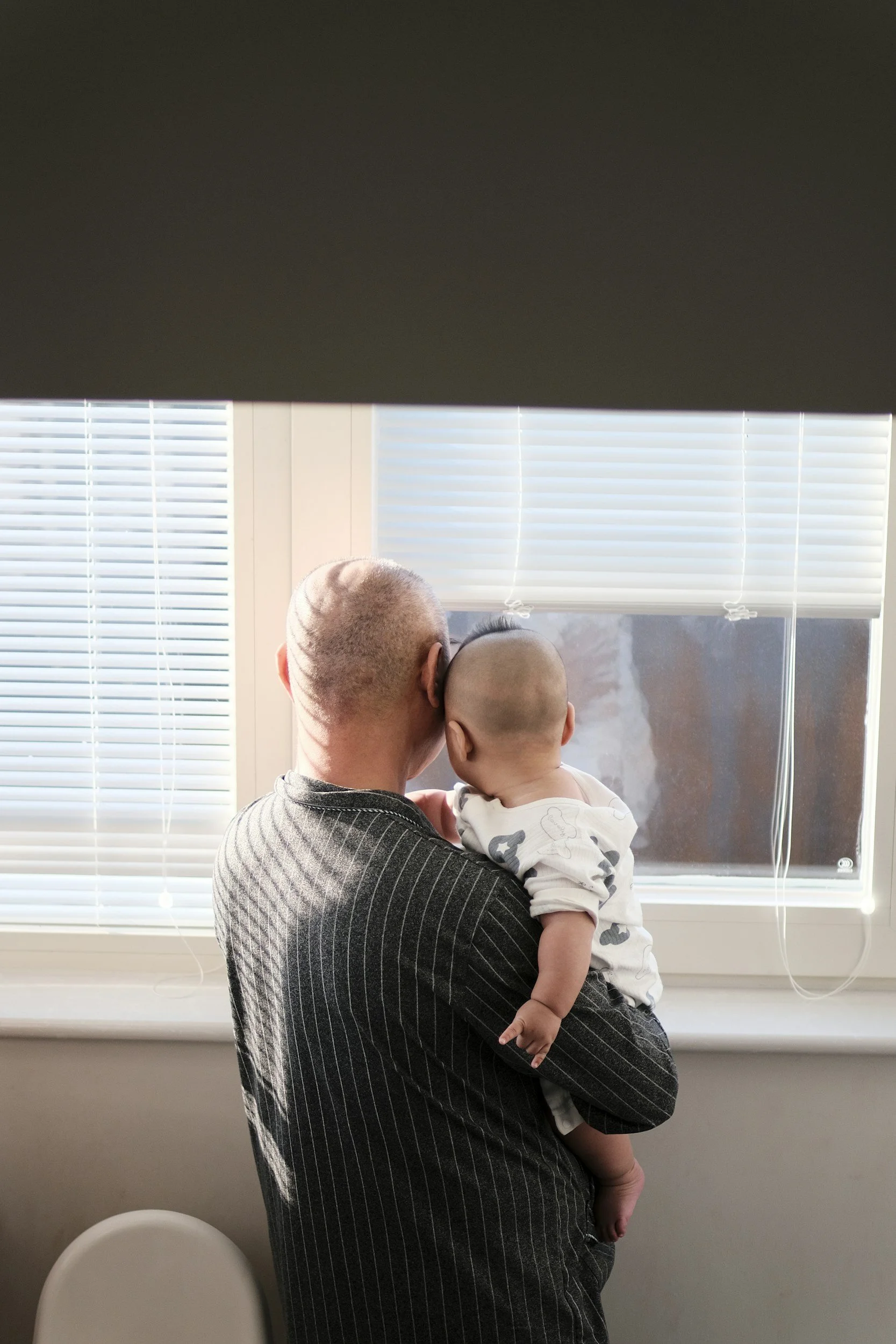
According to Karolinska Institutet's summary, depression and stress-related diagnoses in fathers were more than 30% higher than in the year before pregnancy.
Most postpartum check-ins happen in the first few weeks, and most of them focus on the person who gave birth. New research shows that for many fathers, the hardest stretch may come closer to the baby's first birthday.
If you're a new dad or partner who feels flat, irritable or far from yourself, you're not imagining it, and you're not alone. Here's what the research shows, what to watch for and where to get help.
What the 2026 study of new fathers found
Researchers at Karolinska Institutet in Sweden, with Sichuan University and Uppsala University, used national health records for more than 1 million fathers whose children were born between 2003 and 2021. Their study appeared in JAMA Network Open in March 2026.
New psychiatric diagnoses among fathers actually dipped during pregnancy and the first months after birth. By about a year after the birth, the picture changed. According to Karolinska Institutet's summary, depression and stress-related diagnoses were more than 30% higher than in the year before pregnancy. The researchers called the delayed rise unexpected.
The study only counted fathers who received a clinical diagnosis. Many men never seek care, so the real number is likely higher.
How common postpartum depression is in fathers
Earlier research points the same way. A large meta-analysis in JAMA, covering 43 studies and 28,004 participants, found that about 10% of fathers experience depression around pregnancy and the first year, with the highest rates 3 to 6 months after birth. Fathers' depression was also linked to mothers' depression, which means one parent's struggle often affects the other.
Postpartum Support International estimates that about 1 in 10 dads experiences postpartum depression and that 5% to 15% develop an anxiety disorder during pregnancy or the first year.
Signs of postpartum depression in dads and partners
Depression in fathers often looks different from the sad, tearful picture many people expect. The American Academy of Pediatrics describes signs of perinatal depression in partners that include:
Irritability and anger: A shorter fuse, snapping at family or outbursts that feel out of character.
Self-doubt: Being hard on yourself or questioning whether you're a good parent.
Pulling away: Withdrawing from your partner, your baby or friends, or working longer hours to avoid home.
Physical changes: Low energy, brain fog and changes in sleep or appetite.
Trouble bonding: Feeling disconnected from the baby or guilty about it.
Many pediatricians now screen both parents at well-baby visits. If yours doesn't, you can bring it up yourself.
Why fathers' wellbeing matters for the whole family
Family Life Education looks at the family as a system, and a struggling parent affects everyone in it. Fathers' health deserves attention for its own sake, too. A 2026 study in JAMA Pediatrics from Northwestern University tracked the fathers of all 130,267 babies born in Georgia in 2017. The researchers found that 796 died within five years of their child's birth, and about 60% of those deaths had potentially preventable causes, including suicide and overdose. Fathers overall had lower death rates than men of the same age without children.
Taking care of your own stress also helps your child. Our article on why calming your own stress comes first explains how a regulated grown-up helps a child stay regulated, too.
How to support a new dad, and where to get help
If you're a partner, family member or friend, small check-ins matter, especially around the first birthday when everyone assumes the hard part is over. Try: "You've been carrying a lot this year. How are you doing?" Then listen without rushing to fix it.
If you're the one struggling, these free resources can help:
Postpartum Support International HelpLine: Call 1-800-944-4773, or text 800-944-4773 in English or 971-203-7773 in Spanish. Leave a message and a trained volunteer will get back to you.
National Maternal Mental Health Hotline: Call or text 1-833-TLC-MAMA (1-833-852-6262), free and available 24/7 in English and Spanish. It also supports partners and family members.
988 Suicide and Crisis Lifeline: If you're in crisis or thinking about harming yourself, call or text 988 any time.
Your primary care doctor is another good starting point. Postpartum depression in fathers is treatable, and asking for help is part of taking care of your family.
A place for every grown-up at Happy Day Play
Connecting with other parents can make the first year feel less isolating. Our Grown-Up & Me classes welcome dads, partners, grandparents and every caregiver, with music, movement and play you can share with your baby. Walk-in classes are one price per family, with no commitment, and siblings are included.
Key takeaways
- A 2026 study of more than 1 million Swedish fathers found that depression and stress-related diagnoses rose more than 30% by about a year after birth.
- About 1 in 10 fathers experiences postpartum depression, and it often shows up as irritability, anger, self-doubt or pulling away.
- Fathers' mental health affects the whole family, and earlier research links fathers' depression with mothers' depression.
- Free help is available through Postpartum Support International, the National Maternal Mental Health Hotline and the 988 Lifeline.
Sources & further reading 8
- Xiang, N., Zhou, J., Lin, Y., et al. (2026). Psychiatric disorders among fathers in Sweden before, during, and after partner pregnancy. JAMA Network Open, 9(3), e262725. Read the study
- Karolinska Institutet. (2026, March). Fathers' mental health deteriorates long after the birth of their child. Karolinska Institutet News. Read the news release
- Paulson, J. F., & Bazemore, S. D. (2010). Prenatal and postpartum depression in fathers and its association with maternal depression: A meta-analysis. JAMA, 303(19), 1961-1969. Read the summary
- Garfield, C. F., Simon, C. D., Harrison, C., Woods, M., Bedjeti, K., & Carter, J. T. (2026). Paternal mortality during early childhood. JAMA Pediatrics, 180(7), 795. Summary via ScienceDaily. Read the summary
- American Academy of Pediatrics. (2023). Perinatal depression in partners: Can both parents get the "baby blues"? HealthyChildren.org. Read the article
- Postpartum Support International. Help for dads. Postpartum Support International. Read the resource page
- Health Resources and Services Administration. National Maternal Mental Health Hotline. HRSA. Read the hotline details
- 988 Suicide and Crisis Lifeline. 988 Lifeline. Visit the Lifeline
About this article
Every article on Happy Day Play is written by Kaitlynn Blyth herself, then checked against our published standards before it goes live. You can read exactly how we research, verify, and fact-check our work, and how we use and limit AI, in the policies below.
Last fact-checked Oct. 8, 2026
Read More About Parenting