Toddler Conversation Skills Study 2026: How Toddlers Learn the Rules of Back-and-Forth Talk
New research shows that by age 2, toddlers use small words like "you" to predict when it's their turn to talk. Learn how conversation skills develop from 18 months to 3, why back-and-forth exchanges matter so much for language and easy ways to build them into your day.
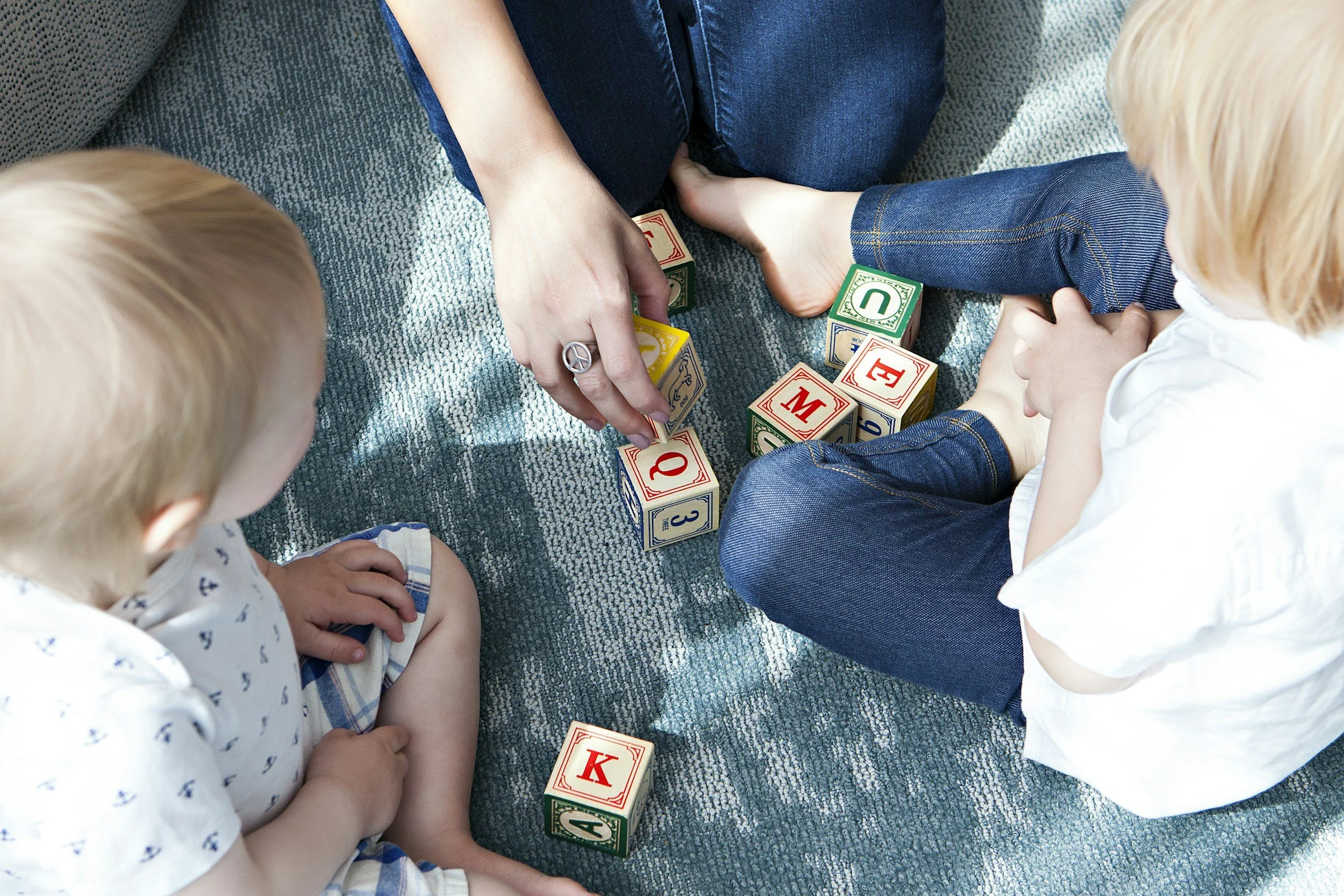
New research from the Max Planck Institute for Psycholinguistics shows toddlers use specific language cues to predict whose turn it is to talk.
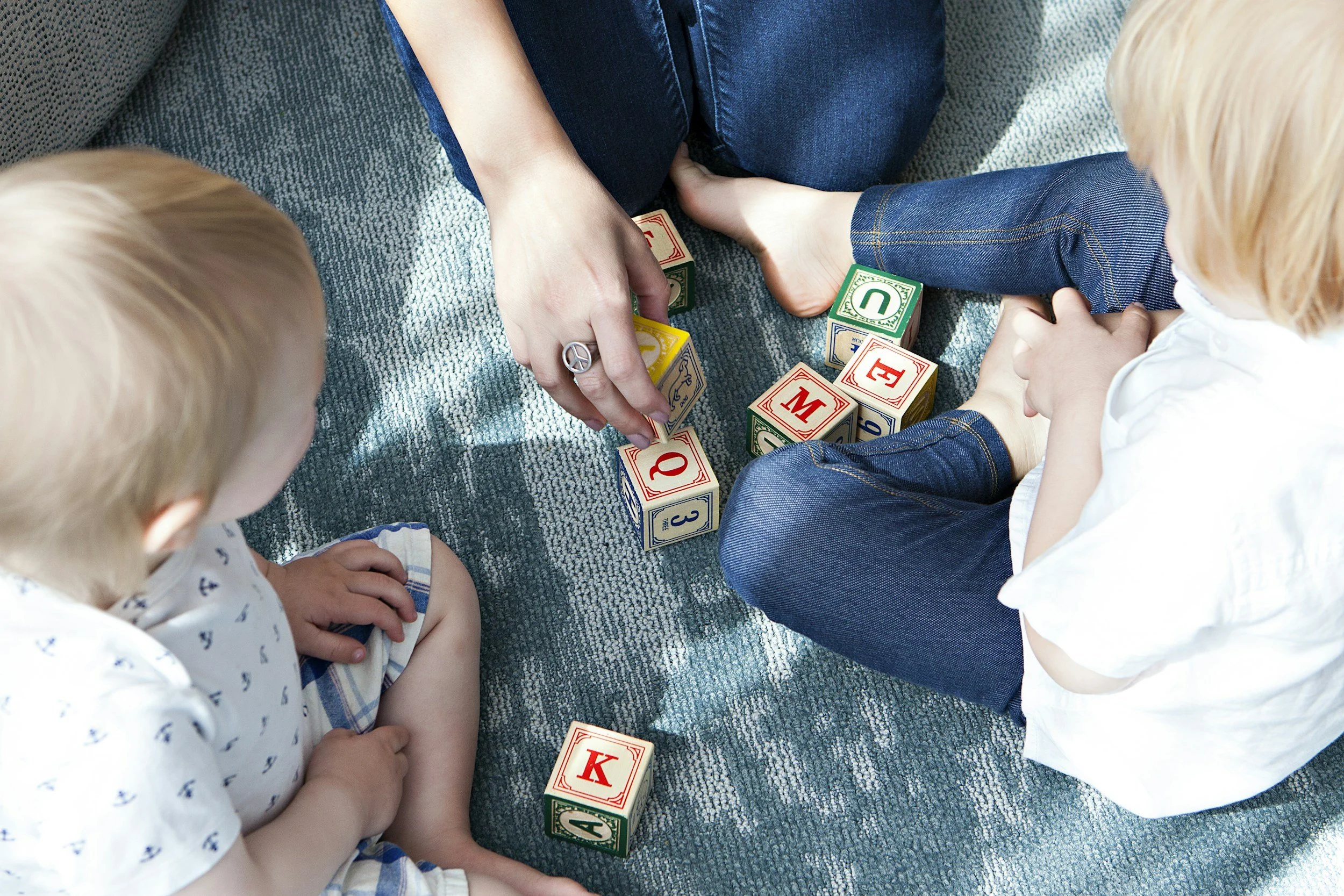
Your 2-year-old already understands a surprising amount about how conversations work, even before they can tell you about their day. Watch them at the dinner table and you'll see it. They look to the person who's about to answer a question before the answer even starts.
New research from the Max Planck Institute for Psycholinguistics shows toddlers use specific language cues to predict whose turn it is to talk. That skill, along with plenty of back-and-forth practice with you, lays the groundwork for language growth in the years ahead.
What the 2026 turn-taking research found
Researchers tracked where Dutch children ages 1 to 4 looked while watching two animated characters talk. If a child looked toward the next speaker before the current one finished, it showed they were predicting the turn change. According to the Max Planck Institute's summary, published in the Journal of Experimental Child Psychology:
Two-year-olds used pronouns as clues: They predicted a speaker change more often after questions with "you," like "Do you want an apple?", than after questions with "I."
One-year-olds didn't use this cue yet: The skill appeared around age 2.
Prediction improved with age: Four-year-olds anticipated turn changes more often than 2- and 3-year-olds.
A related study in the Journal of Speech, Language, and Hearing Research compared 3-year-olds with and without developmental language disorder. Both groups understood when a response was expected, though children with the disorder were slower to predict the next speaker.
Why back-and-forth talk builds language skills
Hearing lots of words helps, and taking turns in conversation helps even more. In a study of 146 children, published in Pediatrics, researchers recorded full days at home and followed the children for about a decade. Conversational turns at 18 to 24 months explained 14% to 27% of the differences in language and thinking skills at ages 9 to 14, even after accounting for family income and education.
Brain research points the same way. An MIT study of 4- to 6-year-olds found that children who had more back-and-forth conversations with adults showed more activity in a key language area of the brain, and that activity was linked to stronger language scores. Conversational turns mattered more than the number of words a child heard.
Harvard's Center on the Developing Child calls these exchanges serve and return. Your child serves with a sound, a word or a point, and you return it with words, eye contact or a hug.
Toddler conversation milestones from 18 months to 3 years
Here's what the CDC lists as typical language skills at each age:
By 18 months: Your child tries to say three or more words besides "mama" or "dada" and follows one-step directions without gestures.
By 2 years: Your child says two words together, like "more milk," and points to things in a book when you ask.
By 3 years: Your child talks with you in at least two back-and-forth exchanges and asks "who," "what," "where" or "why" questions.
Children develop at different rates. The American Speech-Language-Hearing Association's milestones for 2 to 3 years suggest talking with a speech-language pathologist if your child is missing many of them. Your pediatrician can also help you decide on next steps.
Easy ways to build conversation skills at home
The goal is more turns, and a turn can be as small as a point or a babble. Try these:
Wait a beat longer: After you ask a question, count to five silently before answering for your child.
Ask "you" questions: "Do you want the red cup or the blue cup?" gives your child a clear cue that it's their turn.
Expand what they say: If your toddler says "truck," you can say, "Big truck! The truck is going fast."
Talk through routines: Bath time, diaper changes and snack time are natural chances for back-and-forth talk.
Read and pause: Point to a picture, ask "What's that?" and give your child time to answer.
Talking about feelings counts, too. Our article on feeling words shares easy ways to add emotion language to your conversations.
Songs, signs and conversation at Happy Day Play
Call-and-response songs and simple signs give toddlers lots of chances to take a turn. Our Baby Sing & Sign and Grown-Up & Me classes are full of them, and you'll leave with songs you can use at home. Walk-in classes are one price per family, with no commitment, and siblings are included.
Key takeaways
- By about age 2, toddlers use words like "you" to predict when it's their turn to talk.
- Back-and-forth conversation at 18 to 24 months is linked to stronger language and thinking skills a decade later.
- By age 3, most children can hold at least two back-and-forth exchanges and ask questions like "why."
- Waiting a beat longer, asking "you" questions and expanding your child's words all build conversation skills.
Sources & further reading 7
- Lammertink, I., De Vries, M., Rowland, C. F., & Casillas, M. (2026). From age two, children use pronouns to predict who will speak next in conversation. Journal of Experimental Child Psychology, 261, 106358. Read the Max Planck Institute summary (DOI: 10.1016/j.jecp.2025.106358)
- Lammertink, I., Rowland, C. F., & Casillas, M. (2026). Who's next? Turn anticipation in Dutch preschoolers with and without developmental language disorder. Journal of Speech, Language, and Hearing Research, 69(4), 1728-1745. Read the Radboud University summary (DOI: 10.1044/2025_JSLHR-25-00180)
- Gilkerson, J., Richards, J. A., Warren, S. F., Oller, D. K., Russo, R., & Vohr, B. (2018). Language experience in the second year of life and language outcomes in late childhood. Pediatrics, 142(4). Read the abstract
- MIT News. (2018, Feb. 14). Back-and-forth exchanges boost children's brain response to language. Reporting on Romeo, R. R., et al. (2018). Psychological Science. Read the article
- Center on the Developing Child at Harvard University. Serve and return. Harvard University. Read the key concept
- Centers for Disease Control and Prevention. Milestones by 18 months, 2 years and 3 years. Learn the Signs. Act Early. Read the milestones
- American Speech-Language-Hearing Association. Communication milestones: 2 to 3 years. ASHA. Read the milestones
About this article
Every article on Happy Day Play is written by Kaitlynn Blyth herself, then checked against our published standards before it goes live. You can read exactly how we research, verify, and fact-check our work, and how we use and limit AI, in the policies below.
Last fact-checked Oct. 8, 2026
Read More About Baby