Toddler Screen Time in 2026: The Average 2-Year-Old Now Gets 2 Hours a Day. Here’s What You Need to Know
New 2026 research finds the average 2-year-old spends about two hours a day on screens, double the recommended limit. Here's what it means for toddler development, and a realistic, no-shame plan
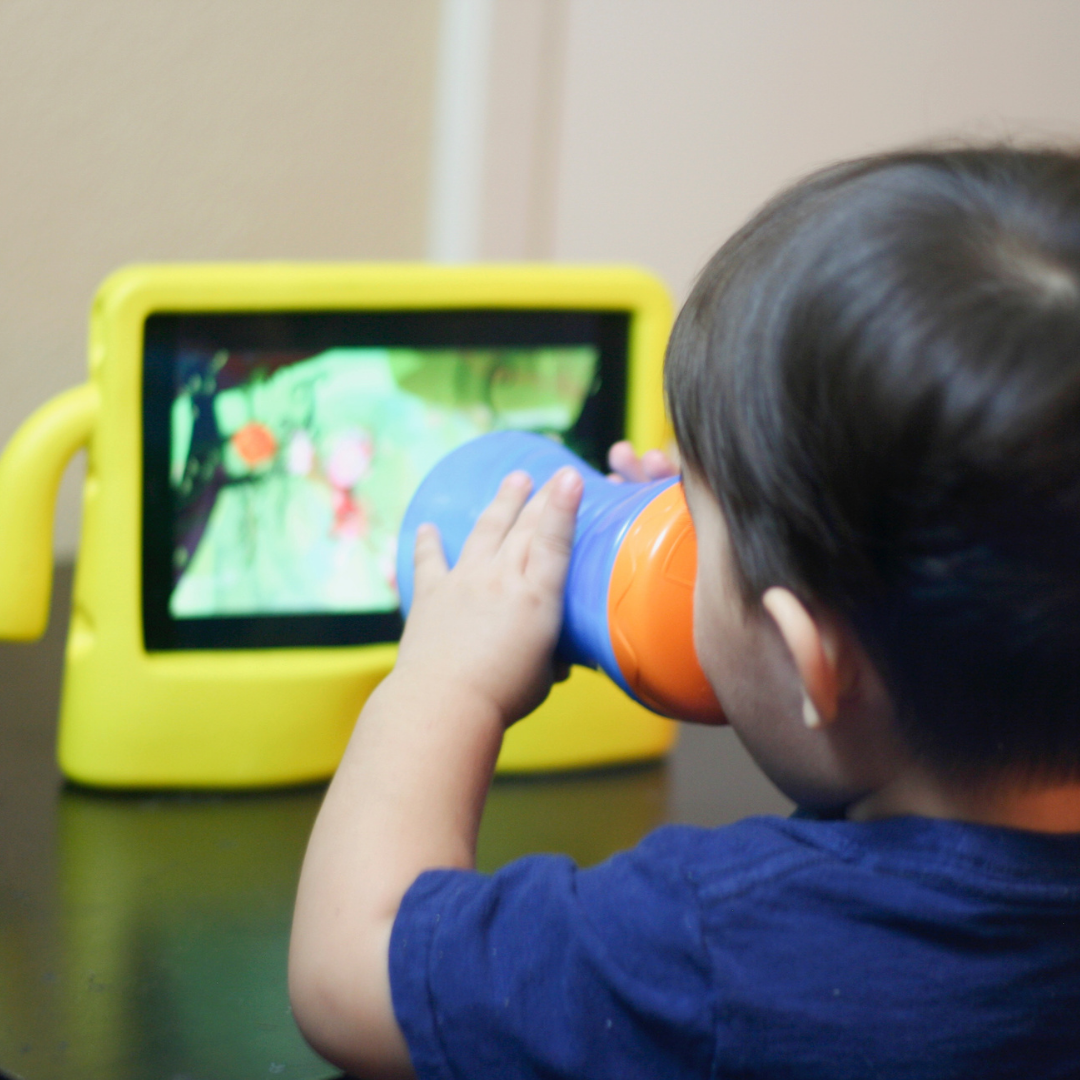
The average 2-year-old now spends about 129 minutes a day with screens.
If you have a toddler who uses screens, the newest screen-time research is probably going to feel a little familiar and a little uncomfortable. A January 2026 study from the UCL Centre for Longitudinal Studies, commissioned by the UK Department for Education, analyzed data from more than 4,700 parents of 2-year-olds and reported a number that's been making the rounds at pediatricians' offices on both sides of the Atlantic. The average 2-year-old now spends about 129 minutes a day with screens. That's more than double the World Health Organization's recommendation of an hour or less. Almost every child in the study (98%) used screens on a typical day, and only 34% met the WHO guideline.
Before you close this tab out of guilt, take a breath. The research doesn't blame parents, but rather, explains them.
What the 2026 toddler screen time study found
The UCL team found that 2-year-olds with the highest screen use scored lower on vocabulary assessments and showed more emotional and behavioral difficulties than peers with the lowest use. The heaviest users (about five hours a day) could say roughly 53% of a set of test words, compared with 65% for the lightest users (about 44 minutes a day). That gap held even after the researchers accounted for parents' income and education. One honest caveat from the authors: the study shows an association, not proof that screens cause these differences, and it didn't capture what children were watching or whether they watched alone or with someone. They say that context likely matters.
The Harvard Center on the Developing Child has, for years, pointed to the back-and-forth of babbling, pointing, eye contact and conversation between caregiver and child, what scientists call serve-and-return, as one of the most powerful drivers of early brain development. When screens replace those exchanges, the data suggests something measurable goes missing.
Why allowing screens isn't a parenting-failure story
The same UCL study found screen time was meaningfully higher in families coping with economic stress, and in households where the primary caregiver had symptoms of depression (about 182 minutes a day compared with 135 for those without). That tracks with the U.S. picture. In August 2024, the U.S. Surgeon General issued an advisory titled Parents Under Pressure, reporting that 41% of American parents and caregivers say most days they're so stressed they can't function. It remains the operative federal guidance in 2026.
The story the data tells that screens have quietly become a coping tool for a generation of stretched-thin caregivers, and the developmental cost is starting to show up in the numbers. If that resonates, our piece on Harvard's toxic stress research digs into how a present, supported adult buffers a child through a hard, busy environment.
Five realistic moves for families who use screen time
Screens can be a tool when they're limited and used with intention. Start small, stay present, keep content high-quality for the youngest kids, and forgive yourself for the rest.
1. Pick one screen-free window, not the whole day: Consistency beats intensity. A protected 20-minute stretch at breakfast, or a wind-down between bath and bed, is enough to begin shifting the language environment.
2. Make serve-and-return your daily habit: When your toddler points at a passing bus, says "ba ba ba," or hands you a sticky cracker, respond with eye contact and words. The Center on the Developing Child has documented this single back-and-forth as one of the most evidence-based things a caregiver can offer. Some children loose this interaction when the attention is on the screen.
3. Co-view and narrate when screens happen: The American Academy of Pediatrics recommends watching alongside your young child rather than leaving them to watch alone, because toddlers learn best when an adult narrates and connects what's on screen to real life. If a screen is on, sit next to them and talk about it.
4. Choose vocabulary-rich environments by design: Grown-Up & Me classes, library storytimes and themed music and movement programs are language-intensive by structure, with an adult modeling language for a full hour. A few minutes of back-and-forth reading at home does the same. That's exactly the input the UCL data shows is thin in heavy-screen homes.
5. Mind your own bandwidth, and your own screens: A 2025 study in Frontiers in Pediatrics linked higher parental screen time and lower-quality parent-child interaction to greater risk of language delay, while storytelling was protective. When your phone has your attention, the serve-and-return your toddler needs drops. The Surgeon General's advisory names caregiver wellbeing as a child-development factor, so a weekly class in a room of other grown-ups, a call to a friend, or a 15-minute walk while a partner handles bath time all count.
Why Family Life Education and screen time go hand in hand
Happy Day Play is grounded in Family Life Education, an evidence-based field recognized by the National Council on Family Relations that treats the whole family system, not just the individual child, as the unit of support. Increased screen usage is a symptom of a stressed family system. The thing that actually moves the needle isn't a screen-time ban though. It's the slow, weekly rebuilding of warm, predictable routines that meet a young child's developing brain where it is. Whether that involves a screen at all is up to you. If you choose to use screens in your home, limiting them and using them as an intentional tool is key.
That's what our themed Grown-Up & Me classes are designed to do. Each week brings a new theme your child can look forward to, ocean creatures one week, garden friends the next, with songs, sensory play, gross-motor activities and shared rituals built around their development. The class is screen-free by design, vocabulary-rich by structure, and built so that you, the grown-up, are the central relationship in the room.
Common questions about toddler screen time
How much screen time is OK for a 2-year-old?
The WHO and the American Academy of Pediatrics both suggest keeping it to about an hour a day or less of high-quality content for ages 2 to 5, ideally watched together. For children under 18 months, the AAP recommends avoiding screens apart from video chat.
Is screen time really that bad for toddlers?
The 2026 UCL study links heavy use to lower vocabulary and more emotional and behavioral difficulties, though it shows association, not proof of cause. The concern is screens crowding out the back-and-forth talk that builds language.
My toddler already watches a lot. Have I done damage?
Take a breath. The same research that flags the risk also points to the fix, and it isn't guilt. It's adding back small, repeatable moments of warm, responsive attention. Start with one screen-free window and one daily ritual. That's enough to begin shifting the language environment.
Swap one screen window for one rich hour
If you're in Staten Island or Bergen County and you want to trade one daily screen window for one rich, in-person hour, our Grown-Up & Me classes are a good place to start. They're walk-in, one price per family, siblings included, with no commitment. Walk in ready to have fun, leave with a slightly tired toddler and a clearer sense of what's coming next.
Key takeaways
- A January 2026 UCL study of 4,700+ families found the average 2-year-old spends about two hours a day on screens, more than double the recommended hour. Only 34% met the guideline.
- Heavier screen use was linked to lower toddler vocabulary and more emotional and behavioral difficulties. It's an association, not proof of cause, but the worry is screens crowding out the back-and-forth talk that builds language.
- Screen use was higher in families under economic stress or with a depressed caregiver. Screens are often a symptom of a stretched-thin family system, not a parenting failure.
- The fix isn't guilt or a total ban. It's one screen-free window, serve-and-return, co-viewing when screens happen, vocabulary-rich time together, and protecting your own bandwidth as a caregiver.
Sources & further reading 7
- UCL Centre for Longitudinal Studies (Children of the 2020s). (2026). Toddlers spending two hours on screens a day. University College London. ucl.ac.uk
- World Health Organization. (2019). Guidelines on physical activity, sedentary behaviour and sleep for children under 5 years of age. who.int
- American Academy of Pediatrics (HealthyChildren.org). Helping Kids Thrive in a Digital World: AAP Policy Explained. healthychildren.org
- Wan, X., Kang, X., Chen, S., Du, J., Yan, F., & Bai, Y. (2025). Analysis of the impact of parents' electronic screen time habits, young children's screen exposure and parent-child interaction on language development delay in young children. Frontiers in Pediatrics, 13. frontiersin.org
- U.S. Surgeon General. (2024). Parents Under Pressure: A Surgeon General's Advisory. U.S. Department of Health and Human Services. hhs.gov
- Center on the Developing Child at Harvard University. Serve and Return (key concept). developingchild.harvard.edu
- National Council on Family Relations. What Is Family Life Education? ncfr.org
About this article
Every article on Happy Day Play is written by Kaitlynn Blyth herself, then checked against our published standards before it goes live. You can read exactly how we research, verify, and fact-check our work, and how we use and limit AI, in the policies below.
Last fact-checked June 3, 2026