How to Plan a Developmentally Appropriate 2nd Birthday Party (Without Overwhelming Your Toddler)
What actually works for a 2-year-old's birthday, from a family life educator: calmer party ideas, the right length and guest list, activities that fit this age, and how to plan a celebration your toddler can handle.
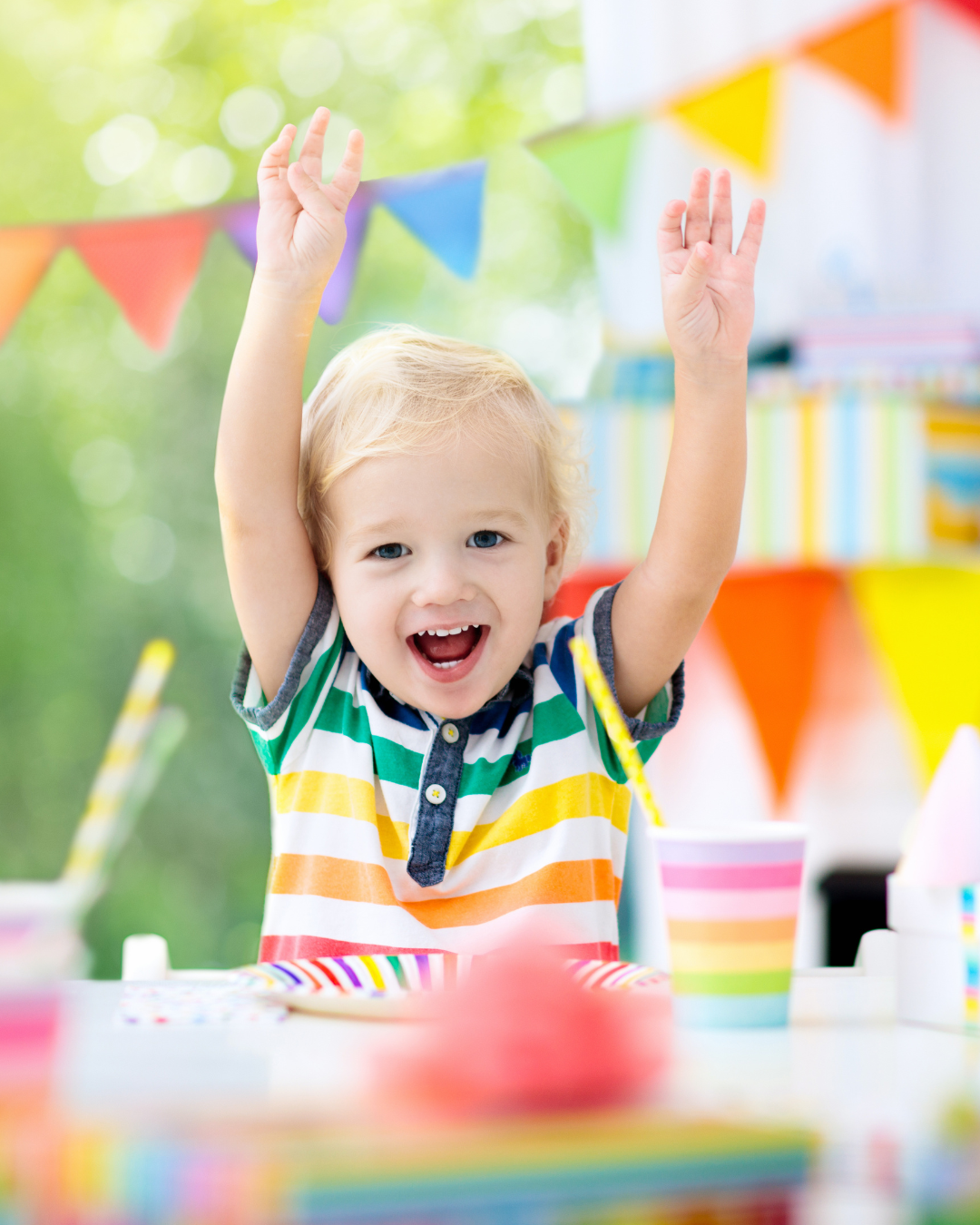
The key to planning comes down to one thing: whether the party fits the specific, marvelous, complicated little person who is turning 2.
You have been on Pinterest for an hour. You have a board saved with a dozen themed cakes, a balloon arch tutorial and a printable scavenger hunt that no 2-year-old in history has ever finished. Underneath all of it sits a quieter feeling you cannot quite name, something like, "Wait, is this for them or for the internet?"
Let's set the Pinterest board aside for a minute.
A 2nd birthday party can be a wonderful family ritual. It can also become a sensory bomb that ends in tears, your child's and yours. The difference comes down to one thing: whether the party fits the specific, marvelous, complicated little person who is turning 2.
We are a family life education company, and we run toddler birthday parties every weekend. Here is what we have learned about what works at age 2, what tends to backfire and how to plan a celebration that fits your child.
What 2-year-olds actually understand about birthdays
The cognitive leap between ages 1 and 2
By age 2, your child has a name for themselves, a strong sense of "mine" and an early grasp of "today" versus "tomorrow." They recognize familiar people and routines, and they can anticipate a familiar event.
Even so, "I am turning 2" stays a fuzzy idea. Most 2-year-olds understand cake, presents and the word "party" long before they understand the calendar event. That is plenty. Your child does not need to understand the meaning of the day for the day to feel meaningful.
Why being the center of attention is a lot at this age
Erik Erikson's classic framework places the central task of this age as autonomy versus shame and doubt. In plain terms, your child is discovering that they have a self, that they can make choices and that they can also disappoint people. Putting that brand-new self at the center of a room full of singing adults can feel magical to one toddler and like far too much to another.
This is the most common cause of the 2nd birthday meltdown that catches parents off guard. When a toddler falls apart at their own party, it is their nervous system waving a white flag. Their feelings are real and age-appropriate, and knowing that ahead of time changes how you design the day.
What a developmentally appropriate 2nd birthday party looks like
NAEYC's idea of developmentally appropriate practice is simple at its core: match the experience to the child's stage and individual interests. The CDC and the American Academy of Pediatrics fill in what that stage looks like, with milestones describing what most 2-year-olds can do. Together they point to a party built around your actual toddler. Here is how that translates.
Shorter, well-timed events
Aim for 60 to 90 minutes of actual partying, meaning the stretch where your child is interacting, eating and engaging with any entertainment. Three hours of nonstop stimulation is more than a 2-year-old can hold. Schedule the party during your child's best window, usually mid-morning or right after a nap, and keep it well clear of bedtime. A 90-minute party where your child eats, plays and enjoys their own little bubble is a real win. A four-hour party that ends in screaming on the floor becomes a story you tell later, probably not fondly.
A few familiar faces over a big crowd
A 2-year-old does not need a long guest list. They need a few favorite people who will get down on their level early and help them feel settled in a setting that sits outside their normal routine. Aim for the people your child already knows by name or lights up at on sight.
Predictable structure with built-in breaks
Think of the party as one of our class sessions, with a gentle arc: arrival window, free play, one structured activity, snack, cake and song, goodbyes. Your toddler does not need to see the schedule to feel its rhythm. Build in at least one quiet moment, even a simple story corner, where a child nearing their limit can reset without having to leave.
A sensory load your specific toddler can handle
Some 2-year-olds ride out a loud bounce house with 20 kids and come out grinning. Others come undone when three balloons pop. You know your child. Pay attention to sound, lighting, crowd size, smells (heavy perfumes and scented candles add up) and surprise textures. Dialing the sensory load down is almost always the safer bet for this age.
2nd birthday party formats that work for 2-year-olds
Several formats consistently work, plus a couple we would gently steer you away from at this age.
A play-based open house at home
A loose one-hour window where guests drift in and out, with familiar toys available, a snack table and a small ritual moment for cake and song. The flexibility lets your toddler step away when they need to, and it lets a shy guest arrive without walking into a spotlight.
A class-style party with a familiar format
If your child already attends a Grown-Up & Me class, that rhythm is gold. The structure is familiar, the activities are familiar, and the one difference is that today is in their honor. This is our favorite format, because it puts the developmental supports your toddler already trusts at the center of the celebration, so they walk in already at ease. We run toddler birthday parties across NYC and NJ this way, and the feedback keeps confirming it: when toddlers feel comfortable, they engage.
A small family gathering
Sometimes the most fitting party for your child is a small one: grandparents, a close friend or two, a homemade cake and a quiet afternoon. For a 2-year-old, that can be exactly right, and it counts every bit as much as a big event.
A simple outdoor playground party
Open space solves a lot of toddler problems: less echo, more room to run, easy exits and no furniture to climb. A favorite park, a few picnic blankets, simple snacks and a portable cake can satisfy everyone there.
Toddler birthday party activities that fit this age
Some classic party activities fall flat for toddlers. Pin the tail on anything, games with rules and most crafts that need more than three minutes of focus are tough at 2. Here is what tends to land instead.
Music and movement circles
Ten minutes of familiar songs, simple instruments, scarves and a parachute will outperform almost any other planned activity at age 2. It regulates the group, it is fun, and every child can join at their own level. If your child loves their music class, recreate that arc and you are set.
Sensory bins and toddler-safe art
Set out shallow bins of dyed rice, dry pasta or kinetic sand with scoops and cups. Add chunky crayons and a roll of butcher paper on the floor. Bring stickers, and then bring more stickers. These invite parallel play, which is exactly how 2-year-olds are wired to play near each other.
Bubbles, balls and parachute play
Bubbles are basically magic at age 2, and so are big light-up bouncy balls, and so is a parachute with a few stuffed animals bouncing on top. They are simple, repeatable and impossible to get wrong.
Story time and gentle pretend play
A cozy corner with a few favorite picture books, a soft rug and a calm adult reading aloud welcomes the children who need a breather, and it keeps that break from feeling like a punishment. Add a basket of pretend-play props, like toy food, soft animals and scarves, and you have a built-in calm zone.
Party length, food and gifts for a 2-year-old
Timing, food and the gift moment are where most parties go sideways. A little planning here pays off.
How long the party should actually last
Plan for your toddler to be fully engaged for 60 to 90 minutes. If you want a longer window, run it as an open house with rolling arrivals so no single child is there for the whole stretch. A peak of happiness followed by a clean exit beats a long afternoon that drains every battery in the room.
Snacks that work for picky eaters and common allergies
Reliable toddler-safe snacks: fresh fruit cut small, soft crackers, veggie pouches and water. Skip whole grapes, whole nuts, popcorn and hard candies, which are choking risks. Ask families about allergies on the invite, and set up the table so it is safe for everyone. Cake is plenty of treat for one day.
A calmer approach to gifts and gift opening
Opening gifts in front of a crowd is genuinely hard for a 2-year-old. They will want to play with the first thing they unwrap. They will be puzzled when another box appears. They may get overwhelmed and cry. Consider opening gifts at home afterward, in a quiet moment with just your family, and most guests will feel relieved. If you want a moment of acknowledgment during the party, a simple "look at all these wonderful gifts" before snack time does the job, and the unwrapping can wait.
Helping your toddler through the big day
Pre-party prep and a gentle rehearsal
In the days before, read a picture book about a birthday. The CDC even offers a free read-aloud for this age called "Where Is Bear?" Talk through what will happen in simple sentences: "On Saturday, our friends are coming over. We will sing a song. There will be cake. Then they will go home and we will keep playing." Repeat it as often as your child wants to hear it.
Reading early meltdown cues
Most 2-year-olds give a quiet signal before a full meltdown. Watch for ear covering, retreating to a corner, sudden clinginess, a glazed stare or a change in eye contact. Step in early when you see it. A snuggle, a snack or a few minutes in a calm room often resets the whole afternoon. This is also where your own steadiness matters, because a 2-year-old reads your face to decide how safe a new situation feels. We dig into that in our piece on calming your own stress first.
Permission to skip the big moment
If your child does not want to blow out the candles in front of everyone, let it go. You can sing the song, light the candles and blow them out together while your child watches from your arms. You can also save the cake for after guests leave. Your child's experience of being celebrated is what counts, and that survives a skipped candle just fine.
The 2nd birthday as a family ritual
Why a small, repeated tradition carries the most weight
Researchers have studied family routines and rituals for decades. The Fiese review of 50 years of that research drew a clear line between routines, the practical things we repeat, and rituals, the moments that carry symbolic and emotional meaning and tell a family "this is who we are." Those meaningful rituals were linked to stronger child adjustment and family well-being. The takeaway for a 2nd birthday is freeing: the meaning of the tradition is what lands, so the budget and the production value can stay small.
Your birthday ritual can be tiny. The same cake recipe each year. The same song from a grandparent. A photo on the same front step. Those are the threads your child will hold onto.
What your child will actually remember
Your child keeps the feeling of the day, in the bodily way 2-year-olds remember, the sense of being safe, celebrated and held by the people who love them. The decor and the theme live in the photos, a sweet snapshot of what they love right now, and that is a lovely thing on its own.
2nd birthday party questions parents ask
Do I have to invite the whole daycare class?
There is no rule that says you do. Invite the whole class if that feels good to you. Invite three close friends if that feels better. If you are worried about hurt feelings, hand out invitations privately, away from school.
Should I hire entertainment?
For a 2-year-old, traditional entertainment like a clown, a princess or a costumed character can go either way, depending entirely on your child's temperament. If they have never seen what you are considering, you might test the waters first, for example at a local kids' night at a restaurant, and watch how they react. At Happy Day Play, we build age-appropriate activities that welcome children of every age in the room and center the birthday child's current favorites and party theme, for two reasons: the day should be about the child and their favorite things, and a comfortable child is an engaged, happy one.
What if my child cries the whole time?
It happens, and it is developmentally normal. Your child is telling you that something about the day is too much right now. Note what set it off, whether too many people, too much noise, a missed nap or too long a day, tuck that away for next year and try not to take it to heart. The cake still gets eaten. The photos still get taken. The party still happened. Your child will turn 3 before you know it, and this second birthday will become a story you tell with a smile.
If a calm, developmentally informed birthday sounds right for your family, and you are in Staten Island, the rest of NYC or New Jersey, we would love to plan it with you. Our toddler birthday party packages are designed by family life educators around the exact principles in this article: short and well-paced, familiar in structure, easy on the senses and high on fun. Booking starts with a $100 retainer that holds your date and applies toward your total. It is non-refundable, so you only lock in once the date feels right. We walk through every detail with you so the day itself feels easy.
Key takeaways
- A developmentally appropriate 2nd birthday party fits your specific 2-year-old, with the length, guest list and activities matched to what this age can comfortably handle.
- Keep it short and familiar: 60 to 90 minutes, a few favorite faces and a predictable rhythm with a built-in quiet corner give a toddler what they actually need.
- Meltdowns at this age signal an overwhelmed nervous system. Watch for early cues, step in with a snack or a snuggle, and let your own calm help your child feel safe.
- The meaning of a birthday ritual is what your child keeps, so a small tradition you repeat every year is what counts most.
Sources & further reading 6
- NAEYC. Developmentally Appropriate Practice (DAP) position statement. National Association for the Education of Young Children. Read the statement
- Centers for Disease Control and Prevention. Learn the Signs. Act Early.: Milestones by 2 years. CDC. View the milestones
- American Academy of Pediatrics. Developmental milestones: 2 year olds. HealthyChildren.org. Read the guidance
- Zero to Three. 24 to 36 months: Social and emotional development. ZeroToThree.org. Read the resource
- Erikson, E. H. Psychosocial stages: autonomy versus shame and doubt. SimplyPsychology. Read the overview
- Fiese, B. H., Tomcho, T. J., Douglas, M., Josephs, K., Poltrock, S., & Baker, T. (2002). A review of 50 years of research on naturally occurring family routines and rituals: Cause for celebration? Journal of Family Psychology, 16(4), 381 to 390. View on PubMed
About this article
Every article on Happy Day Play is written by Kaitlynn Blyth herself, then checked against our published standards before it goes live. You can read exactly how we research, verify, and fact-check our work, and how we use and limit AI, in the policies below.
Last fact-checked June 13, 2026