How to Prepare Your Child for 3-K in NYC: The Skills That Matter Most
Your child does not need to read, write or be out of diapers to start 3-K. A Family Life Educator walks through the developmental skills that actually help a 3-year-old settle in, simple ways to practice them at home and the readiness worries you can let go of.
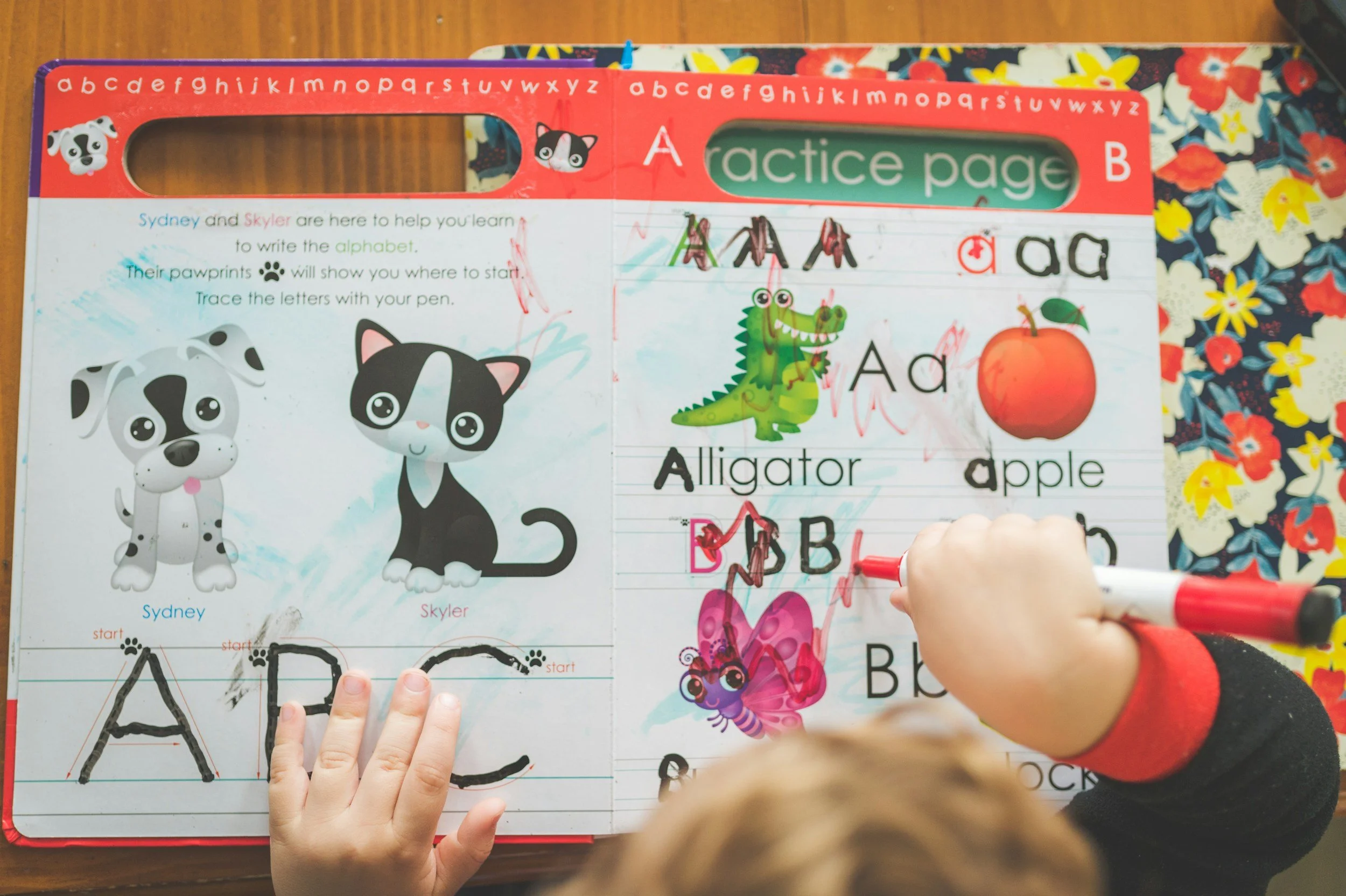
New York City’s 3-K program uses a play-based “Creative Curriculum”
If your child has a 3-K seat coming this fall, you might be wondering what they need to know before the first day. Here's the reassuring part: in New York City, 3-K is play-based “creative curriculum” and built to meet 3-year-olds exactly where they are. There's no entrance test, no reading or writing required and your child does not need to be out of diapers to start. What helps most is a short list of everyday skills, and they grow through play and your steady support, with flashcards nowhere on the list.
This guide walks through the developmental skills that help a child settle into 3-K, simple ways to practice them at home and the worries you can set down. Many of these same skills are the ones we practice every week in our Grown-Up & Me classes.
What "ready for 3-K" really means
NYC 3-K is free, full-day and play-based, and you apply the calendar year your child turns 3. The program is designed for 3-year-olds as they actually are, which means readiness looks a lot gentler than parents fear. The U.S. Centers for Disease Control and Prevention describes what most 3-year-olds can do by age 3: calm down within about 10 minutes after you leave them, like at a child care drop-off, notice other children and join them to play, and hold a short back-and-forth conversation. Readiness means leaning toward those skills at a 3-year-old's pace, in your child's own time.
Here's what that adds up to. The skills that matter at this age are social and practical, the kind a child grows into through play, routine and a warm grown-up nearby. The classroom will handle the rest.
The developmental skills that help your child thrive in 3-K
Think of these as the skills that smooth the landing, each one something you can support at home and something your child keeps practicing once school starts.
Separating from you with confidence
Drop-off is the moment most families worry about, and it's worth a little runway. A typical 3-year-old can settle within about 10 minutes after a goodbye, per the CDC. You can build toward that with short, predictable separations and a consistent goodbye ritual. In our Grown-Up & Me classes, your child gets comfortable exploring a busy room, warming up to other trusted adults and joining a group while you stay close, which is the security that makes a later goodbye feel safer.
Handling big feelings with help
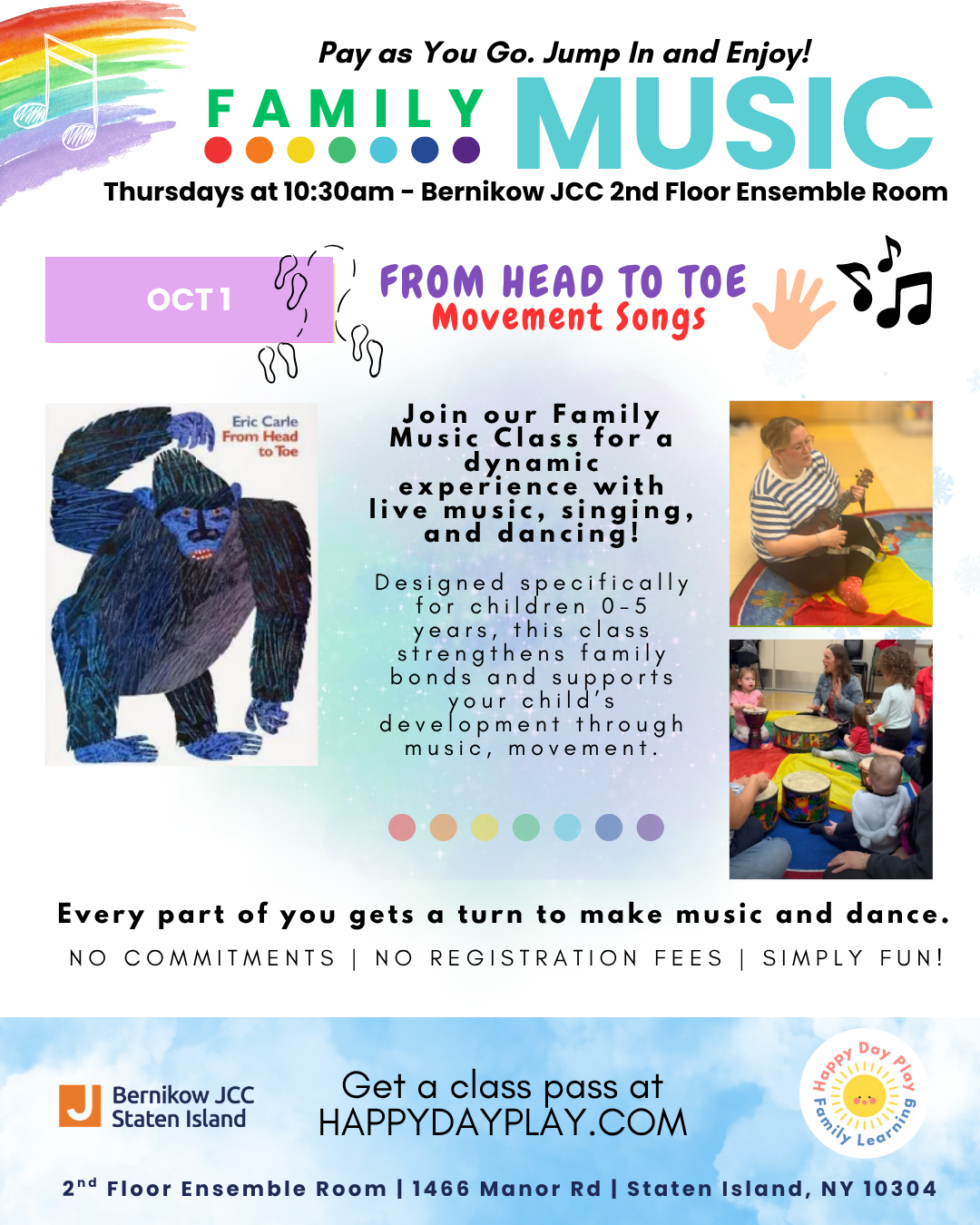
Three-year-olds feel things hugely and cannot calm themselves alone yet. The part of the brain responsible for self-regulation is one of the latest to develop, as Zero to Three explains, so children borrow our calm first and build their own over time. You help by staying steady, naming the feeling and offering comfort before correction. Our pieces on co-regulation and feeling words go deeper. In class, predictable songs, circle time and calm transitions give children repeated, low-stakes practice riding the wave of a big feeling with a grown-up right there.
Playing and getting along with other children
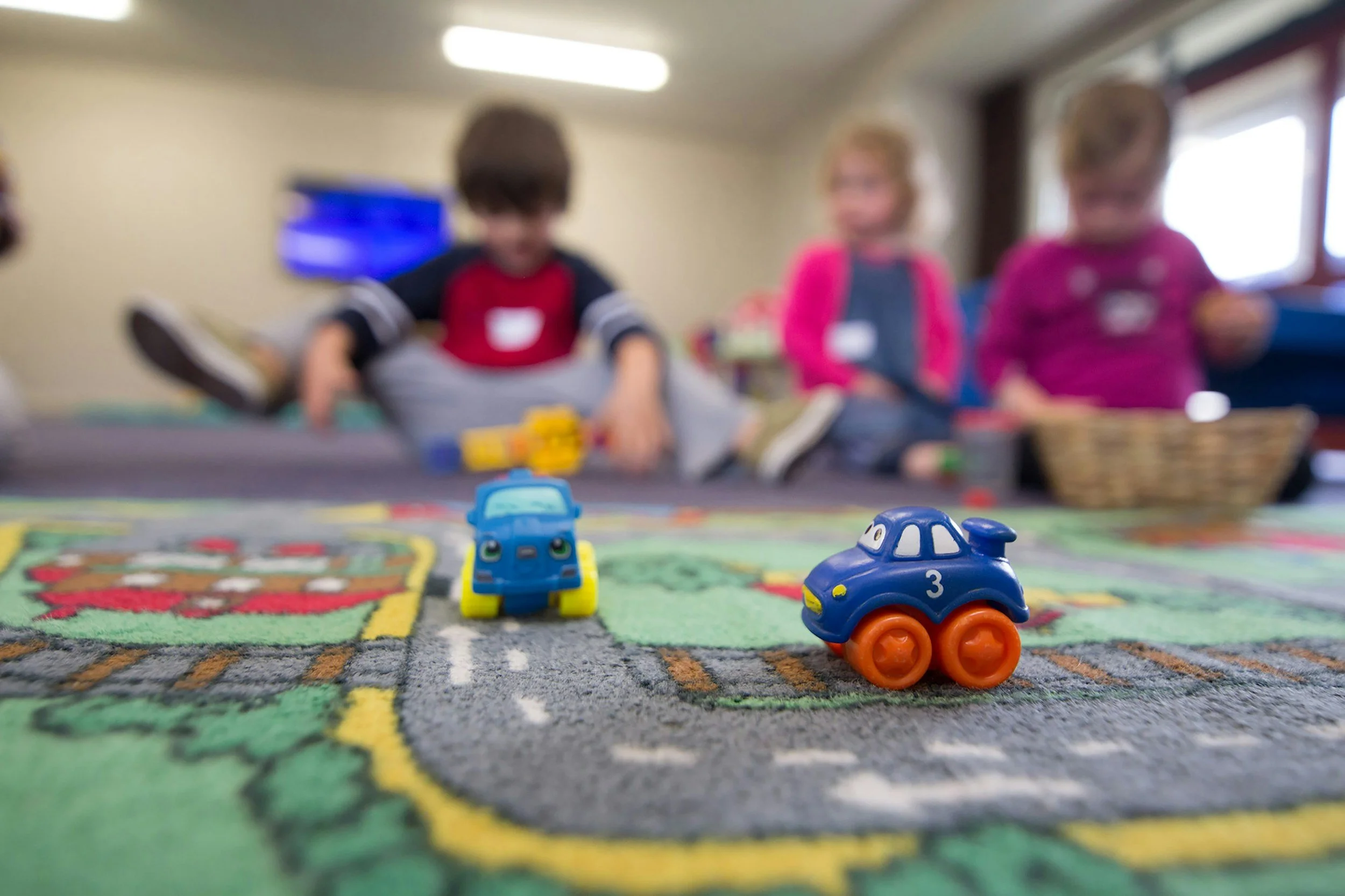
Around age 3, children shift from playing beside other kids to noticing them and joining in, a social/emotional milestone for this age. Sharing, taking turns and working through small conflicts are learned through play, not lectures, as Zero to Three notes in its work on toddler social-emotional development. A Grown-Up & Me class is built-in peer practice: passing a scarf, waiting for a turn with an instrument and singing together are all turn-taking reps with a caregiver close by.
Communicating needs and following simple directions
It helps enormously when a child can ask for help, say when they need water or the bathroom and follow a one- or two-step direction. By age 3, the CDC notes, most children hold a conversation with two back-and-forth exchanges and ask who, what and where questions. You can grow this by giving real directions at home and waiting for the follow-through. Class routines like "everybody grab a scarf" and a clean-up song give children friendly practice listening to a group instruction and using words to join in.
Everyday self-help
Small bits of independence go a long way in a classroom: washing hands, trying to pull on shoes and a coat, feeding themselves and putting a toy in a bin. The CDC's tips for preschoolers 3 to 5 note that children this age can begin to help dress and undress themselves. The trick at home is to let them try and wait through the slow, wobbly attempt instead of stepping in. Clean-up time and transitions in our classes give children regular practice managing their own little routine.
Settling into routines and transitions
Predictable routines help children feel safe and in control, which Zero to Three describes as a foundation for self-control. The hard moments are usually transitions, like stopping play to clean up, so a heads-up before a change helps a lot. Every Grown-Up & Me class follows the same arc, a hello song, an activity, clean-up and a goodbye song, which mirrors the rhythm of a preschool day and teaches a child what comes next.
Simple ways to practice before 3-K starts
None of this calls for a curriculum. A few small, low-pressure habits in the months before school do the work:
Practice short goodbyes: leave your child with a trusted person for a few minutes and return, stretching the time slowly, so they learn that you always come back.
Keep a simple daily routine: predictable wake-ups, meals, play and nap make a school schedule feel familiar before day one.
Name feelings out loud: "You're frustrated the tower fell" hands your child the words for emotions they cannot yet describe.
Play turn-taking games: Freeze Dance, Red Light Green Light and Simon Says build waiting and self-control while everyone laughs, a tip Zero to Three recommends.
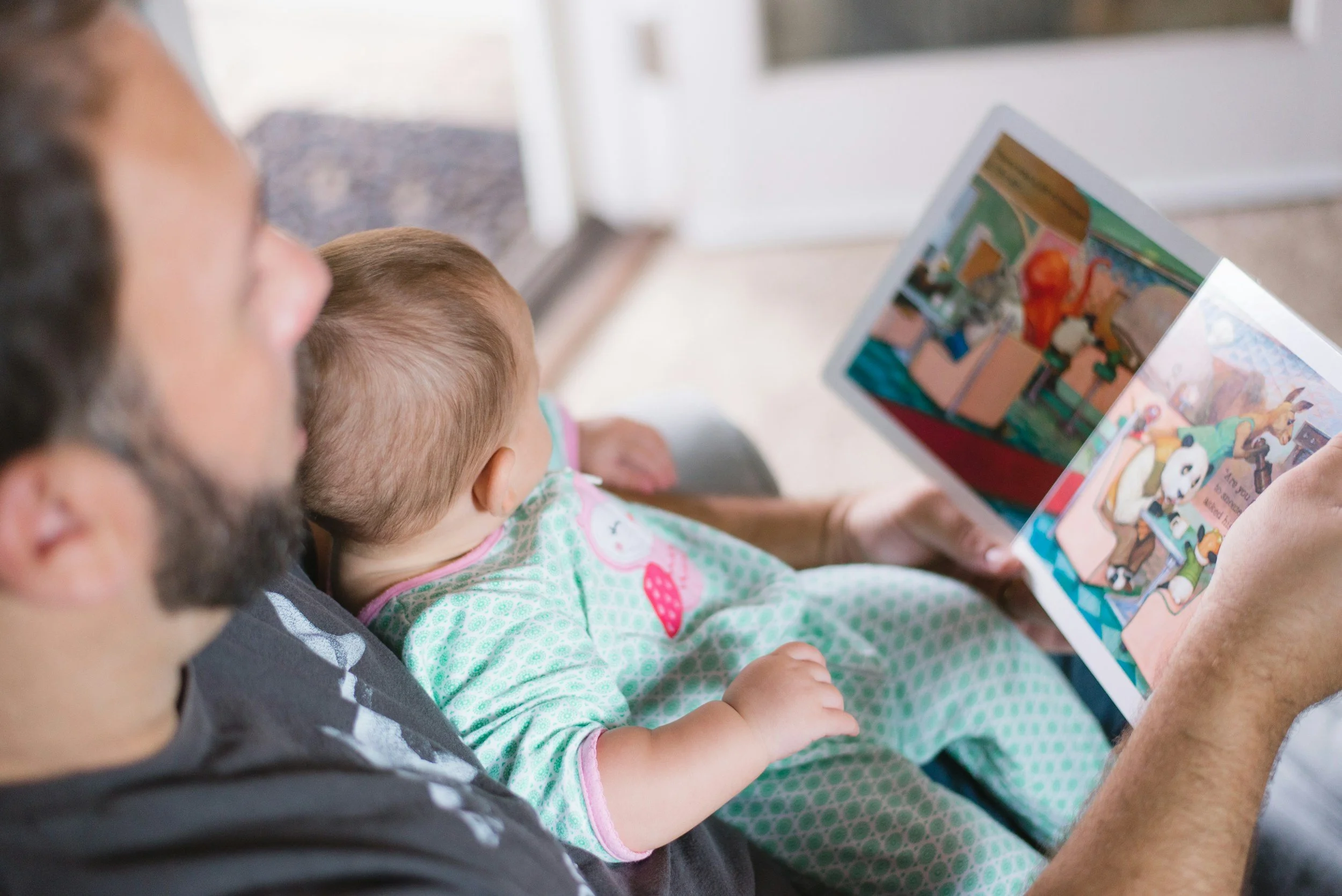
Read books about starting school: stories about drop-off and making friends let your child rehearse the day in a safe, cozy way.
Visit the program if you can: a quick look at the room and a hello to a teacher takes the mystery out of the first morning.
Let them do more themselves: shoes, handwashing and putting toys away, even when it's slower, build the confidence a classroom rewards.
What you don't need to worry about
Plenty of common worries simply don't apply to 3-K, so you can let these go:
Toilet training: NYC 3-K does not require it, and the CDC notes most children train between ages 2 and 3, where starting too early can cause stress and setbacks. Teachers support children who are still learning. If you’re child is at the cusp, try using the summer beforehand to get them fully potty trained for peace of mind and ease.
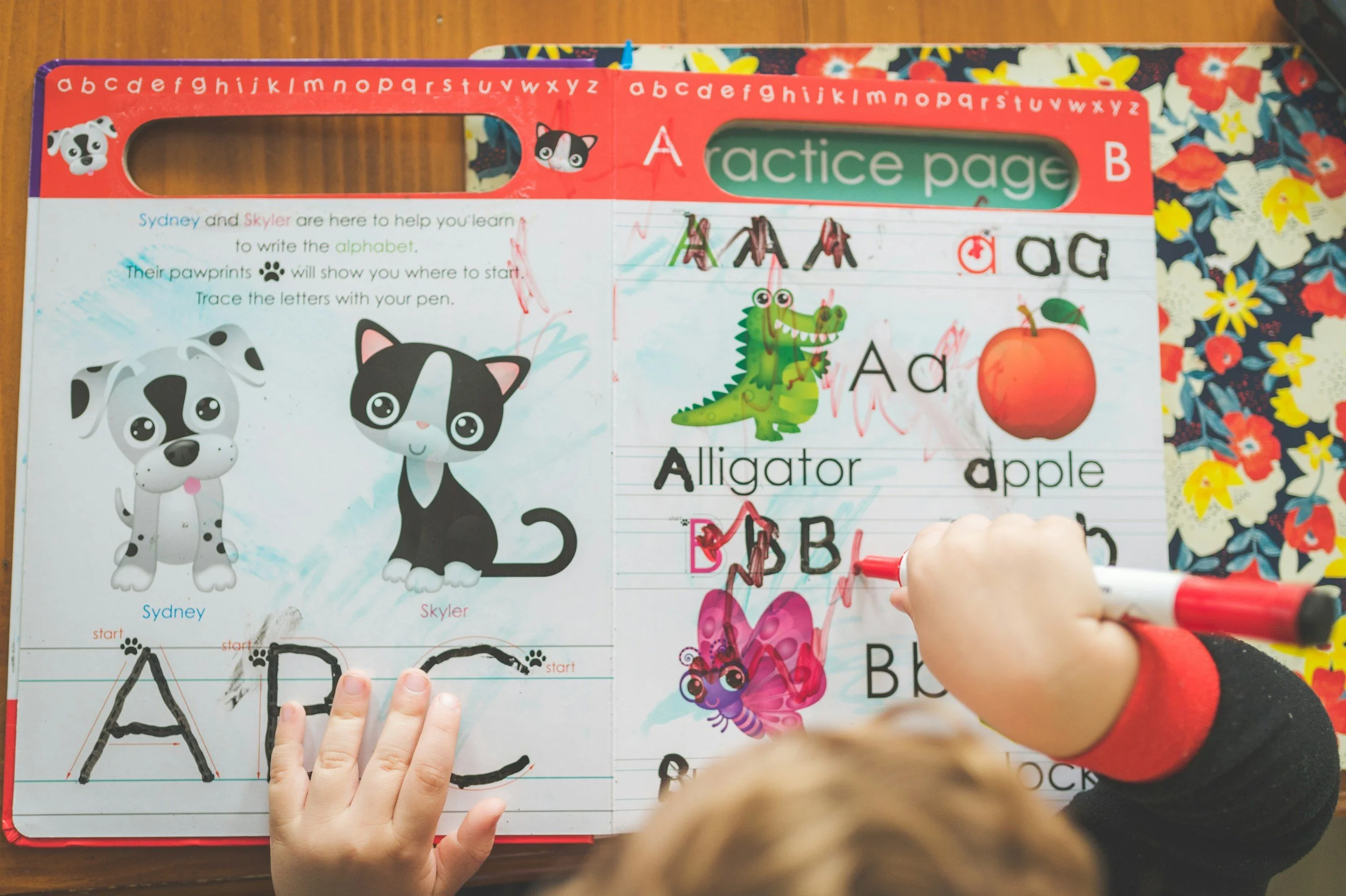
Academics: your child does not need to read, write or know every letter and number. A play-based program teaches those through games and stories.
Perfect behavior: tears at drop-off, the occasional meltdown and not-yet-sharing are all typical at 3. Teachers expect them and know how to help.
Drilling: flashcards and worksheets can wait, because play, conversation and routine are what build these skills at this age.
How our Grown-Up & Me classes build 3-K readiness
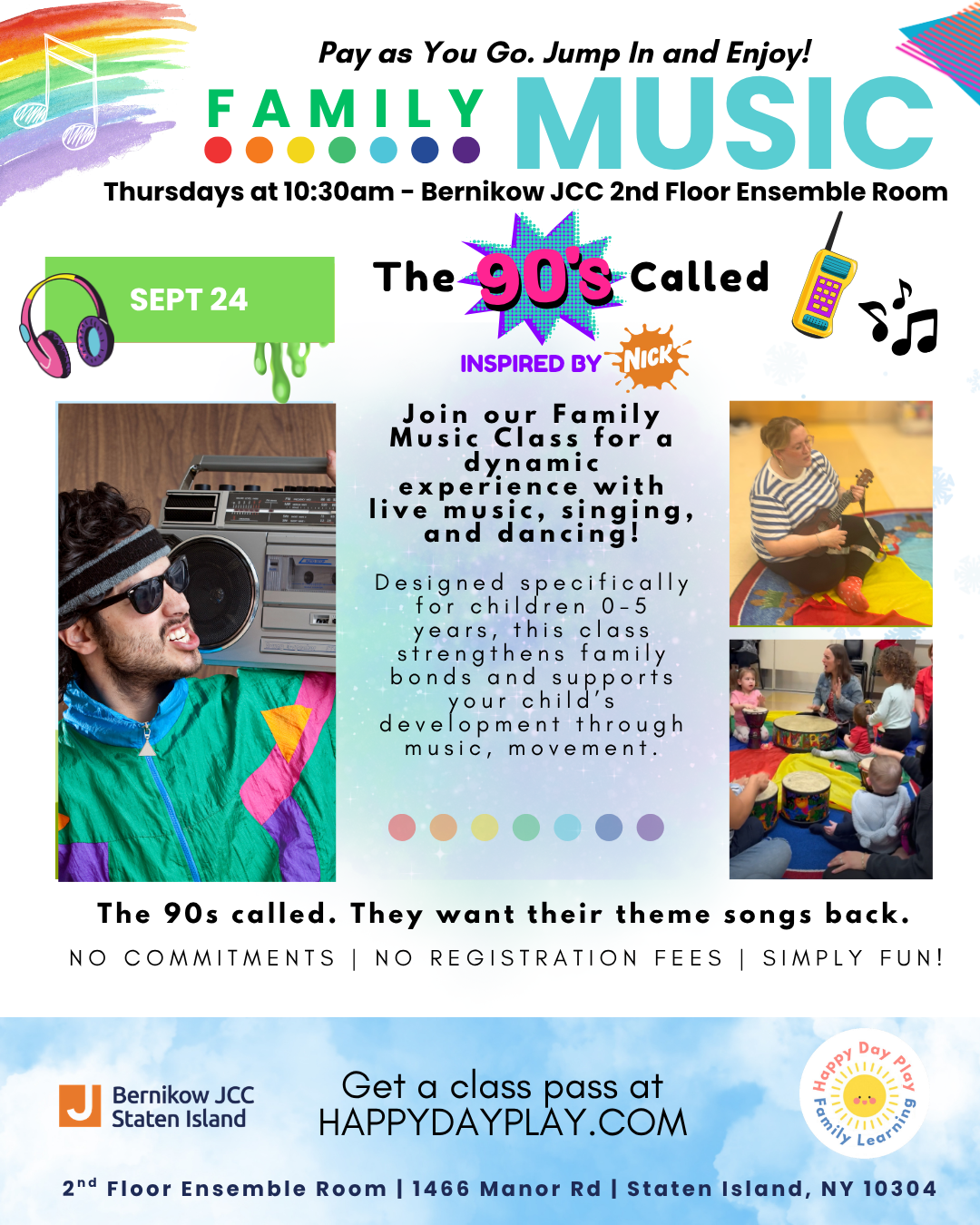
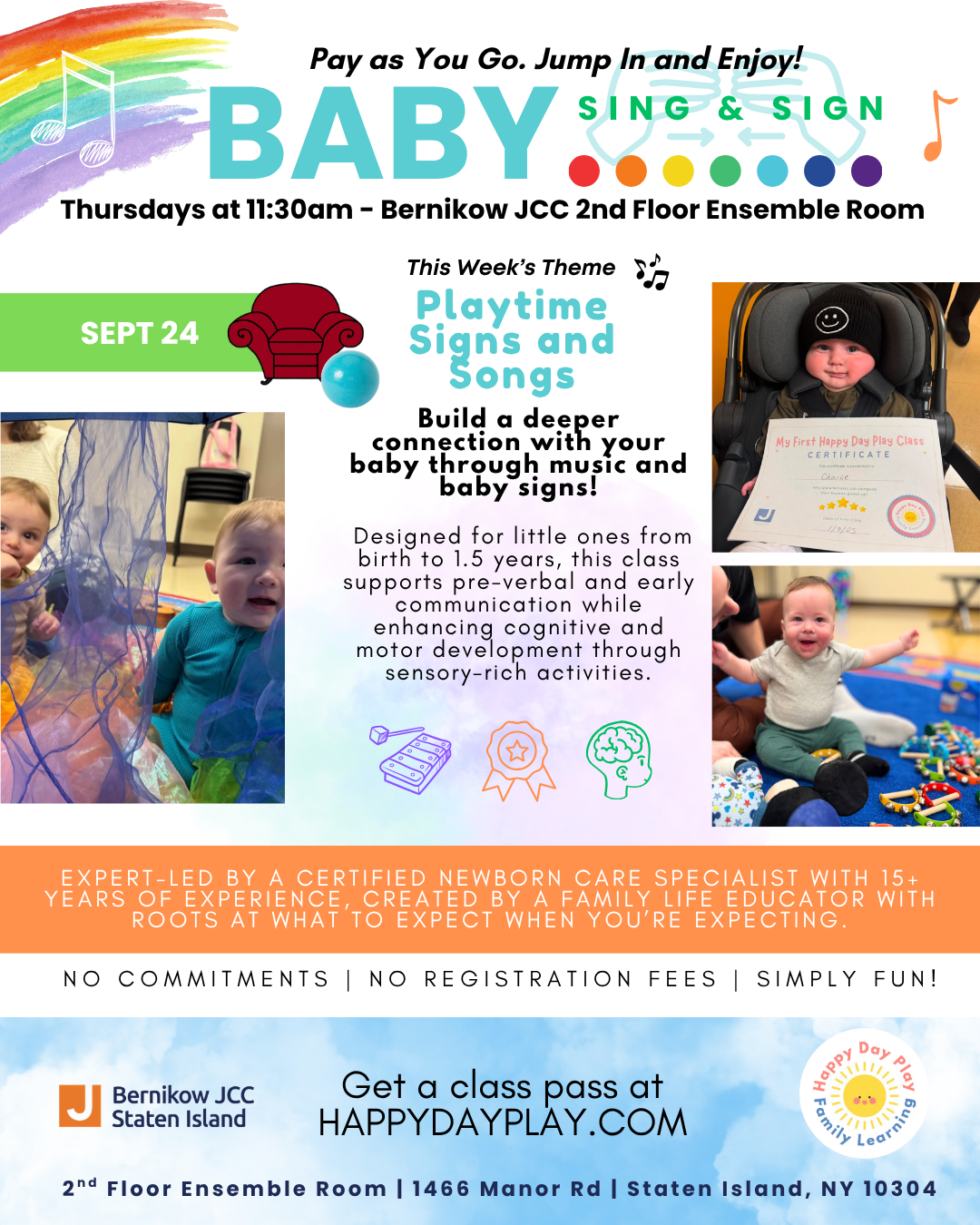
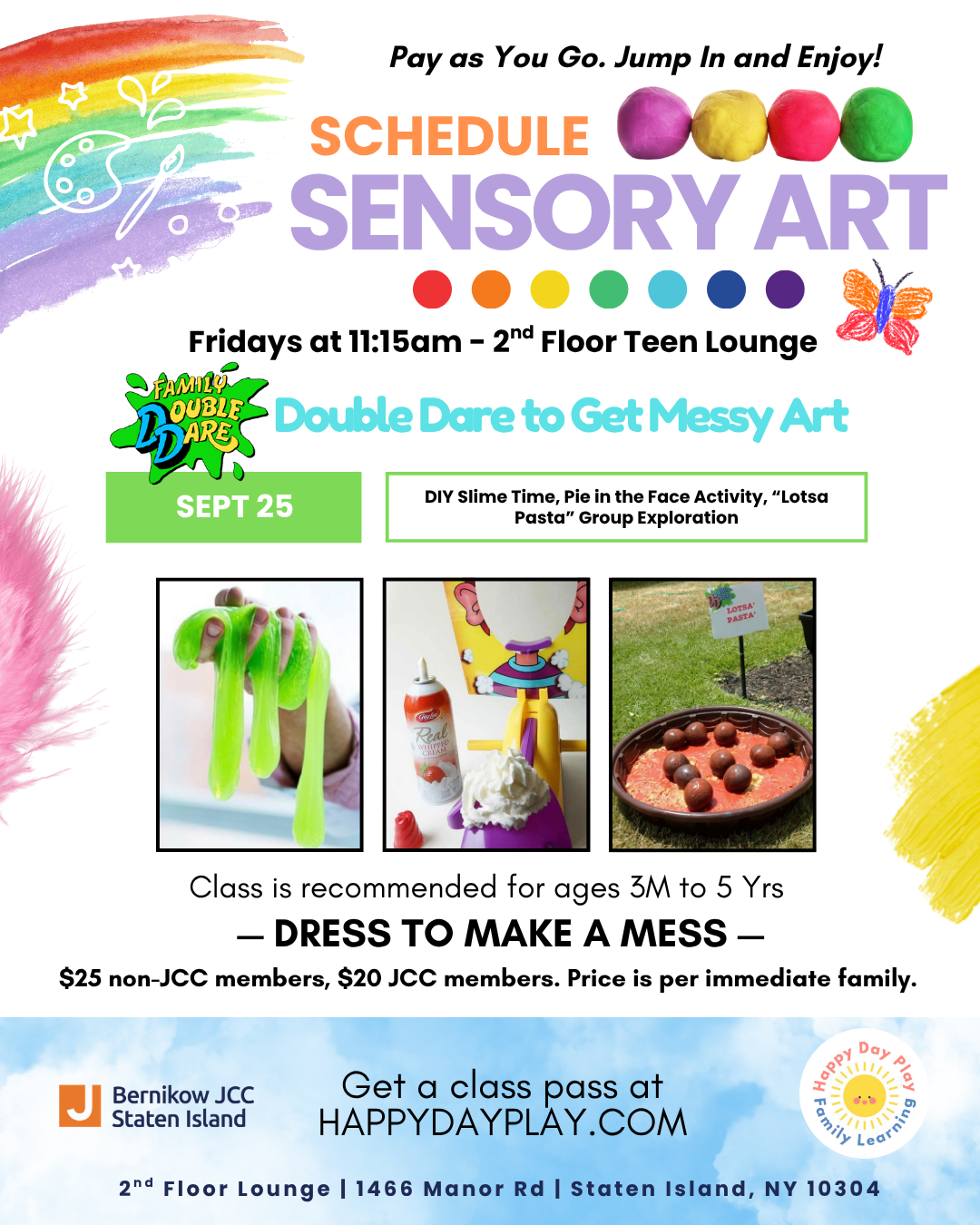
Here's where we fit. Our Grown-Up & Me classes are built around the exact skills above. A predictable hello-to-goodbye routine teaches the rhythm of a school day. Turn-taking with instruments and props practices sharing and waiting. Calming songs and circle time give children reps at managing big feelings, and fine-motor play with art and materials strengthens little hands. With you in the room, your child builds the social confidence and group comfort that make the eventual step into a 3-K classroom feel familiar rather than scary. This connects directly to why play-based learning works.
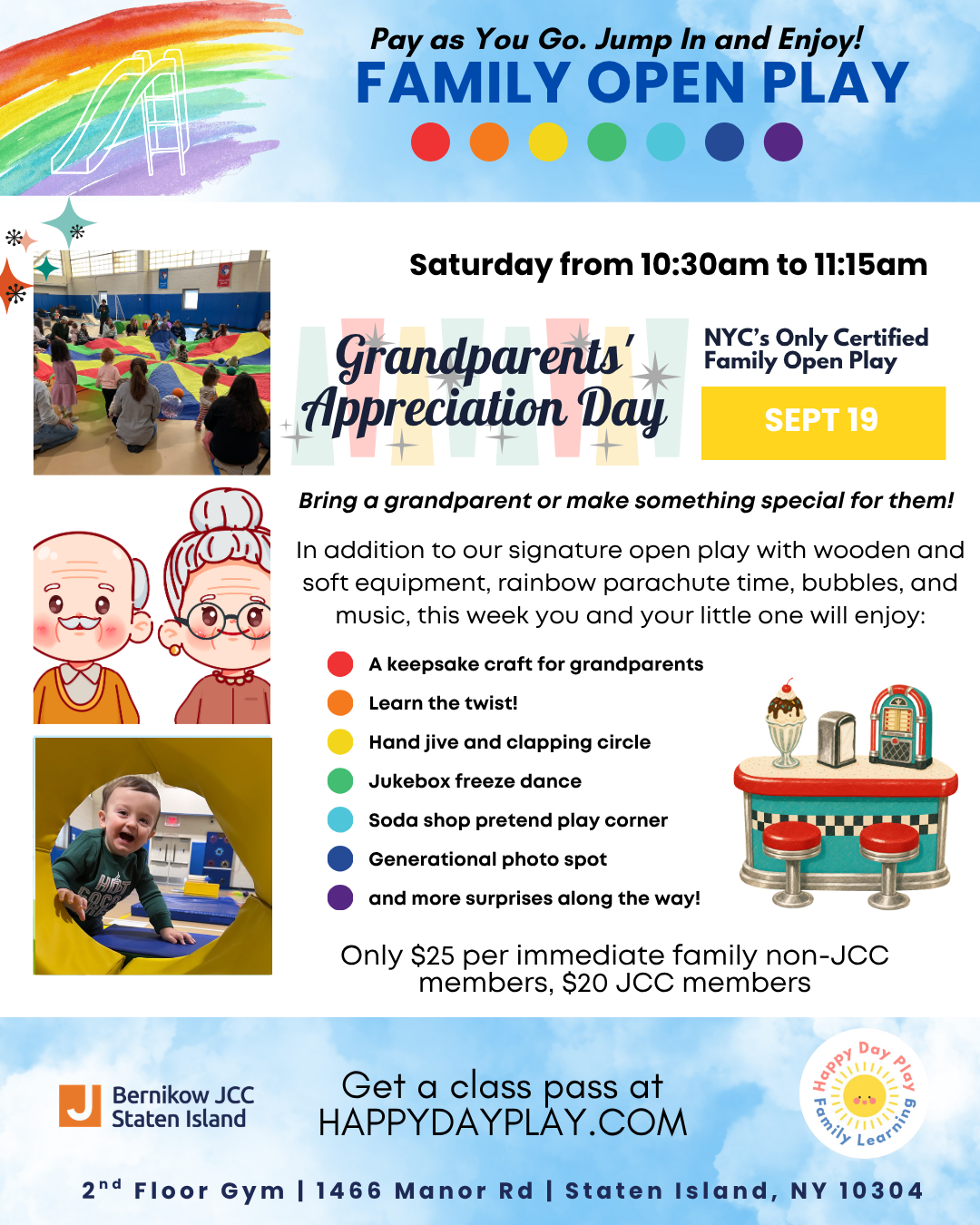
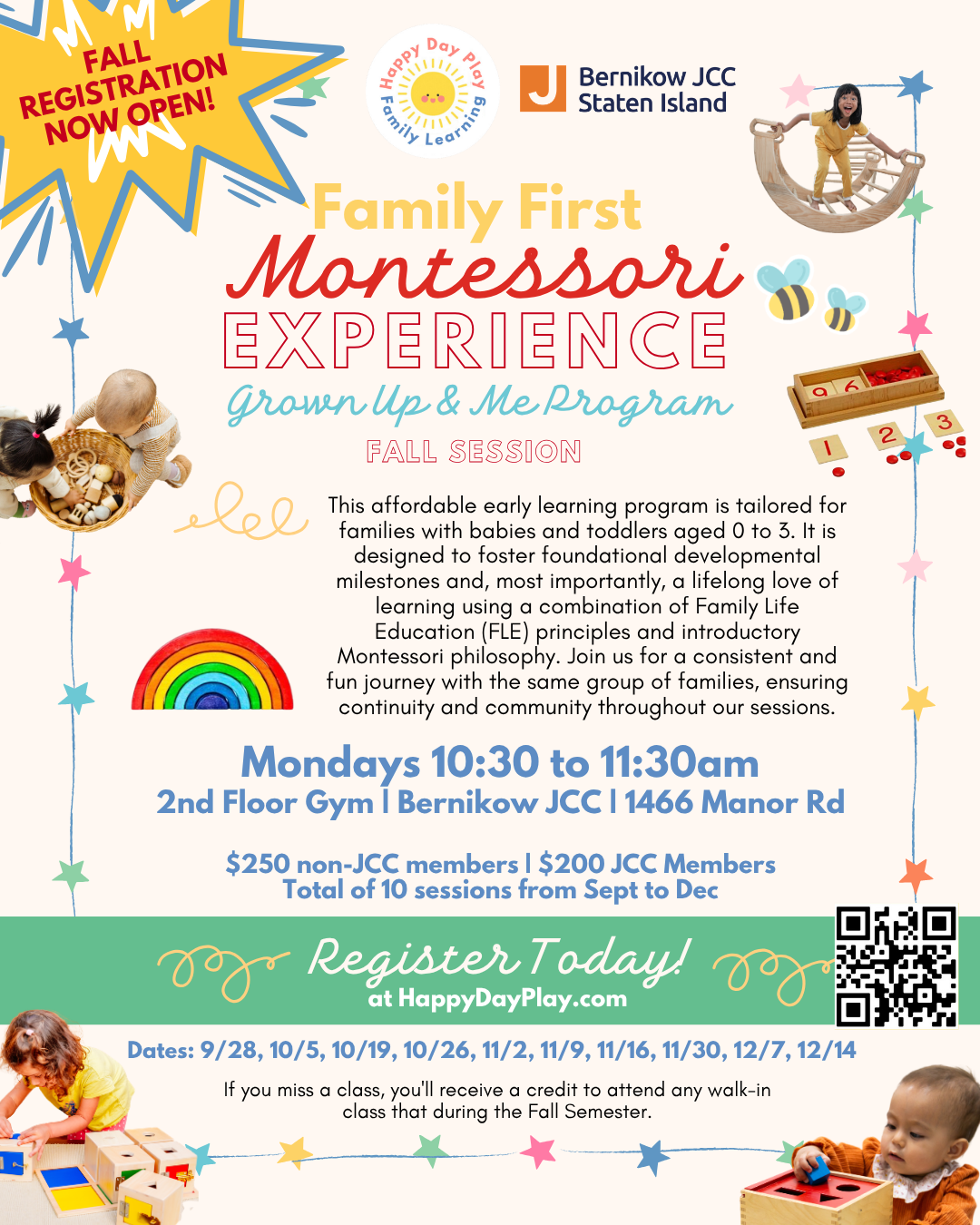
The classes are walk-in, one price per family, with no commitment, which makes them an easy way to build readiness on your own timeline. You can browse classes by age and see times on our schedule, and Family Open Play is another relaxed way for your child to practice sharing space with other r kids. Families who want a committed program with the same group each week can look at Happy Trails and Family First Montessori, our commitment-based option.
Frequently asked questions
Does my child need to be potty trained for 3-K in NYC?
No. NYC 3-K does not require toilet training, and teachers support children who are still learning. The CDC notes most children train between ages 2 and 3, and pushing too early can backfire.
What skills should a 3-year-old have before 3-K?
The most helpful skills are social and practical: separating from you calmly, handling big feelings with a grown-up's help, playing near other children, following a simple direction and basic self-help like handwashing. None of these need to be perfect on day one.
How do I help my child with drop-off?
Practice short goodbyes ahead of time, keep a consistent goodbye ritual, and always say goodbye rather than slipping out. It reassures children to know that most 3-year-olds settle within about 10 minutes after a parent leaves.
How can I prepare my child for 3-K at home?
Build a simple daily routine, name feelings out loud, play turn-taking games like Freeze Dance and Simon Says, read books about starting school and let your child practice self-help tasks like shoes and handwashing.
Is my child ready for 3-K?
Most 3-year-olds are, because the program is play-based and meets children where they are. If you have a specific developmental concern, the CDC's milestone checklists and your pediatrician are good next steps.
Key takeaways
- NYC 3-K is play-based and built to meet 3-year-olds where they are, so there are no academic prerequisites and toilet training is not required.
- The skills that help most are social and practical: separating calmly, handling big feelings with help, playing with other kids, following simple directions and basic self-help.
- These skills grow through everyday play, routine and your steady support.
- You can practice at home with short goodbyes, simple routines, turn-taking games and books about starting school.
- Many of these same skills are exactly what our Grown-Up & Me classes practice each week.
Sources & further reading 8
- U.S. Centers for Disease Control and Prevention. Milestones by 3 Years (Learn the Signs. Act Early.). cdc.gov
- U.S. Centers for Disease Control and Prevention. Positive Parenting Tips: Preschoolers (3 to 5 Years). cdc.gov
- Zero to Three. Encouraging School Readiness From Birth to 3. zerotothree.org
- Zero to Three. 24-36 Months: Social-Emotional Development. zerotothree.org
- Zero to Three. Helping Toddlers Develop Self-Control From 24-36 Months. zerotothree.org
- NYC Public Schools. 3-K: How to Apply (free, full-day, play-based; no toilet training required). schools.nyc.gov
- Yogman, M., et al. (2018, reaffirmed 2025). The Power of Play: A Pediatric Role in Enhancing Development in Young Children. Pediatrics. publications.aap.org
- Center on the Developing Child at Harvard University. How-to: 5 Steps for Brain-Building Serve and Return. developingchild.harvard.edu
About this article
Every article on Happy Day Play is written by Kaitlynn Blyth herself, then checked against our published standards before it goes live. You can read exactly how we research, verify, and fact-check our work, and how we use and limit AI, in the policies below.
Last fact-checked June 17, 2026
Read More About Early Education