How to Read to Your Toddler So It Actually Counts
A 2026 study of nearly 37,000 children found that reading together often is tied to stronger development across the board. Pair that with the dialogic "ask, wait, add" method and each read does even more
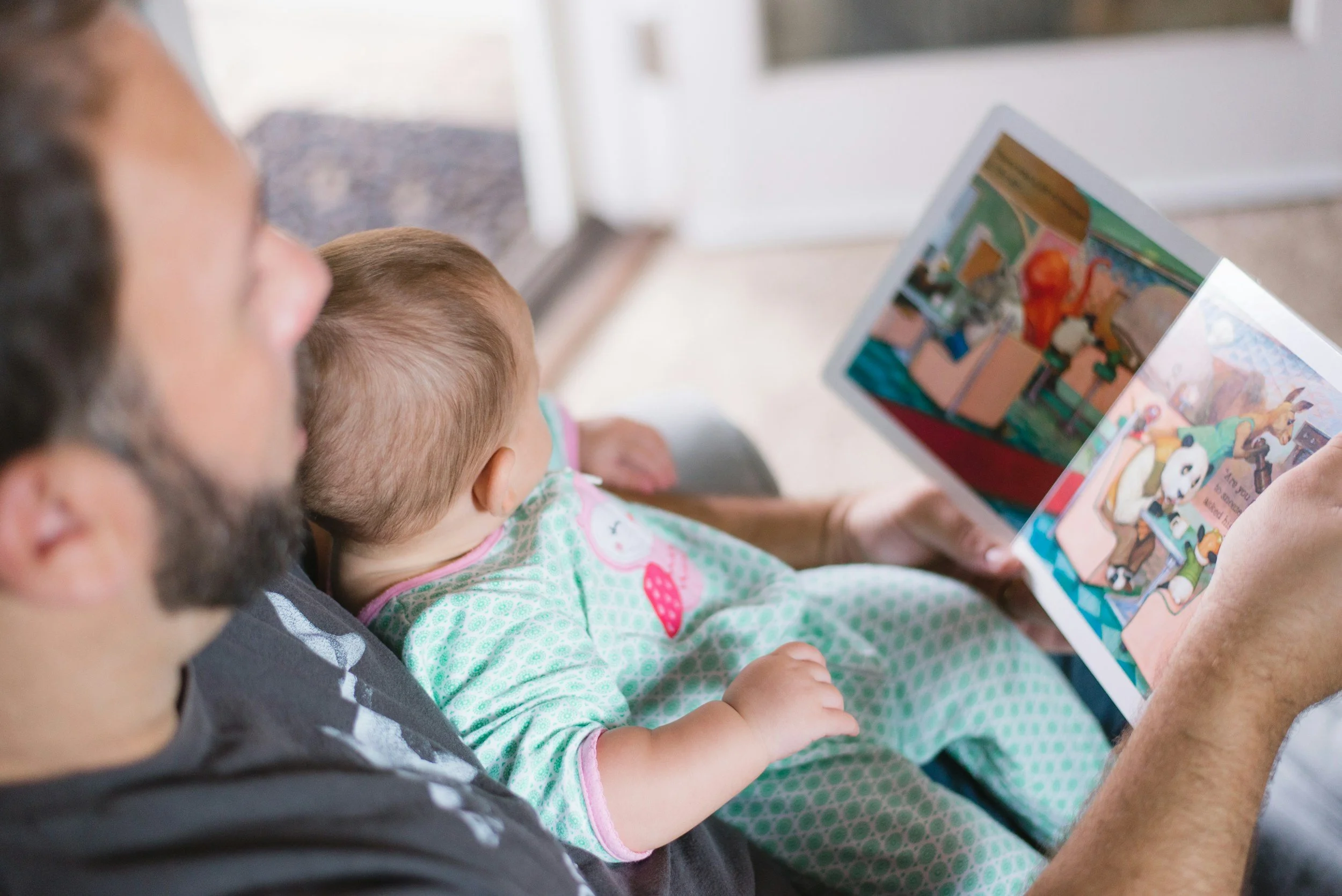
In a new 2026 study, researchers found that the more often families read together, the higher children scored across every developmental domain, even after accounting for parental background, how much families played with their child and screen time.
You already know reading to your child matters. New research from one of the world's largest child studies sharpens the message in two useful ways: how often you read matters more than you might think, and how you read can make each book do even more.
What the 2026 study found
A 2026 study in Pediatric Research, built on the Japan Environment and Children's Study, followed 36,866 mother-child pairs and tracked how often families shared storybooks up to age 3. Using a standard developmental screen (the Ages and Stages Questionnaire), the researchers found that the more often families read together, the higher children scored across every developmental domain, even after accounting for parental background, how much families played with their child and screen time.
Two details stand out. The questionnaire scores each area of development from 0 to 60, where a higher number means a child is hitting more of the skills expected for their age. At age 3, children who were read to often scored about 5.5 points higher on communication than children who were rarely read to. In plain terms, the kids read to often were noticeably further along in how they communicated, and that gap held up even after the researchers accounted for other advantages. The second detail is just as striking: among children who were behind at age 1, those who were read to more often afterward improved the most. So reading often is one of the highest-return, lowest-cost things you can do, and it helps the kids who need it most.
Then make each read richer: dialogic reading
Reading often is the foundation. A separate, well-established line of research adds the other half: how you read shapes how much a child gets from it. The approach is called dialogic reading, developed through the Stony Brook Reading and Language Project, and summarized by Reading Rockets. The idea is simple: instead of reading at your child, you turn the book into a conversation and let your child become the storyteller. Children read to this way tend to land ahead of children read to in the traditional way on tests of language development.
What dialogic reading actually means
It's a back-and-forth style of reading. You ask an open-ended question ("What do you think happens next?"), wait for your child to answer, then build on what they say ("Yes, the puppy is hiding. Maybe he's scared"). The child does more of the talking, and you follow their lead. It's the same serve-and-return rhythm the Center on the Developing Child at Harvard University describes as core to building early language and connection.
Three moves to try tonight when reading to your child
Ask, don't just read: Pause on a page and wonder aloud. "Where did the cat go?" "Why is she sad?"
Wait: Give your child a few extra seconds to find their words. The silence feels long to you and just right to them.
Add: Build on whatever they say with one new word or idea. They say "dog," you say "yes, a fluffy brown dog."
Three picture-book pages read this way do more than ten pages read on autopilot. And on the nights you only manage the quick version, you're still building the frequency the research rewards. Both count.
Theme books to your child’s current likes or obsession
Children lean in hardest when a book meets a passion. If your child is wild about trucks or dinosaurs or ballerinas, a themed book turns reading into something they pull off the shelf themselves. It's the same principle behind our themed classes and birthday parties at Happy Day Play: we meet children at their interests, because that's where engagement and learning live.
For more easy, language-rich ideas at home, our guide to sensory play for 1-year-olds pairs naturally with a themed book.
The Family Life Education lens on reading
Family Life Education sees reading as a relationship ritual instead of a literacy chore. Dialogic reading builds language and the bond at the same time, because it's rooted in attention and response. A few minutes of warm, chatty reading is a small daily act of connection that pays developmental dividends.
Common questions about reading to toddlers
How often should I read to my toddler?
As often as you reasonably can, even briefly. The 2026 study found that more frequent shared reading tracked with stronger development across every domain, so a short daily book beats a long one once a week.
Does it matter how I read, or just that I read?
Both. Reading often is the foundation the big cohort study points to. Reading interactively, the dialogic ask-wait-add style, is what a separate body of research links to faster language gains. You don't have to choose.
My child wants the same book every night. Is that okay?
More than okay. Repetition is how young children master language, and a familiar book is the easiest place to practice dialogic reading, because your child already knows what's coming and can do more of the telling.
Hear it in a Grown-Up & Me class
Our Grown-Up & Me classes are full of themed songs and story moments where children are invited to talk, predict and join in, the same back-and-forth that makes reading at home count, led by a Family Life Educator. The walk-in classes are one price per family, siblings included, with no commitment. Come read, sing and talk with us.
Key takeaways
- A 2026 study of 36,866 families found that the more often parents shared storybooks, the higher children scored across every developmental domain, even after accounting for background, playtime and screen time.
- Reading often helps most where it's needed most: kids who were behind at age 1 improved the most with more frequent reading.
- How you read matters too. A separate body of research links dialogic reading, the ask-wait-add style, to faster language gains. You don't have to choose between often and interactive.
- Match books to your child's current obsession, and let them do the talking. Reading is a relationship ritual that builds language and bonding together.
Sources & further reading 3
- Nakamura, H., Suzuki, T., Kanamori, K., et al. (2026). Impact of shared storybook reading on child development: The Japan Environment and Children's Study. Pediatric Research. nature.com
- Whitehurst, G. J. / Stony Brook Reading and Language Project. Dialogic Reading: An Effective Way to Read Aloud with Young Children. Reading Rockets. readingrockets.org
- Center on the Developing Child at Harvard University. Serve and Return. developingchild.harvard.edu
About this article
Every article on Happy Day Play is written by Kaitlynn Blyth herself, then checked against our published standards before it goes live. You can read exactly how we research, verify, and fact-check our work, and how we use and limit AI, in the policies below.
Last fact-checked June 3, 2026