Sensory Play for 1-Year-Olds: What Actually Works, and What Your Toddler's Brain Is Doing
You don't need a kit or a craft room. Here's what sensory play does for your 1-year-old's developing brain, how to keep it taste-safe, and eight easy setups using what's already in your kitchen.
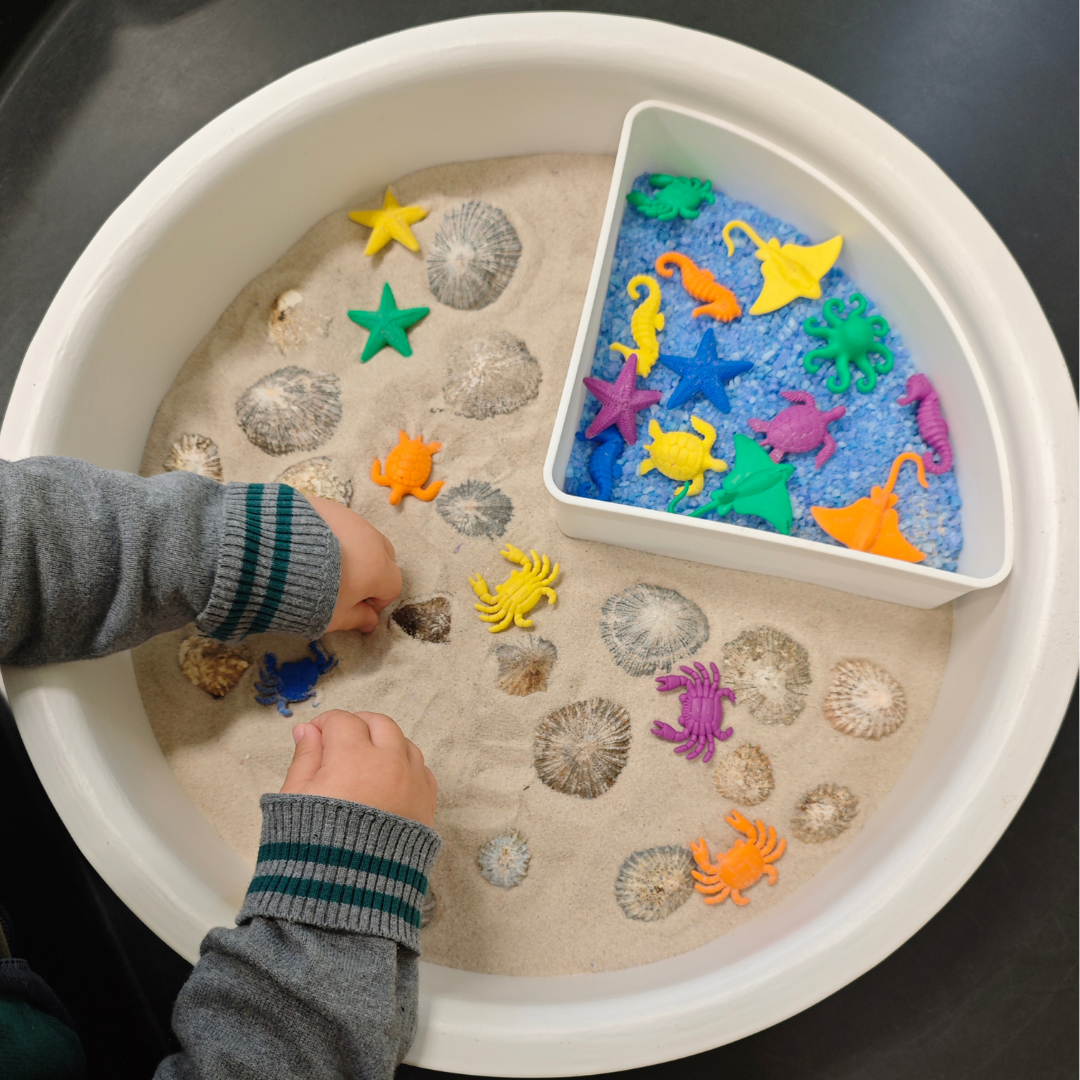
Sensory play engages one or more of a child’s senses, including proprioception.
There's a particular flavor of overwhelm that hits at 12 months. Your baby is on the move and they want everything in their mouth and most things in their hair. The Instagram parents in your feed are filling rainbow rice bins shaped like the alphabet, and you're wondering whether a 1-year-old really needs Amazon kits to develop.
Point blank: They don't.
Sensory play is one of the most important categories of activity in the first three years of life and is also one of the simplest. You don't need a fancy kit. You don't need a craft room. You need a tray of some sort, three minutes and you on the floor.
Let’s walk through what sensory play actually is, what's happening in your 1-year-old's brain when you do it, how to keep it safe for a child who still mouths everything, eight easy setups that use what's already in your kitchen, and a quiet shift in how to think about it all from a family perspective.
What sensory play for 1-year-olds really is (and what it isn't)
Sensory play is any play that intentionally engages one or more of a child's senses. Touch, sight, sound, smell, taste and the often forgotten ones: proprioception, the body's sense of where it is in space, and the vestibular system, the body's sense of balance and motion.
That's the whole definition, really! Stomping in a puddle is sensory play. Squeezing a wet washcloth is sensory play. Watching a candle flicker safely from across the room is sensory play. It could not be more simple.
Why sensory doesn't have to mean messy
The internet has trained us to associate sensory play with rainbow rice all over the floor. Rest assure, mess is just one option and isn't a requirement. A 14-month-old can have a profound sensory experience with a clean ice cube on a tray and a small cup of warm water beside it.
The difference between sensory play and just play
Most play has a sensory component, but what makes a setup sensory play is intention. You chose the materials with the senses in mind, you set up the space so your child can lead, and you're present to narrate, support and adjust.
What sensory play does in your 1-year-old's brain
Neural pathway building in the first three years
The first three years are when the brain builds the largest share of its lifetime connections. The Center on the Developing Child at Harvard describes this period as a time of foundational brain architecture, when experiences shape the circuits your child will use for decades. Sensory exploration is one of the main ways young brains gather the data they need to wire themselves.
When your toddler squishes oat dough between their fingers, neurons in the touch, motor and language regions are firing together. Repeated experiences turn those firings into stable circuits.
Language, attention and self-regulation gains
Sensory play is also a language workshop. You're naming what your child is doing ("you're squeezing it, it's squishy"), narrating cause and effect ("you tipped the cup, the water poured out") and giving your toddler the words for their experience. The American Academy of Pediatrics clinical report on the power of play names play, including sensory play, as a driver of cognitive, language and self-regulation development.
Attention spans grow through experiences exactly like this. A baby who can focus on a sensory tray for eight minutes today may be able to focus for 15 in a few short months.
How sensory play supports fine and gross motor development
Picking up a single piece of dry pasta builds pincer grasp, just as walking across a textured path builds balance on uneven surfaces. Squeezing a wet sponge builds hand strength and pouring water from one cup to another builds wrist control. All of it is preparation, eventually, for crayons, zippers, scissors and pencils.
Taste-safe sensory play for a 1-year-old who still mouths everything
This is the part most generic guides skip, and the part parents of 1-year-olds most need.
The taste-safe rule for 1-year-olds
For a 12- to 18-month-old who still puts everything in their mouth, the safest sensory materials are taste-safe. That means materials your child could swallow without medical concern. At home, that can mean: cooked plain pasta, dry oats, whole-grain cereal, cooked rice, cucumber slices in water, yogurt with food coloring and small pieces of soft cooked vegetables. Remember, supervision is required at all times.
W recommend skipping dry rice, dry beans and small craft pom-poms at this age when you have other options available. Supervision matters for all sensory play, but these items need even more attention, because a 1-year-old's airway is small and curious.
Choking hazards to keep out of the bin
The American Academy of Pediatrics choking prevention guidance recommends keeping items smaller than a quarter out of reach for children under 4. For sensory play with a 1-year-old, that means anything round, hard and small enough to fit in their mouth is a no.
Small marbles, beads, buttons, dry beans, small dried fruit, hard candy, whole grapes, whole nuts and tiny toy pieces all sit on the save-for-later list when they are older and still with supervision.
Supervision and setup expectations
A 1-year-old in a sensory setup is never unattended. You're not setting up a tray and walking away to fold laundry. The important setup is one where you and your child are present together. That's a feature, not a flaw and it’s the developmental point.
When water play is safe and when it isn't
Water play is glorious for this age, in shallow, supervised setups. A half inch of water in a baking tray, on a towel on the kitchen floor, with you sitting beside it, is safe. A bathtub or bucket of water without you within arm's reach is not. The American Academy of Pediatrics drowning prevention guidance reminds parents that drownings can happen quickly and in small amounts of water. Please stay close and supervise always. Not to fear monger, but it only takes a second for something bad to happen. It’s always better to proceed with caution!
Eight easy sensory play setups for 1-year-olds (using what you already have)
These take three to five minutes to set up. They use what's in your kitchen and you don't need anything from Amazon.
A taste-safe pantry bin in three minutes
Ingredients and materials:
Shallow tray
One cup of dry oats
A small wooden spoon
A small cup
Instructions: Sit on the floor with your child. Put the oats on the tray with the wooden spoon and cup. Let them scoop, dump and, yes, taste! Narrate quietly what they are doing and how you’re modeling the actions. Ten minutes of engaged play is a great outcome.
A cold and warm water tray, working on temperature differentiation
Materials:
Baking tray
Beach towel
Warm water
A few ice cubes
Two small cups
Instructions: Place the baking tray on a beach towel. Put half an inch of warm water in one cup. Put a few ice cubes in the other cup. Put both cups on the tray. Your child explores temperature, density and pouring all in one setup however they wish. It is that easy!
A sensory bottle a curious 1-year-old can shake
Materials:
An empty water bottle
Half filled with water
A few drops of food coloring
A small amount of vegetable oil
Instructions: Put water, food coloring and vegetable oil in the empty water bottle. Seal tightly with hot glue or strong tape on the cap. Shake it and watch the colors mix and separate. Mesmerizing for a 1-year-old, and surprisingly mesmerizing for the parent.
An edible paint with yogurt and food coloring
Materials:
Plain yogurt
Three small bowls
A few drops of food coloring
A paintbrush or just fingers
Sheet of paper
Tape
Instructions: Tape a sheet of paper to a high chair tray or the floor. Place yogurt in each of the three bowls and add a small amount of food coloring to each. Your child paints, tastes and explores texture all at once. Most of it will end up on their face and in their mouth, which is perfectly okay!
A textured walking path on the floor
Materials:
Bubble wrap
Fleece blanket
Sheet of foil
Sandpaper or similar texture (glitter cardstock, etc.)
Instructions: Lay a piece of bubble wrap, a folded fleece blanket, a sheet of foil and a square of sandpaper across the floor. Walk it together. Stop and let your child crouch on each surface. That's vestibular, proprioceptive and tactile input all in one walk.
A scoop and pour station with cups and oats
Materials:
Three small cups
A scoop
A cup of dry oats.
Instructions: Demonstrate scooping from one cup to another with the oats. Hand it over to your child and sit close. Resist the urge to correct what they're doing. Pouring out (and making a little mess) is also learning.
A frozen toy rescue
Materials:
Small, safe toys
Shallow plastic container
Water
Freezer
Wooden spoon
Instructions: Place a few small, safe toys in a shallow plastic container, fill with water and freeze overnight. The next morning, set the block of ice on a tray with a small cup of warm water and a wooden spoon. Your child rescues the toys as the ice melts. Captivating, mostly clean and beautifully rich for development.
A bubble wrap stomp mat
Materials:
Bubble wrap
Tape
Instructions: Tape a large piece of bubble wrap to the floor. Hold your child's hands and walk them across. The pops are auditory and tactile input. New walkers find this delightful, sometimes startling. Follow your child’s cues.
Sensory play ideas for 1-year-olds by developmental skill
For early walkers building balance and coordination
The textured walking path, the bubble wrap stomp, a stepping-stone path of couch cushions on the floor, anything that asks the body to manage slightly uneven surfaces while you're right there are ideal.
For the just-turned-1-year-old still doing more sitting
The frozen toy rescue, the yogurt paint, a simple touch tray with three different fabrics on it, the water and ice tray, and anything they can stay close to and explore from a stable seated position are ideal.
For the older 1-year-old experimenting with cause and effect
The scoop and pour station, the sensory bottle, dropping ice cubes into a cup of water, a small ramp made of a piece of cardboard and a baking pan with a soft ball to roll down are ideal. Cause and effect is the favorite story at this age, and sensory play is the perfect setting for it!
For the sensory seeker who needs a lot of input
The bubble wrap, the bigger water tray, the yogurt paint, a pillow crash zone in your living room are ideal. Along stretch of music and movement before sensory time helps them arrive ready to focus.
For the sensory avoider who melts down easily
Start dry, start small, start with one sense at a time. A tray with a few pieces of dry pasta on it is a full setup for a sensory-cautious 13-month-old. Add textures and water only as your child shows interest. The Zero to Three resource on learning through the senses is a reliable source to read more.
A Family Life Education view: the parent is the active ingredient
Why the parent is the most important material in the bin
The most important material in the setup isn't the rice, the water or the yogurt. It's you!
Your eye contact, your narration, your warmth, your reactions are important for any sensory activity at this age. The Center on the Developing Child at Harvard calls this kind of back-and-forth attention serve and return, and identifies it as one of the most powerful drivers of healthy brain development. Your toddler's brain is gathering data not just from the oats, but from your face as they touch the oats.
If you remember nothing else, remember this: a tired parent on the floor with a tray of cooked pasta is doing more developmental work than a Pinterest-perfect setup without you in it.
How sensory play builds family rhythms, not just skills
Three short sensory sessions a week, scheduled around the times your toddler usually melts down, build a family rhythm. Your child starts to expect the small ritual. You start to have a tool in your pocket. The setup becomes a regulation cue: oats on the tray means we're settling in together.
A reminder that boredom is part of how brains grow
You don't need to fill every minute. A 1-year-old benefits from short, focused sensory play, then independent floor time with a few familiar objects, then a snack, then a stretch where they wander and look at things. The pauses aren't empty. They're processing.
Common sensory play frustrations, and how to handle them
When everything ends up in the mouth
For a 12- to 18-month-old, it’s developmentally expected for a child to put things in their mouth. This is a sensory motor reflux. Choose taste-safe materials, sit close, and let it be okay. Rest assured, mouthing is also exploration.
When the bin gets dumped in the first 30 seconds
Welcome to sensory play with a toddler where dumping the materials is a big WOW factor for them! Hand the cup back, narrate the act and try again. The first dump is data gathering, the second is intentional play. Give it time and don’t get upset.
When cleanup feels like more than the play was worth
Choose setups that match your tolerance today. A dry oat tray on a beach towel cleans up in one sweep. Yogurt paint takes a full kitchen reset. Pick the one that fits the day, not the one you wish you were the parent to set up.
When siblings of different ages want in
Older siblings can pull up a chair and help. Give them a small job that doesn't require sharing materials in real time: pour the next cup, take a photo, narrate what the baby is doing. Multi-age sensory play can work beautifully with a tiny bit of planning.
When to do sensory play in a class instead of at home
What a Sensory Art class offers that a home bin can't
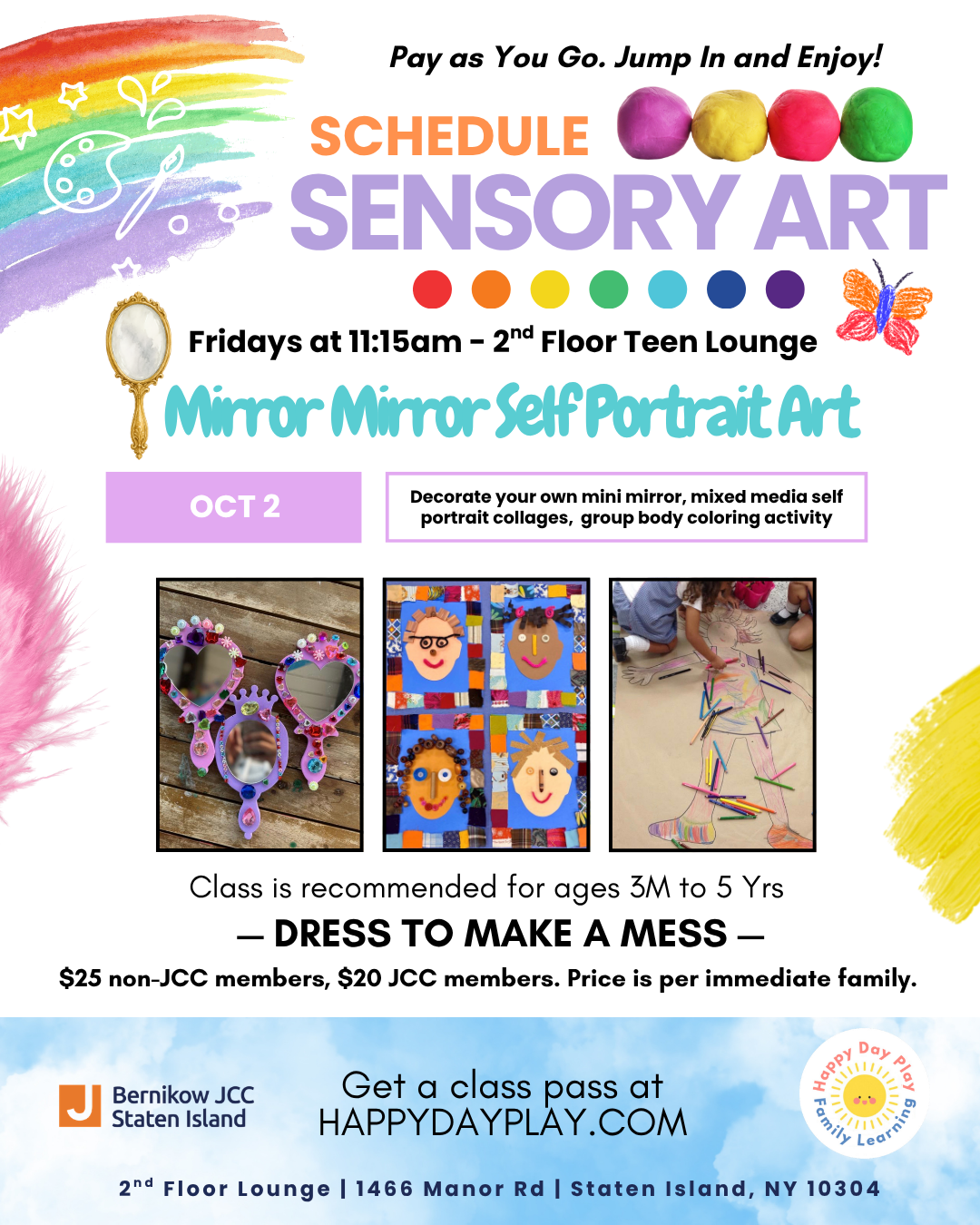
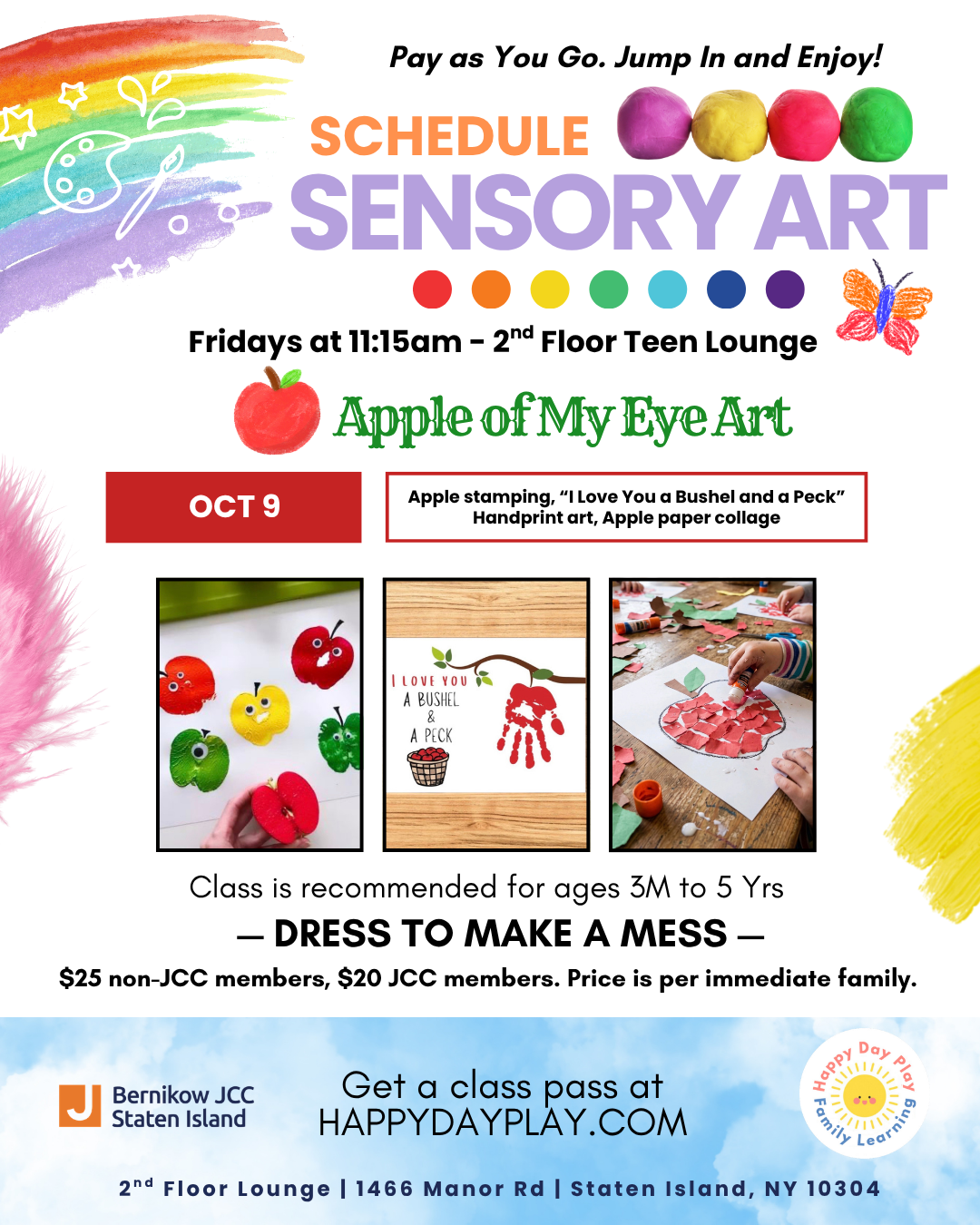
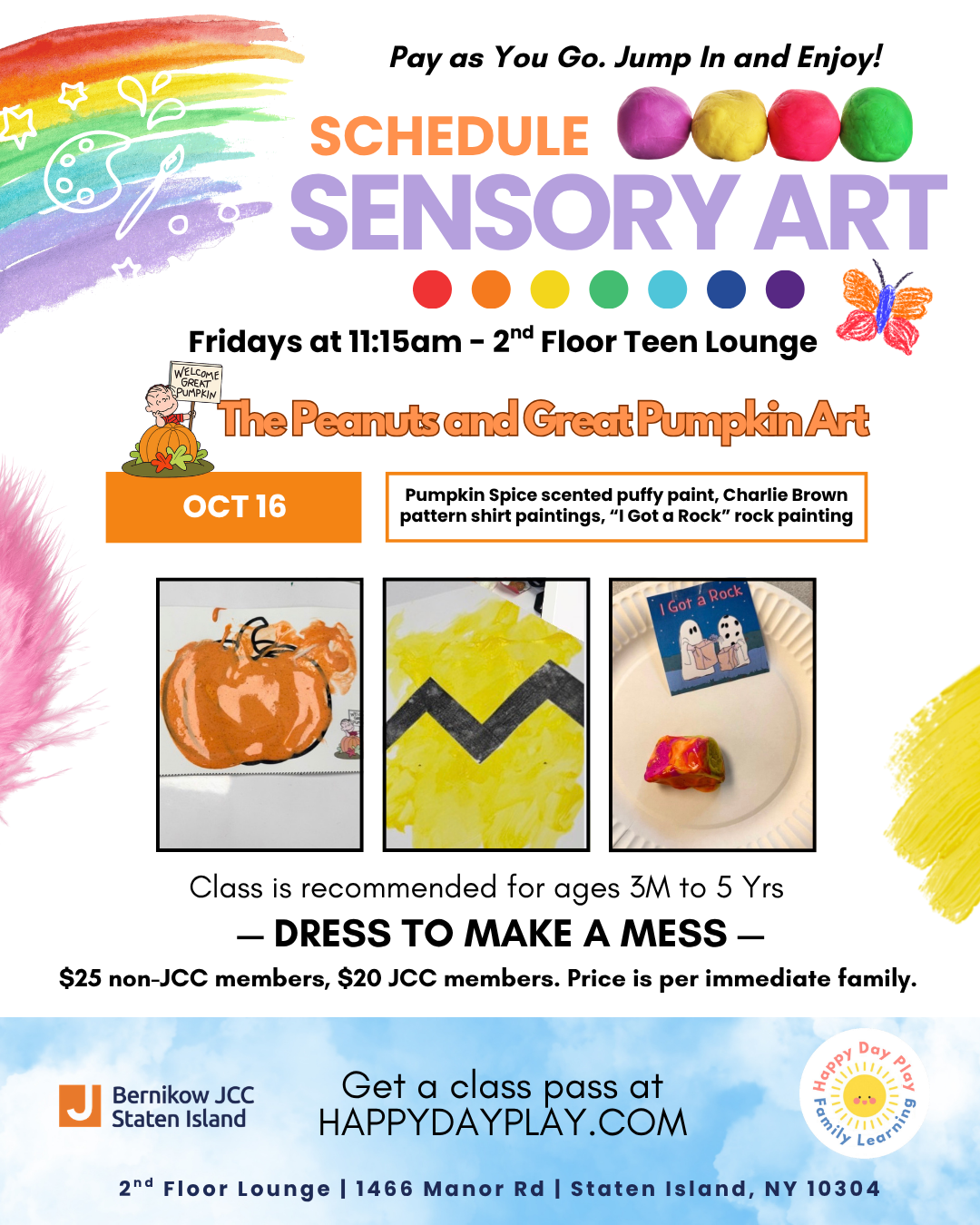
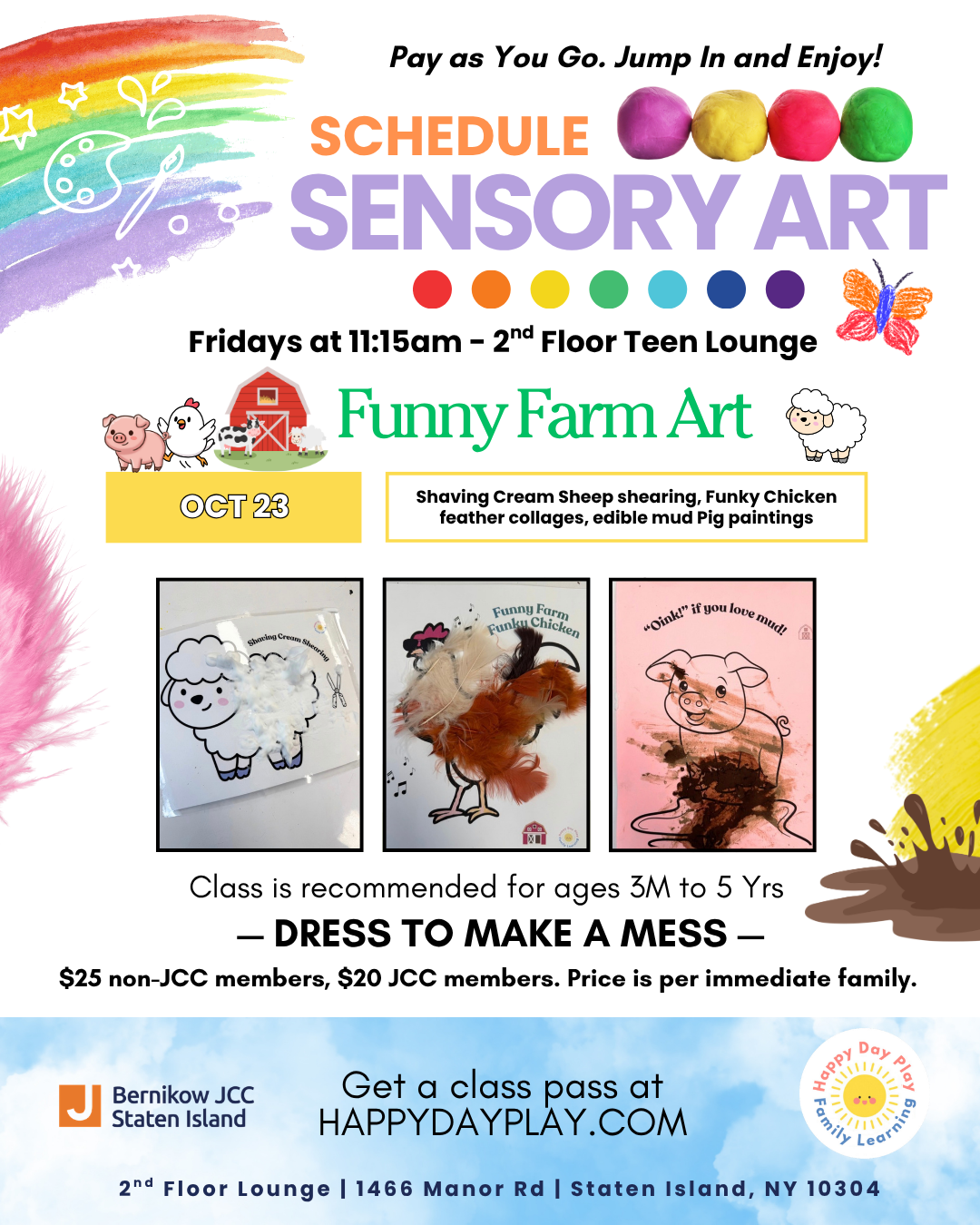
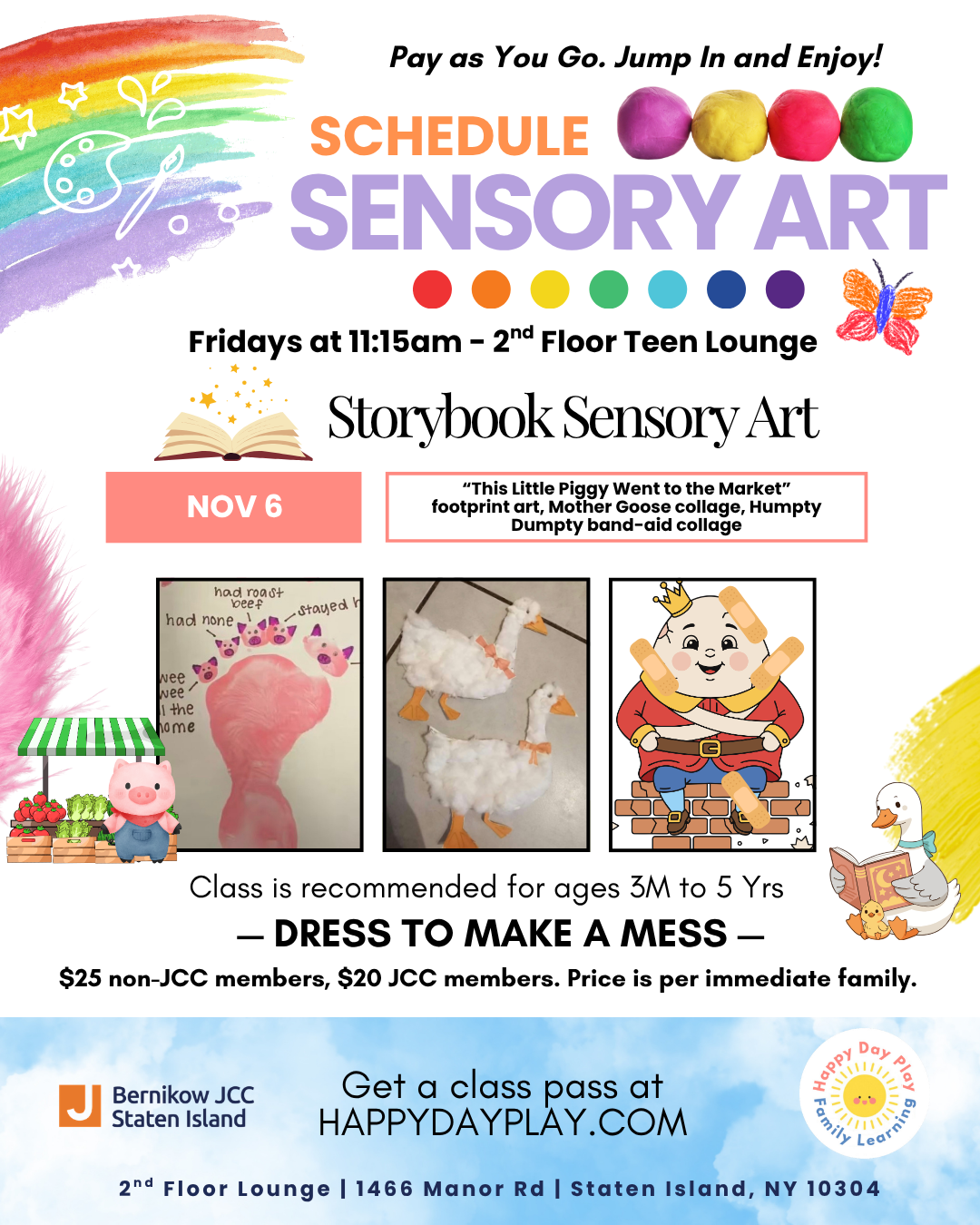
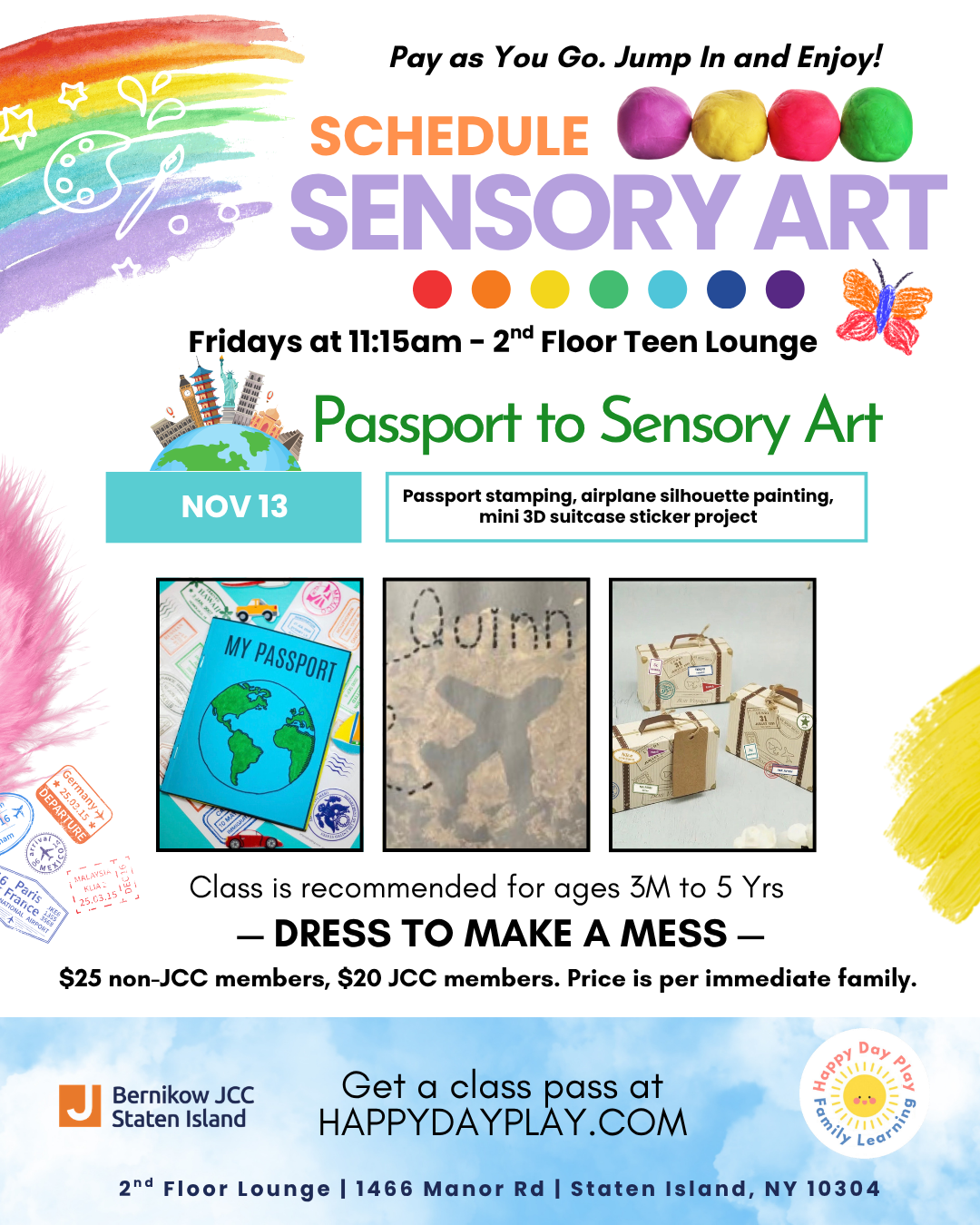
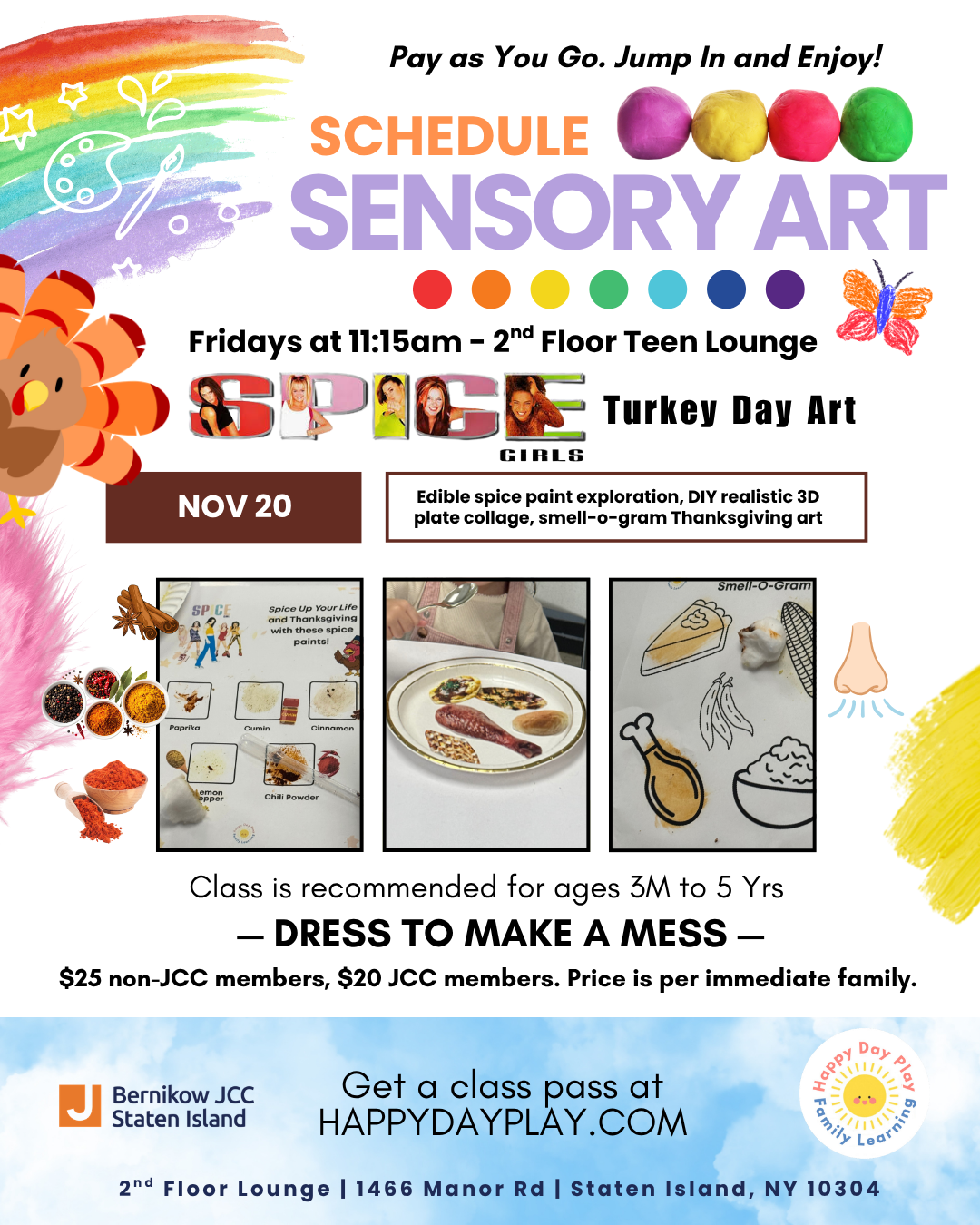
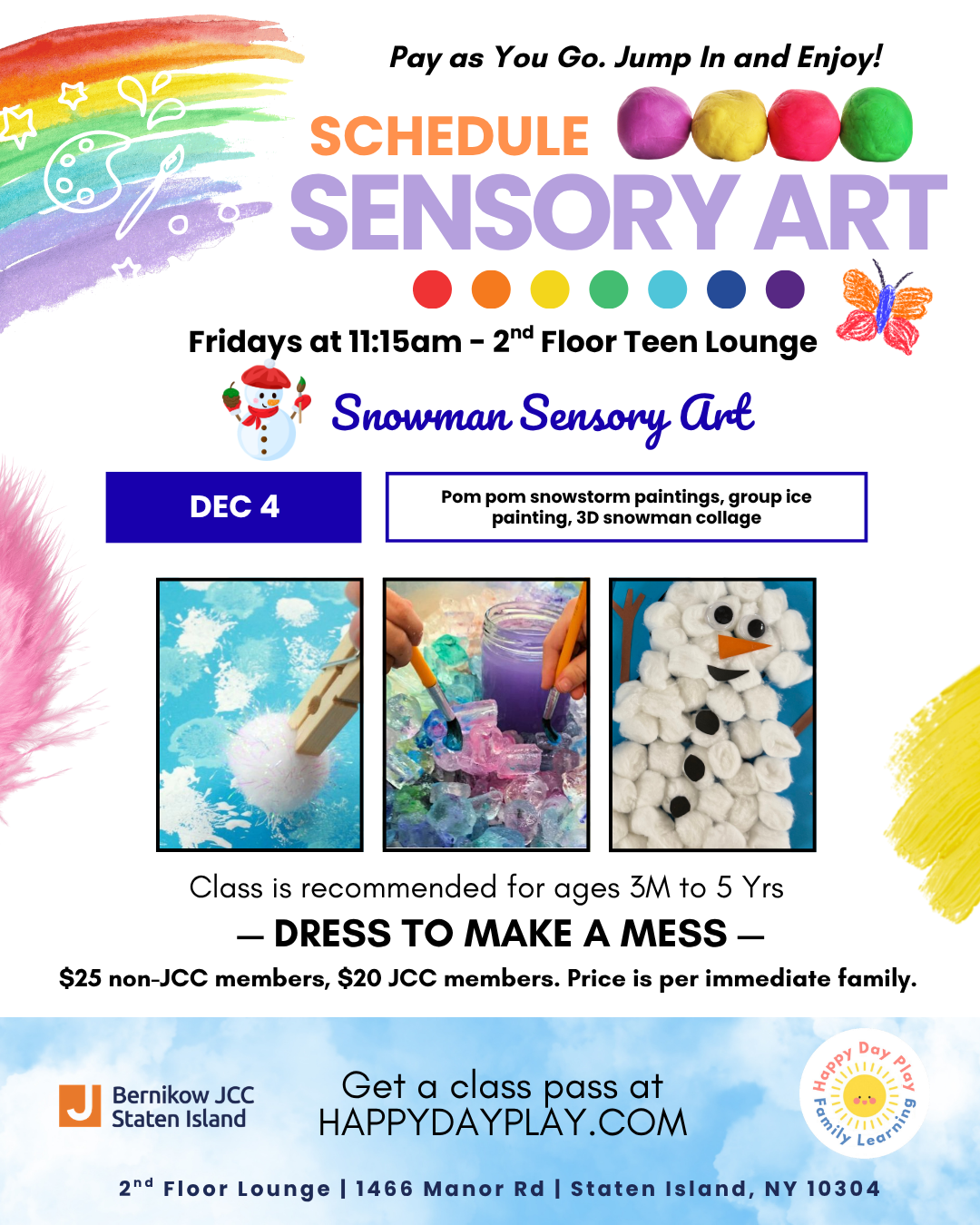
A Sensory Art class like Happy Day Play’s hands you a setup someone else built, a room someone else will clean, and a teacher who knows what to add next when your toddler loses interest. For a parent who's tired or who has tried a few setups that flopped, a class can give you a confident afternoon and a few ideas to bring home.
How Family Open Play supports sensory exploration at scale
Our Family Open Play class is built for big-body sensory experiences a house can't host as easily. Climbing, parachute play, ball play, soft equipment, and music wrapped into one. It's especially valuable in winter or extreme summer, when indoor at-home setups aren't enough on their own and going outside may be too much for you or your little ones weather wise (each family’s tolerance is different).
When you, the parent, are the one who needs the supported environment
Sometimes the at-home setup isn't failing because of your toddler, but because you're exhausted and the kitchen floor is the last place you want to be. In this case, a class is also for you and walking into a room where the activity is already prepared and someone else is leading is its own kind of rest.
Sensory play for 1-year-olds: questions parents ask
How long should sensory play last for a 1-year-old?
Anywhere from five to 20 minutes is typical. Eight to 12 minutes is a great session! End before your child fully loses interest if you can and help them gently transition to something else. This way, they'll come back to it more readily next time because the interest is still there.
My child barely engages with sensory bins. Am I doing it wrong?
Probably not. Some 1-year-olds dive into a sensory trays whereas others observe, touch one finger to the oats and then walk away. Both are learning and both are age and developmentally appropriate reactions. Try simpler setups, narrate gently and follow their pace. The NAEYC guidance on developmentally appropriate practice consistently centers the child's own pace.
Do I need special supplies to make a sensory bin?
No. Your kitchen has nearly everything! A few small cups, a shallow tray, a beach towel and basic pantry items get you through months of sensory play.
How often should we do sensory play?
A few times a week is plenty. For instance, two or three short, focused sessions, paired with lots of normal play, books, music and outside time, is a wonderful rhythm for a 1-year-old.
A printable quick start: five sensory setups for this week
Tape this to your fridge if you want a small plan.
Monday: dry oat tray with scoop and cup, 10 minutes before lunch.
Tuesday: water and ice tray on a beach towel, 15 minutes in the kitchen.
Wednesday: textured walking path with three fabrics, between morning snack and outside time.
Thursday: yogurt paint on a high chair tray, right before bath.
Friday: frozen toy rescue, the long version that buys you 20 minutes of focused play.
That's the whole plan, super simple with no kits required. Sensory exploration doesn't need to be complicated.
A small invitation
If you'd rather have someone else build the bin this week, our Sensory Art class and Family Open Play are walk-in friendly at both of our Staten Island JCC locations and at our Bergen County location at Babies R Us American Dream. $25 per family, siblings included, no reservation. Check this week's schedule for a time that fits your nap window.
Key takeaways
- Sensory play is any play that engages your child's senses, and it's one of the most important and simplest things you can do in the first three years.
- You don't need a kit or a craft room. A tray, a few minutes and you on the floor is the whole setup.
- For a 1-year-old who still mouths everything, stick to taste-safe materials like cooked pasta or oats, and never leave a sensory setup unattended.
- The most important part of the bin is you. Your eye contact, narration and warmth are what turn sensory play into brain-building serve and return.
Sources & further reading 7
- Center on the Developing Child at Harvard University. (n.d.). Brain Architecture. Harvard University. developingchild.harvard.edu
- Center on the Developing Child at Harvard University. (n.d.). Serve and Return. Harvard University. developingchild.harvard.edu
- Yogman, M., Garner, A., Hutchinson, J., Hirsh-Pasek, K., & Golinkoff, R. M. (2018). The Power of Play: A Pediatric Role in Enhancing Development in Young Children. Pediatrics, American Academy of Pediatrics. publications.aap.org
- American Academy of Pediatrics. (n.d.). Choking Prevention. HealthyChildren.org. healthychildren.org
- American Academy of Pediatrics. (n.d.). Water Safety and Young Children. HealthyChildren.org. healthychildren.org
- ZERO TO THREE. (n.d.). Tips on Learning Through the Senses. ZERO TO THREE. zerotothree.org
- National Association for the Education of Young Children. (n.d.). Developmentally Appropriate Practice (Position Statement). NAEYC. naeyc.org
About this article
Every article on Happy Day Play is written by Kaitlynn Blyth herself, then checked against our published standards before it goes live. You can read exactly how we research, verify and fact-check our work, and how we use and limit AI, in the policies below.
Last fact-checked June 1, 2026
Read More About Art and Sensory Play