Why Risky Play Is Good for Your Toddler (and How to Allow It Safely)
Risky play sounds like the opposite of careful parenting. It's one of the most useful things you can allow. A Family Life Educator explains the real benefits of risky and outdoor play for toddlers, the difference between a risk and a hazard, and how to step back without hovering.
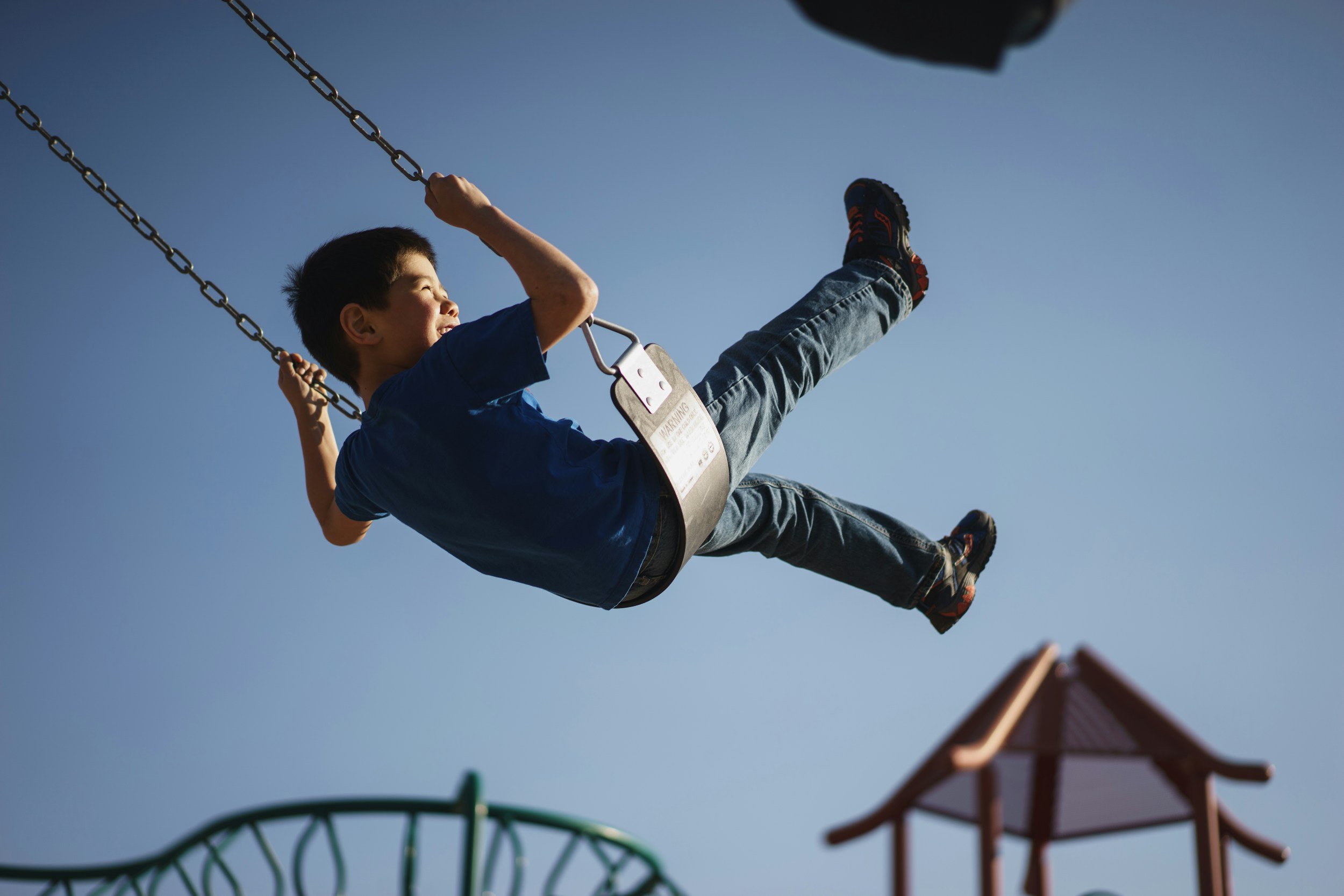
A risk is a challenge a child can see, weigh and decide about for themselves
Your toddler is halfway up the play structure, higher than you'd like, and your hand is already reaching out. Every instinct says catch them, lift them down, steer them toward the safe little slide. Hold that thought for a second. The climb they're attempting, the one making your stomach drop, is doing more for them than the safe slide ever could. Letting toddlers take small, real risks is one of the most evidence-backed things you can do for their development, and it tends to make them safer over time, not less safe.
If the phrase "risky play" makes you flinch, you're the parent this was written for.
What "risky play" actually means (and what it doesn't)
Risky play has an unfortunate name. It conjures images of unsupervised kids and trips to the ER, which is the opposite of what researchers mean. The Canadian Paediatric Society, in a 2024 position statement, defines risky play as thrilling, exciting free play that carries some uncertainty and a chance of physical injury. Picture a toddler deciding how high to climb, how fast to run down a grassy hill, whether to jump off the low wall. The thrill is the point. That flutter of "can I do this?" is a child running a small experiment on themselves.
What risky play is not: it isn't reckless, and it isn't unsupervised. The same statement is clear that risky play doesn't mean ignoring safety, leaving a child alone in a dangerous spot, or pushing a child past their own comfort level. You're right there with them. You've checked the ground. You're simply not doing the climbing for them.
Risk versus hazard: the difference that changes everything
Here's the distinction that should reframe how you watch your kid at the playground. A risk and a hazard are not the same thing, and learning to tell them apart is most of the job.
A risk is a challenge a child can see, weigh and decide about for themselves: how high to climb, how fast to pedal, whether to balance along the log. The child runs the choice, sized to their own nerve and skill.
A hazard is a a danger the child can't reasonably spot or manage, like a cracked branch on the tree they're about to grab, or a slide that isn't bolted down and could tip. Hazards carry no upside. They teach a child nothing.
That gives you a clean rule worth memorizing: scan for hazards and remove them, then step back from the risks and let your child take them. You're not choosing between safe and dangerous. You're clearing out the genuine dangers so your child can practice handling the manageable ones. The Canadian Paediatric Society sums up the mindset with a line worth taping to the fridge: keep children as safe as necessary, not as safe as possible.
The six types of risky play, with toddler-sized examples
Norwegian researcher Ellen Sandseter watched how young children actually play and sorted risky play into six types. Each one shows up in toddler form, scaled way down from the dramatic version the name suggests.
Heights: climbing the low play structure, scrambling onto a boulder, balancing on a curb, with the risk of a small fall.
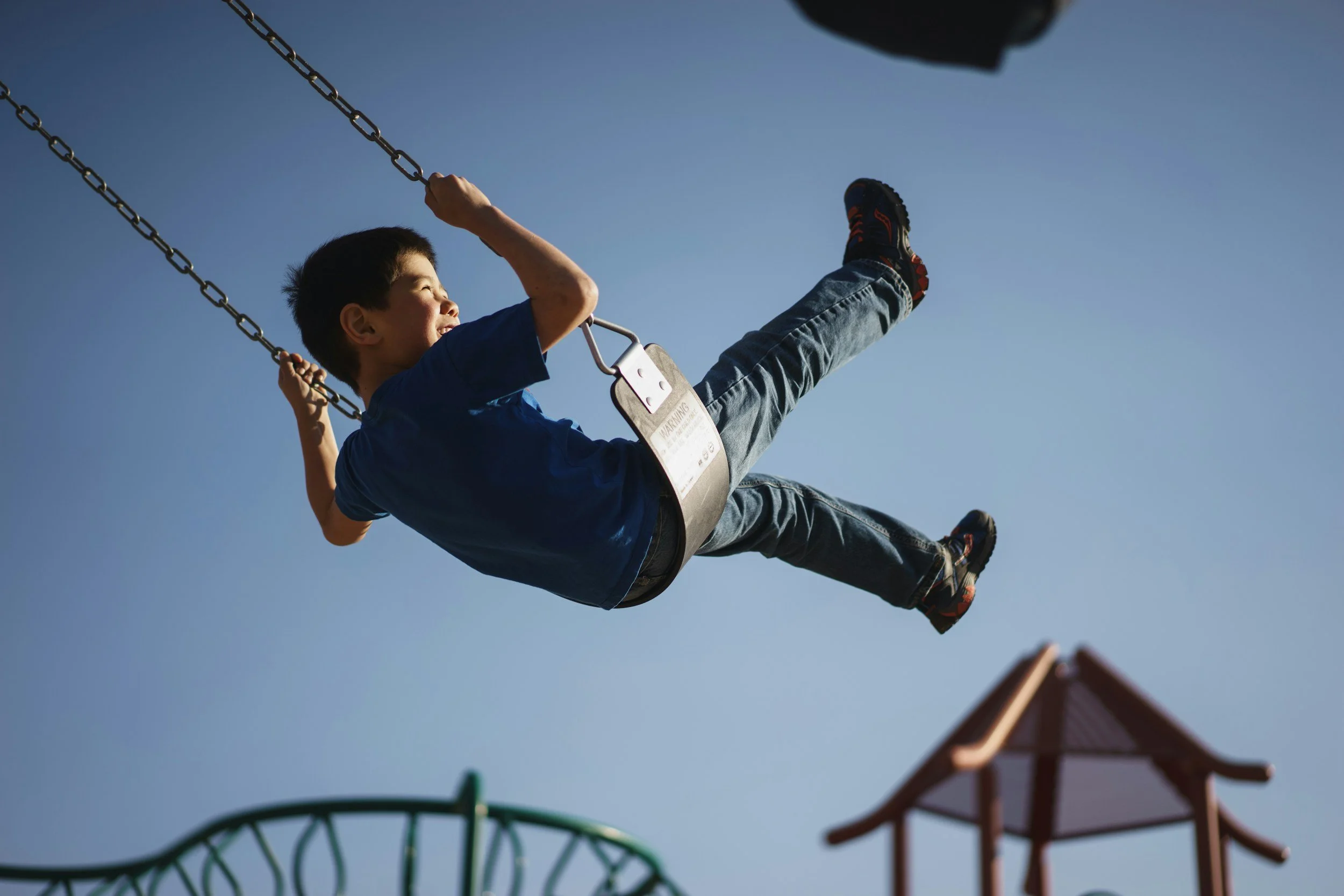
Speed: running flat out down a gentle slope, swinging, spinning until dizzy, a first wobble on a push bike.
Tools and elements: holding a real cup, digging with a sturdy stick, splashing at the water table, helping pour, all supervised.
Rough and tumble: wrestling, chasing, piling onto a willing grown-up on the floor.
Near natural features: wading at the edge of a calm creek, walking a log over a dip, poking around rocks while you stay close.
Getting "lost" within sight: rounding the bush to the far side of the yard, a few steps of "I did it myself" while you keep eyes on.
Notice that none of these needs a cliff or a power tool. For a 2-year-old, risky play is mostly low walls, fast running and the occasional good stick.
What the research says risky play builds
The evidence here is strong and growing, and it points one direction. A 2015 systematic review led by Mariana Brussoni examined 21 studies on risky outdoor play and found overall positive effects on children's health, most consistently more physical activity and better social skills, with little evidence that risky play raises the likelihood of injury. A 2026 scoping review went wider, screening more than 5,000 references and analyzing 40 studies. Every one of the 40 reported positive associations, clustering around resilience and confidence, wellbeing, physical skills and a child's sense of autonomy.
Three things risky play reliably builds:
Confidence and a steadier nervous system: handling a scary-but-doable challenge and coming out fine is how a child learns "I can do hard things." That review flagged anxiety prevention as a recurring benefit, and a long-running theory from Sandseter and her colleague Leif Kennair holds that thrilling play is how children naturally face down everyday fears like heights, so the fear fades instead of hardening. This is a well-supported association and a strong theory, not proof that one afternoon at the park prevents anxiety.
Real physical skill and body awareness: balance, coordination and a sense of where their body is in space. A kid who gets to climb and wobble gets better at not falling.
Judgment: every time a child weighs "can I make that jump?" and decides, they practice real risk assessment. A child who never gets to make the call never learns to make it well.
The bigger picture is the part most parents miss. The American Academy of Pediatrics, in its clinical report The Power of Play, argues that play is how children build executive function and self-regulation, the brain skills behind focus, planning and managing impulses. Risky, physical, outdoor play is that engine running at full tilt.
Why our own fear gets in the way
None of this is really about the playground. It's about us as parents.
Parental anxiety is the biggest reason risky play has shrunk, and the research names it directly. That 2026 review listed parental worry, liability fears and a broad cultural drift toward risk aversion as the main barriers keeping kids off the climbing frame. The instinct is loving. The effect can backfire.
Here's the uncomfortable part. When you gasp, rush in and pluck your child off the structure, you teach a lesson you never meant to: this is dangerous, you can't do it, be afraid. A hovered-over child doesn't learn the world is safe, but instead, they learn they're fragile. Your fear is contagious, and toddlers catch it fast.
The fix starts with your own nervous system. Before you react, take the half-second to ask whether you're looking at a hazard or a risk. If it's a manageable risk, manage yourself instead of the child. Drop your shoulders, keep your voice level, and let them work. You can even name it out loud without alarm: "You're up high. I'm right here." That tells a child two true things at once, that you see the challenge and that you trust them with it.
How to allow risk safely, step by step
This is not a free-for-all. Supported risk has a method, and it's simple.
Scan first, then step back: sweep the area for true hazards (broken equipment, a hard edge over concrete, water too deep, a road too close), fix or move away from those, then back off the risks your child has chosen.
Pause before you swoop: when your child reaches an edge, count to three before you step in, because most of the time they'll find their own footing and the pause is where the learning lives. Stay close enough to catch a real fall, far enough that the choice stays theirs.
Use words that steady, not startle: instead of "be careful," which is vague and faintly alarming, try "you're up high, where will your foot go next?" That hands a toddler something to do with the nervous feeling.
Know your own child's edge: a cautious kid and a fearless kid need opposite things from you, where the careful one needs gentle encouragement and no pressure, and the bold one needs you scanning a step ahead for the hazards they'll never notice.
Easy ways to add a little good risk this week
You can start small.
At the playground: let them climb the structure built for their age, even the parts that make you nervous, and resist narrating every move, and let them take the slide a little faster.
In the backyard or a local park: a low log to balance on, a small slope to run down, a stick to dig with, a puddle to stomp, and some roughhousing on the grass.
Indoors on a rainy day: couch-cushion mountains to climb and crash into, a pillow pile to jump in, a little supervised rough and tumble, because risk doesn't stop at the back door.
If you want a setting where this happens by design, with a grown-up right beside the child, that's the whole idea behind our Family Open Play class and the Happy Trails outdoor summer program, where kids get room to climb, run and test themselves while a trusted adult stays close. It runs on the same principle as how play-based learning actually works.
The family life education view: your calm is what makes risk safe
Most writing about risky play aims everything at the child. The piece nearly everyone leaves out is the grown-up.
A child takes braver, smarter risks when a trusted adult is calmly nearby. That's the whole mechanism. The Power of Play report describes how the back-and-forth between parent and child during play, the "serve and return," helps regulate a child's stress response. Your steady presence is what lets a toddler venture toward the scary thing, glance back to find your face, and try it. You aren't the safety net that stops the play. You're the secure base that makes the play possible.
In our Family Open Play class, the thing we coach most often isn't the child, it's the grown-up's face. A toddler will read your expression before they decide whether a wobbly climb is thrilling or terrifying, so a calm adult two feet away is the most useful piece of safety equipment in the room.
That reframes what letting go even means. Allowing your child a manageable risk isn't stepping back from your job. It's the deepest part of doing it: telling your child, with your calm body and your steady face, that you believe they can. Supported risk is a form of trust, built one low wall at a time, at your child's pace and not a chart's.
Risky play FAQs
Is risky play safe for a 1-year-old? Yes, scaled to them. For a new walker, risky play looks like cruising along the furniture, climbing onto a low cushion, or toddling a few steps away and back. The principle holds at every age: remove hazards, allow manageable risks, stay close.
What's the difference between a risk and a hazard? A risk is a challenge the child can see and decide about, like how high to climb. A hazard is a danger they can't recognize or manage, like a broken rung. You remove the hazards and allow the risks.
Will allowing risk make my child reckless? The evidence points the other way. Children who get to practice judging and taking manageable risks tend to read danger better, not worse. Recklessness is more common in kids who never got the practice.
How do I handle a cautious child versus a fearless one? Let the cautious child set the pace with no pressure, and cheer the small wins. Stay a step ahead of the fearless child, scanning for the true hazards they'll happily ignore, while letting them have the risks they can actually handle.
The next time your toddler eyes a climb that makes you nervous, check the ground, plant yourself within arm's reach, and let them try. The held breath is yours to manage. The climb is theirs.
Key takeaways
- Risky play means thrilling, exciting free play with a small chance of injury, like climbing, running fast or jumping off a low wall. It's supervised and sized to your child, not reckless or unsupervised.
- Learn the difference between a risk and a hazard. A risk is a challenge your child can see and decide about; a hazard is a danger they can't manage. You remove hazards and allow risks.
- The research is consistent: risky outdoor play is linked to more physical activity, stronger confidence and better judgment, with little evidence that it raises injury rates.
- Your calm is the active ingredient. Scan for hazards, then step back, keep your voice steady, and let your child take the manageable risk while you stay within reach.
Sources & further reading 6
- Beaulieu, E., & Beno, S. (2024). Healthy childhood development through outdoor risky play: navigating the balance with injury prevention. Paediatrics & Child Health, Canadian Paediatric Society. Outdoor Risky Play Position Statement
- Canadian Paediatric Society. As safe as necessary: a new approach to play. Canadian Paediatric Society. As Safe as Necessary
- Brussoni, M., Gibbons, R., Gray, C., et al. (2015). What is the relationship between risky outdoor play and health in children? A systematic review. International Journal of Environmental Research and Public Health. Risky Outdoor Play and Health: A Systematic Review
- Gray, T., Down, M. J. A., Mann, J., et al. (2026). Risky outdoor play and adventure education in nature for child and adolescent wellbeing: a scoping review. Behavioural Sciences. Risky Outdoor Play: A Scoping Review
- Sandseter, E. B. H. (2007). Categorising risky play: how can we identify risk-taking in children's play? European Early Childhood Education Research Journal. The Six Categories of Risky Play
- Yogman, M., Garner, A., Hutchinson, J., et al. (2018). The power of play: a pediatric role in enhancing development in young children. Pediatrics, American Academy of Pediatrics. The Power of Play
About this article
Every article on Happy Day Play is written by Kaitlynn Blyth herself, then checked against our published standards before it goes live. You can read exactly how we research, verify, and fact-check our work, and how we use and limit AI, in the policies below.
Last fact-checked June 9, 2026
Read More About Play