9 Amazing Activities for 2-Year-Olds That Support Learning, Creativity and Growth
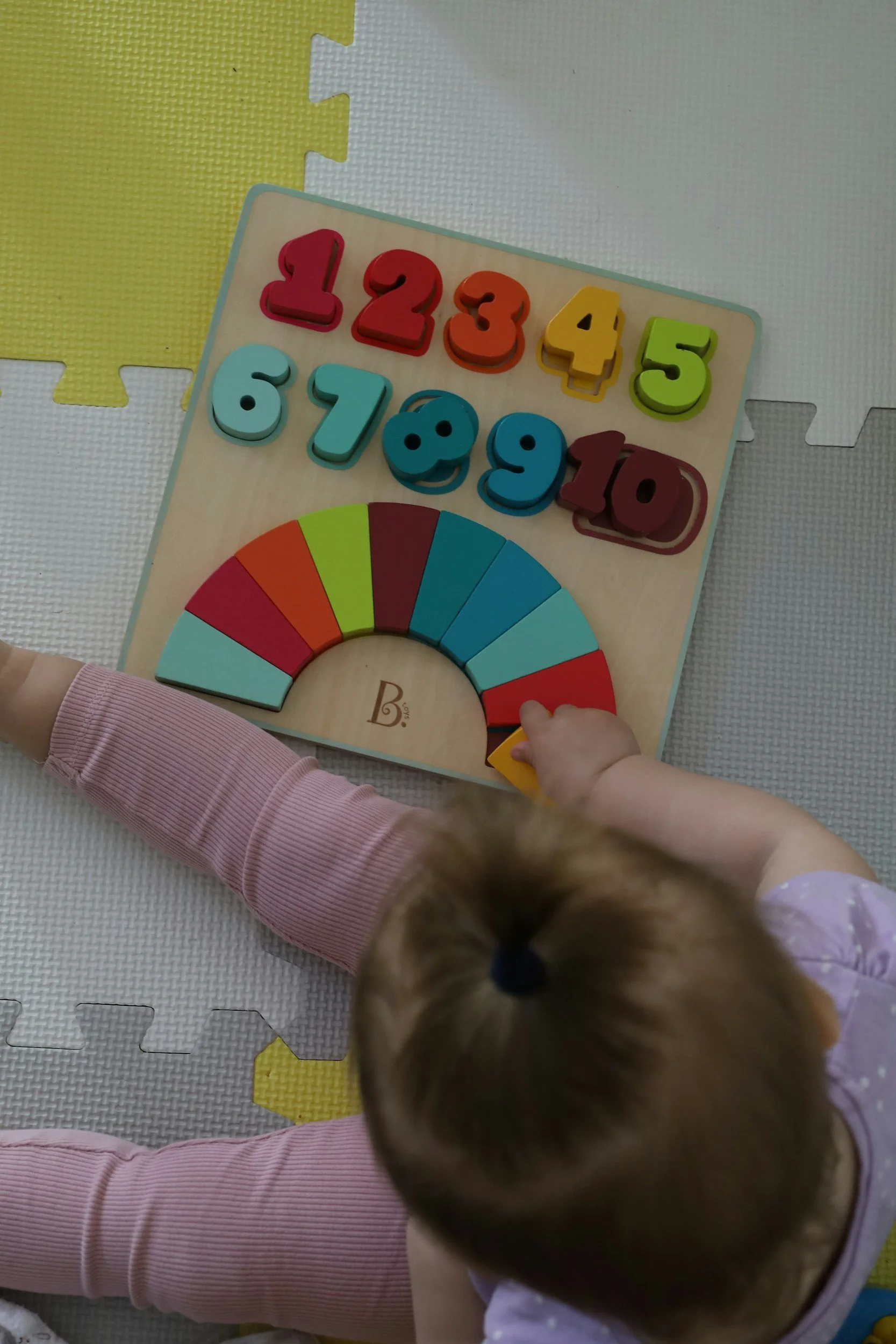
A 2-year-old builds problem-solving and fine motor skills while playing with a simple puzzle at home.
Curiosity and boundless energy define life with a 2-year-old. At this stage, children explore their world with fresh eyes, learning through movement, repetition and discovery. Choosing the right activities can meaningfully support early development, helping toddlers build foundational skills while having fun.
For parents and caregivers, finding expert-backed guidance can feel overwhelming. The good news is that simple, intentional activities make a lasting difference. Here are nine simple and age-appropriate activities designed to spark creativity, support learning and encourage healthy development. Each one offers an opportunity to nurture your child’s growing mind and body, one playful moment at a time.
Why Play-Based Learning Matters at Age 2
Play is central to early childhood development, and that remains true in 2026, regardless of changing trends or technology. At age 2, children are rapidly developing language, motor skills and emotional awareness. Through play, they begin to make sense of the world and their place in it.
Developmental milestones at this age span several areas. Cognitively, toddlers start identifying shapes and colors and using short phrases. Physically, skills such as running, climbing and stacking improve quickly. Socially and emotionally, children show early signs of empathy and curiosity about others. Well-chosen activities can support all of these areas in a balanced way.
Experts agree that both structured and unstructured play are important. Guided activities, such as simple art projects or music sessions, offer opportunities to practice new skills with adult support. Free play encourages creativity, independence and problem-solving. Research published in pediatric development journals continues to link varied play experiences with stronger language and reasoning skills by preschool age.
Technology may play a role in modern childhood, but specialists recommend moderation. Interactive tools can supplement learning, but hands-on, real-world play remains essential for sensory development and physical growth. Pediatric guidelines continue to advise limiting passive screen time in favor of active engagement.
To support well-rounded development, experts including those at Happy Day Play Family Learning recommend that caregivers:
Offer a mix of guided and free-play activities each week
Encourage movement, creativity and social interaction
Follow the child’s interests and developmental pace
Use technology thoughtfully, not as a replacement for play
The message from pediatricians, early childhood educators and family educators is consistent. Intentional play supports school readiness, emotional health and lifelong curiosity.
Nine Activities for 2-Year-Olds to Try in 2026
With so many options available, choosing activities for a 2-year-old can feel daunting. The most effective ones share a few key traits. They are safe, engaging and adaptable, and they support multiple areas of development.
The following nine activities are thoughtfully selected to combine learning and fun. Each can be adjusted for different environments and ability levels, making them accessible for families, caregivers and early educators alike.
1. Sensory Art Exploration
Sensory art allows toddlers to explore textures, colors and movement through hands-on creativity. Finger painting with washable, non-toxic paint, textured collages made from fabric or paper, and edible or homemade dough are all age-appropriate options.
Set up in a space that allows for mess and encourage your child to talk about what they are creating. Describing colors and textures supports early language development while fostering confidence and self-expression.
2. Outdoor Nature Walks and Simple Scavenger Hunts
Outdoor play supports physical health and cognitive growth. Nature walks expose toddlers to new sights, sounds and vocabulary. Adding a simple scavenger hunt, such as spotting a leaf, rock or flower, turns a walk into an interactive learning experience.
Choose safe, accessible paths and allow time for exploration. Outdoor activity has been linked to improved mood, focus and sleep in young children.
3. Interactive Storytime and Puppet Play
Storytime helps build language skills and emotional awareness. Toddlers respond well to repetition, rhythm and familiar characters. Using puppets or stuffed animals to act out stories keeps children engaged and encourages participation.
Pause to ask simple questions or invite your child to mimic actions. A consistent storytime routine also strengthens caregiver-child bonds.
4. Water Play and Bath-Time Discovery
Water play supports sensory exploration and motor development. Pouring, scooping and floating toys help toddlers practice coordination while learning basic concepts such as full and empty or sink and float.
Always supervise closely and use non-slip surfaces. With the right setup, bath time becomes an opportunity for early science learning.
5. Music, Movement and Dance
Music naturally encourages movement, listening and memory. Simple activities such as freeze dance, clapping games or homemade instruments help toddlers explore rhythm and sound.
Family participation enhances social development, and research continues to link music exposure with language growth and emotional regulation.
6. Block Building and Open-Ended Construction
Block play supports spatial awareness and problem-solving. Wooden, foam or magnetic blocks allow toddlers to stack, balance and experiment.
Offer both guided challenges and free play. Playing alongside others introduces early lessons in sharing and cooperation.
7. Pretend Play and Dress-Up
Imaginative play allows toddlers to explore roles, emotions and storytelling. Simple costumes, play kitchens or animal masks encourage creativity and social-emotional development.
Caregivers can join by asking open-ended questions or following the child’s lead. Pretend play supports empathy, language and flexible thinking.
8. Sorting and Matching Games
Sorting activities build early math and cognitive skills. Everyday items, such as socks, blocks or snacks, can be grouped by color, size or shape.
These activities can be easily integrated into daily routines and adjusted as skills develop.
9. Indoor Obstacle Courses and Movement Challenges
Gross motor play helps toddlers build strength, balance and coordination. Indoor obstacle courses made from pillows, tunnels or taped lines turn movement into a fun challenge.
Ensure soft surfaces and close supervision. Active play supports physical health and provides a positive outlet for energy.
How to Choose the Best Activities for Your 2-Year-Old
Choosing the right activities for a 2-year-old can feel overwhelming, especially with so many options available. The most effective approach is to focus on what sparks your child’s curiosity while supporting key areas of development. By considering a few guiding factors, parents and caregivers can create a balanced routine that helps toddlers learn, explore and thrive.
Consider Your Child’s Interests and Developmental Stage
Every child develops at a different pace, so start by observing what captures your toddler’s attention. Some 2-year-olds gravitate toward music and movement, while others prefer building, puzzles or art. Select activities that align with your child’s interests, abilities and comfort level. Safety should always come first, with age-appropriate materials and well-supervised spaces.
Balance Structured and Free Play
A healthy routine includes both structured activities and unstructured play. Structured experiences, such as storytime or guided sensory art, provide gentle direction and clear purpose. Free play, including block building or imaginative dress-up, allows toddlers to explore independently and build creativity. Research on early childhood learning consistently shows that balancing both types of activities supports problem-solving, social skills and emotional growth.
Adapt for Different Abilities and Sensory Needs
Children learn in different ways, and activities should be flexible enough to meet a range of abilities and sensory preferences. Adapting activities for a 2-year-old may involve simplifying steps, offering alternative materials or providing additional support. The goal is to ensure that every child can participate comfortably and confidently.
Follow Your Child’s Lead and Observe Responses
Let your toddler’s reactions guide your choices. When an activity sparks excitement or focus, allow time for deeper exploration. If interest fades, transition calmly to something new. Regular observation helps caregivers adjust routines and keep learning experiences positive and engaging.
Encourage Social Play and Create an Activity Menu
Including siblings or peers in activities helps build early social skills, such as sharing and cooperation. For busy households, creating a flexible daily activity menu can simplify planning and empower toddlers to make choices. Options might include:
Sensory art station
Nature walk basket
Storytime nook
Music and dance corner
Simple sorting games
This approach keeps activities fresh while supporting a wide range of developmental needs.
Setting Up a Safe and Engaging Play Environment at Home
A well-designed play environment supports meaningful activities for a 2-year-old and encourages independence. Thoughtful organization and safety measures help children explore confidently while reducing stress for caregivers.
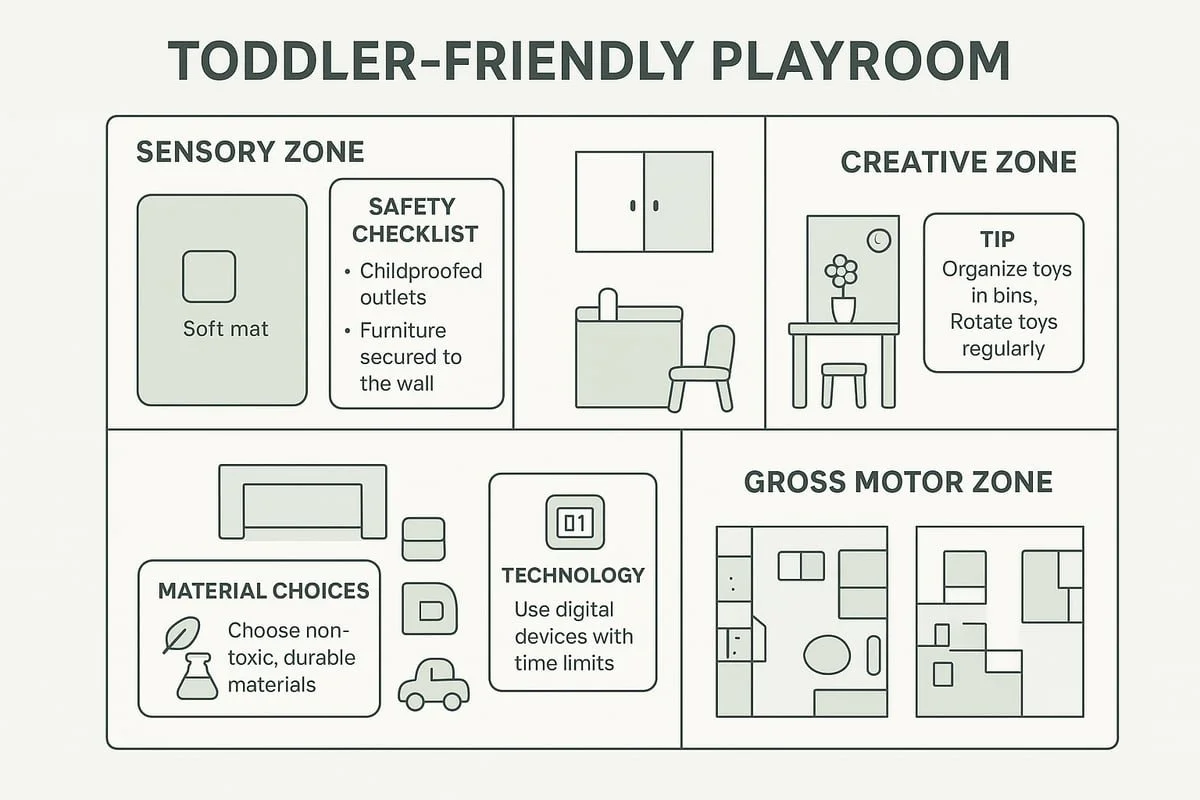
Example layout of a toddler-friendly playroom at home
Key Elements of a Toddler-Friendly Play Space
Safety is the foundation of any play area. Childproof spaces by securing furniture, covering outlets and choosing rounded-edge furnishings. Use non-toxic, durable materials and provide soft surfaces, such as mats or rugs, to cushion falls. All toys and equipment should meet current safety standards for toddlers.
Organizing for Easy Access and Cleanup
Store toys and supplies in low, open bins so children can choose materials independently. Picture labels help toddlers identify where items belong and encourage early responsibility. Rotating toys regularly maintains interest and prevents clutter. Creating defined areas for art, sensory play and movement helps children understand how to use the space.
Incorporating Sensory, Creative and Gross Motor Zones
Designate areas for different types of play. Sensory zones may include bins with safe objects to touch or stack. Creative spaces can feature washable art supplies or building materials. Gross motor areas should allow for climbing, crawling and jumping on soft equipment. In smaller homes, foldable mats and portable bins make it easy to adapt the space as needed.
Using Technology Wisely
Technology should be used with intention. Limit screen time and focus on high-quality, interactive content. Keep devices in shared spaces and supervise use. Digital play should complement, not replace, hands-on activities that support physical, social and sensory development.
Sample Playroom Layouts
In apartments, vertical storage and collapsible play items help maximize space. In larger homes, dividing a room into zones using rugs or shelving creates structure without limiting flexibility. As children grow, the play environment should evolve with their interests and abilities.
Frequently Asked Questions About Activities for 2-Year-Olds
How much time should my 2-year-old spend in structured activities each day?
Experts typically recommend 30 to 60 minutes of structured play daily, balanced with plenty of unstructured free time.
Are group classes or home activities better for social development?
Both offer benefits. Group settings provide opportunities for peer interaction, while home activities with siblings or friends also support cooperation and communication.
What if my toddler loses interest quickly?
Short attention spans are normal at this age. Offer brief, engaging activities and follow your child’s cues. Rotating toys and themes helps keep playtime fresh.
How do I know if an activity is developmentally appropriate?
Look for activities that match your child’s current abilities and interests. Observe how your toddler responds and adjust as needed. Developmental milestones can also offer helpful guidance.
Where can I find more ideas and resources?
Trusted parenting and early childhood education resources, local libraries and community programs are excellent places to find age-appropriate activity ideas for 2-year-olds. There are plenty of pay as you go grown up and me classes at Happy Day Play Family Learning in the NYC area.
The Bottom Line
Thoughtfully chosen activities help 2-year-olds learn through play while supporting healthy development. By offering a mix of creative, physical and social experiences, families can create an environment that encourages curiosity, confidence and connection today and for years to come.