How to Handle a Picky Eater Toddler Without the Mealtime Battles
Your toddler won't eat the dinner they loved last week, and you're tired of the standoff. A Family Life Educator breaks down the calm, evidence-based approach to picky eating, from the division of responsibility to why pressure quietly backfires.
Picky eating tends to ramp up right around age 2
You made the dinner your child ate happily three days ago. Tonight they take one look, push the plate two inches away and announce they're "all done" before a single bite. You're standing there negotiating with someone who can't reliably put on their own socks, and some part of you is wondering whether they're getting enough to eat, whether you're doing this wrong, whether this is the thing that finally breaks you.
You're not doing it wrong. Picky eating is one of the most ordinary things a toddler does, and almost every family lands right here.
Here's the part that should help you breathe: the calmest approach is also the one with the most research behind it. You can stop fighting about food and end up with a kid who eats better, not worse. This is how.
First, the relief: picky eating is usually a normal phase
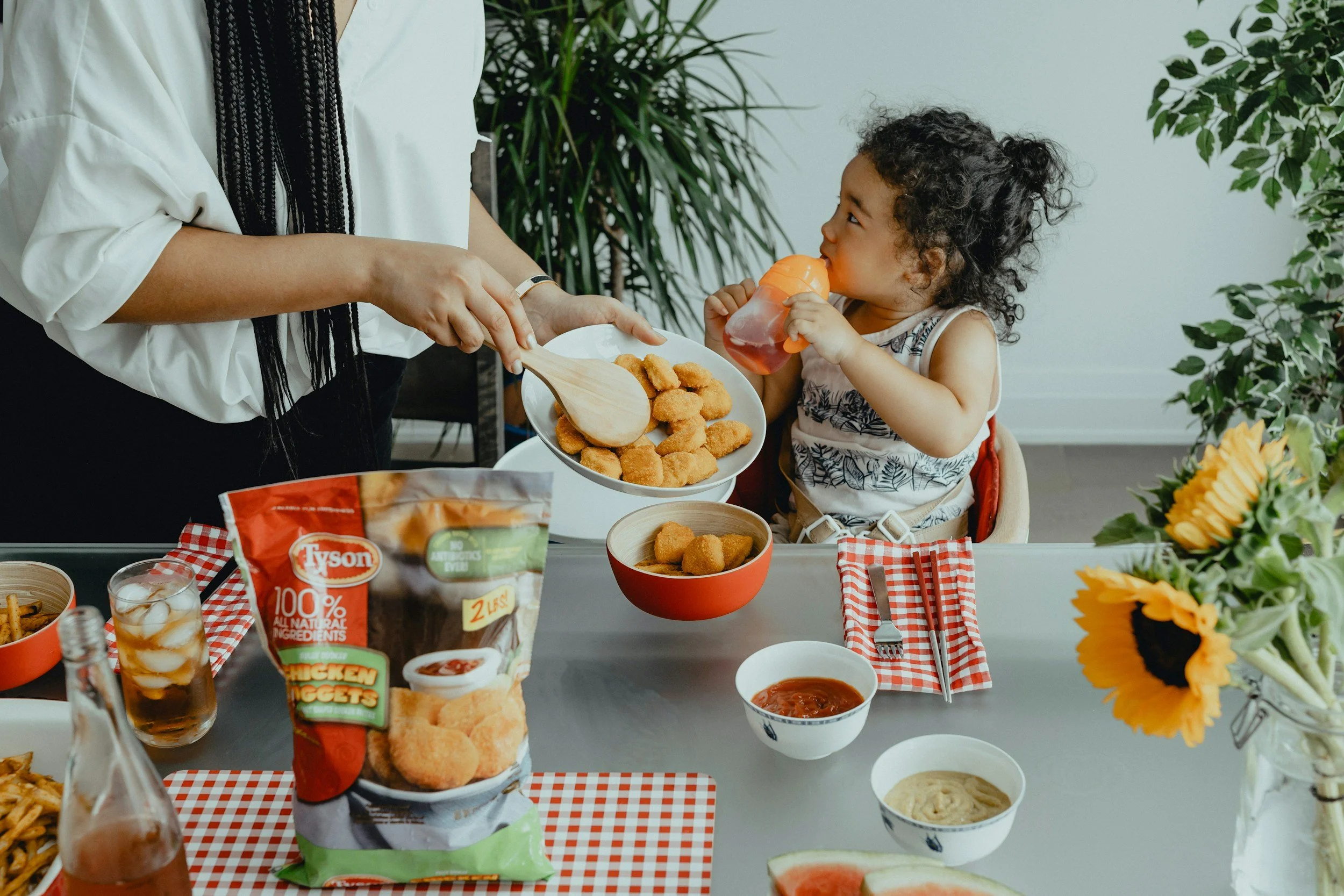
Picky eating tends to ramp up right around age 2, and the timing isn't random. Zero to Three notes that "picky" eating, being unwilling to try new or non-favorite foods, usually starts around 2, the same stretch when toddlers push for independence everywhere else: refusing the bath, bolting in parking lots, fighting the car seat. Food is one of the few things a small child gets to fully control, so it's the thing they control.
There's a biology piece too. After a baby's fast first-year growth, weight gain slows in the toddler years, and appetite slows right along with it. A toddler who "ate everything" at 11 months and seems to live on air and crackers at 2 is usually just being a 2-year-old.
This next fact takes the pressure off more than any other: toddlers don't eat in tidy, balanced daily portions, and they aren't built to. The American Academy of Pediatrics points out that a toddler's calorie intake swings a lot from one meal to the next but stays fairly steady across a full 24 hours. The lunch that looked like nothing gets balanced out by the breakfast that looked like a feast. Children come wired to regulate how much they eat. Your job is to protect that wiring, not override it.
The one idea that changes everything: the division of responsibility
Perhaps the most useful idea in all of feeding comes from dietitian Ellyn Satter, and it's called the division of responsibility in feeding. It splits the job cleanly in two, and it's endorsed by the American Academy of Pediatrics.
You're responsible for the what, the when and the where. You choose which foods get served. You set regular meal and snack times. You decide where eating happens, at the table or in the high chair, screens off.
Your toddler is responsible for whether and how much. From what you've put in front of them, they decide if they eat and how much.
That second half is where most of us get into trouble, because it means letting your child leave food on the plate without a word. No "three more bites” or airplane spoon. The moment you reach across that line and try to manage how much goes in, dinner becomes a contest, and a toddler will win a contest about their own body every time.
In one study of preschoolers, families who stuck more closely to the division of responsibility had children at measurably lower nutrition risk. Each step up in how well parents followed the approach was linked to about 21% lower odds of a child being at nutritional risk. That study looked at families at a single point in time, so it shows a strong link rather than proof the approach causes the result. Still, trusting your child's appetite isn't only the kinder move. It tracks with better eating.
What it looks like at a real, messy dinner: you set down a plate with a couple of things you know they like and one thing you're working on. You sit and eat your own food. They eat the buttered pasta, ignore the salmon, smear some peas around the rim and announce they're finished. You say "okay," and you don't reopen it. That's a win. You did your whole job.
What the research says actually works
The unglamorous stuff is the stuff that holds up. Here's what the evidence supports.
Offer new foods over and over, without pressure: It can take a child 15 to 20 tries before they accept a new food, per the AAP. One rejection means nothing. The catch is that those tries have to be low-key. A "try" where you're cheering, coaxing or bargaining doesn't do the same work as a calm, no-stakes reoffer.
Put new foods next to familiar favorites: A new food looks far less threatening sitting beside the crackers they trust. Serving family-style, with food in the middle and a mostly empty plate for them to fill, also hands toddlers a little of the control they're craving.
Let them touch, smell and play with food: Exposure isn't only tasting. The CDC suggests letting kids touch and smell food to get comfortable with it, and Zero to Three notes the more children touch and help prepare foods, the more likely they are to choose them later. A toddler who squishes a roasted carrot, sniffs it and drops it on the floor is doing real work, even when not one bite goes in.
Keep meals to about 15 to 20 minutes: Zero to Three is clear that toddler and preschooler meals shouldn't run longer than 15 to 20 minutes. A meal that drags into a 40-minute standoff helps no one. When they're done, they're done.
Eat together, and skip the play-by-play: Sit and eat the same food, screens off. Kids decide a food is safe in part by watching the people they trust eat it and like it, no commentary required.
What to stop doing at the toddler table
Some of the most natural parent moves are the ones quietly making it harder. Gently, here's what to drop.
The "one more bite" bargain: Bribing, cheering and negotiating all teach a child that eating is something they do for you, not because their body wants it. Nemours KidsHealth is blunt about it: don't fall into the negotiating trap, and threatening a punishment over food creates a power struggle, the same way bribing does.
Short-order cooking: Making a separate, guaranteed-hit meal every time the first one gets refused trains a toddler to hold out for the chicken nuggets. The AAP's advice is to serve one family meal and resist the urge to cook a backup. Putting one safe food on the plate is the fair version of this.
Pressure of any kind, even the nice kind: Researchers found decades ago that pressuring children to eat made feeding problems worse, not better. Praise like "good job eating your broccoli!" is still pressure. It tells a kid the broccoli is a chore worth rewarding.
Calling them "a picky eater" out loud: Especially in front of them. Labels stick, and a 2-year-old who keeps hearing they're "so picky" is glad to keep playing the part.
A calm mealtime routine you can actually keep
Structure does the heavy lifting that nagging never could.
Set roughly the same meal and snack times each day, with water rather than milk or juice in between. A toddler who's been grazing on crackers and sipping milk all afternoon isn't hungry at dinner, and a kid who isn't hungry is a tough customer. Predictable hunger is your friend.
Serve small on their plates. Parents routinely over-serve toddlers, and a heaping plate is overwhelming. A couple of tablespoons of a new food is plenty, and you can always offer seconds.
Give them the words for "no thanks." Teach a low-drama script and use it yourself: "You don't have to eat it. You can say, 'No thank you.'" When they're finished, "You can say, 'I'm all done'" lets them exit without a meltdown. If you're working on naming feelings in general, those same skills show up at the table, and here's more on why feeling words help toddlers manage big emotions.
End the meal cleanly. When they signal they're done, building a tower with the crackers, lobbing peas, asking to get down, take the plate without a lecture. The next meal or snack is a couple of hours away. They will not starve between now and then.
Why your own stress at the table matters
Here's the part the feeding tips usually skip: you are at this table too, and your nervous system is part of the meal.
Young children borrow calm from the adults around them. It's called co-regulation, and it isn't a metaphor. The Child Mind Institute explains that our stress can physically raise another person's stress, and our calm can help bring theirs back down, right down to stress hormones like cortisol. A wailing, plate-shoving toddler can absolutely spin you up. The first move in calming them is calming you.
This is the same skill we lean on for tantrums and hard goodbyes, and it's worth its own read: calming your own stress is the real parenting skill. At dinner it sounds like this. You feel the frustration climb when the plate hits the floor again. You take one breath before you respond. You keep your voice flat and friendly: "Looks like you're all done." A calm grown-up is the most powerful tool at the table, and it's the one nobody tries to sell you.
Letting go of the clean plate is part of this. The picture of the child who eats three balanced meals and thanks you for the kale is marketing, not childhood. Aim lower and truer: a calm table, and a kid who still trusts their own hunger.
How everyday play builds a more adventurous eater
A child who happily plunges their hands into cold spaghetti, finger paint or a bin of dried beans is practicing something that pays off at dinner. New foods are, at heart, new textures, smells and sensations. A toddler who's comfortable getting messy in play tends to find an unfamiliar food less alarming on the plate.
This is why the touch-and-smell advice from the CDC and the food-prep advice from Zero to Three carry so much weight. They treat food as something to explore, not just swallow. The willingness to explore is the actual skill, and it grows everywhere a child gets to be hands-on with no right answer waiting.
It's also why hands-on, sensory-rich play runs through what we do. In our Sensory Art classes, a toddler might squish, smear and sniff their way through a whole session, building exactly the texture tolerance that makes a strange new vegetable feel a bit more familiar later. We're not promising a class fixes picky eating. The comfort with mess and texture that kids build in play is the same comfort that, over time, helps them meet a new food without a fight.
When picky eating is worth a closer look
Most picky eating is a phase that resolves with time and a calm approach. A smaller share is something more, and it helps to know the difference.
Check in with your pediatrician if your child is losing weight or not gaining, gags or chokes often at meals, eats an extremely narrow range of foods (think fewer than 10 to 20 foods total, with foods dropping off and never coming back), melts down at the sight of whole categories of texture, or if mealtimes have turned distressing in a way that goes past ordinary toddler resistance. Patterns like these can point to a feeding or sensory issue that a pediatrician, a feeding therapist or a pediatric dietitian can help with. Asking is never an overreaction and it never hurts!
Picky eater toddler FAQs
How do I handle a toddler who won't eat dinner? Offer the meal, include one food you know they like, sit and eat with them, and let them decide how much to eat. Don't cook a replacement or push bites. If they eat little, the next snack or meal is coming soon, and toddlers even out their intake across the whole day.
How many times should I offer a new food? Plan on a lot. It can take 15 to 20 calm, pressure-free exposures before a child accepts a new food, so keep reoffering it without comment, even if the last dozen tries ended on the floor.
Should I make a separate meal for my picky eater? No. A separate guaranteed-hit meal teaches a toddler to refuse and wait you out. Serve one family meal, and put at least one food they reliably eat on the plate so there's always something safe.
Is it okay if my toddler skips a meal? Usually, yes. Toddler appetites swing a lot from meal to meal but stay fairly steady across the day. A skipped dinner after a big lunch is normal. Hold the line on regular meal and snack times instead of offering food on demand all evening.
When should I worry about picky eating? When your child isn't gaining weight, gags or chokes often, eats an extremely limited set of foods, or when meals feel genuinely distressing. That's the time to call your pediatrician.
Tonight, you don't have to fix anything. Put the food down, sit with them, keep your voice easy, and let the rest be theirs.
Key takeaways
- Picky eating usually starts around age 2 and is a normal phase. A toddler's appetite swings from meal to meal but stays fairly steady across the day, so a light dinner after a big lunch is fine.
- Use the division of responsibility: you decide the what, when and where of food, and your child decides whether and how much. The moment you push the last bite, dinner turns into a power struggle.
- Calm and repetition win. It can take 15 to 20 pressure-free tries for a child to accept a new food, so keep offering it without bribing, cheering or short-order cooking a backup.
- Your own calm is part of the meal. Kids borrow regulation from you, so taking one breath before you respond does more good at the table than any "one more bite."
Sources & further reading 10
- Ellyn Satter Institute. The Satter Division of Responsibility in Feeding. Ellyn Satter Institute. Division of Responsibility in Feeding
- Muth, N. D. How do I help my picky eater try more foods? (15 to 20 tries to like a new food). HealthyChildren.org, American Academy of Pediatrics. How Do I Help My Picky Eater Try More Foods?
- American Academy of Pediatrics. 10 tips for parents of picky eaters. HealthyChildren.org. 10 Tips for Parents of Picky Eaters
- American Academy of Pediatrics. Toddler food and feeding (24-hour intake and self-regulation). AAP. Toddler Food and Feeding
- ZERO TO THREE. Research-based mealtime hacks for "picky" eaters. Zero to Three. Research-Based Mealtime Hacks for Picky Eaters
- ZERO TO THREE. How to handle picky eaters. Zero to Three. How to Handle Picky Eaters
- Centers for Disease Control and Prevention. Picky eaters and what to do. Infant and Toddler Nutrition, CDC. Picky Eaters and What to Do
- Nemours KidsHealth. Toddlers at the table: avoiding power struggles. KidsHealth. Toddlers at the Table: Avoiding Power Struggles
- Lohse, B., Satter, E., & Horacek, T. (2020). Valid and reliable measure of adherence to Satter Division of Responsibility in Feeding. Journal of Nutrition Education and Behavior. Adherence to the Satter Division of Responsibility in Feeding
- Child Mind Institute. What is co-regulation? Child Mind Institute. What Is Co-Regulation?
About this article
Every article on Happy Day Play is written by Kaitlynn Blyth herself, then checked against our published standards before it goes live. You can read exactly how we research, verify, and fact-check our work, and how we use and limit AI, in the policies below.
Last fact-checked June 9, 2026
Read More About Eating