Toddler Bedtime Routine: A Plan to Get Your Child to Sleep
Bedtime resistance is normal. Here's a calm, evidence-based toddler bedtime routine that helps your child wind down and fall asleep faster, plus what to do when your toddler won't go to bed.
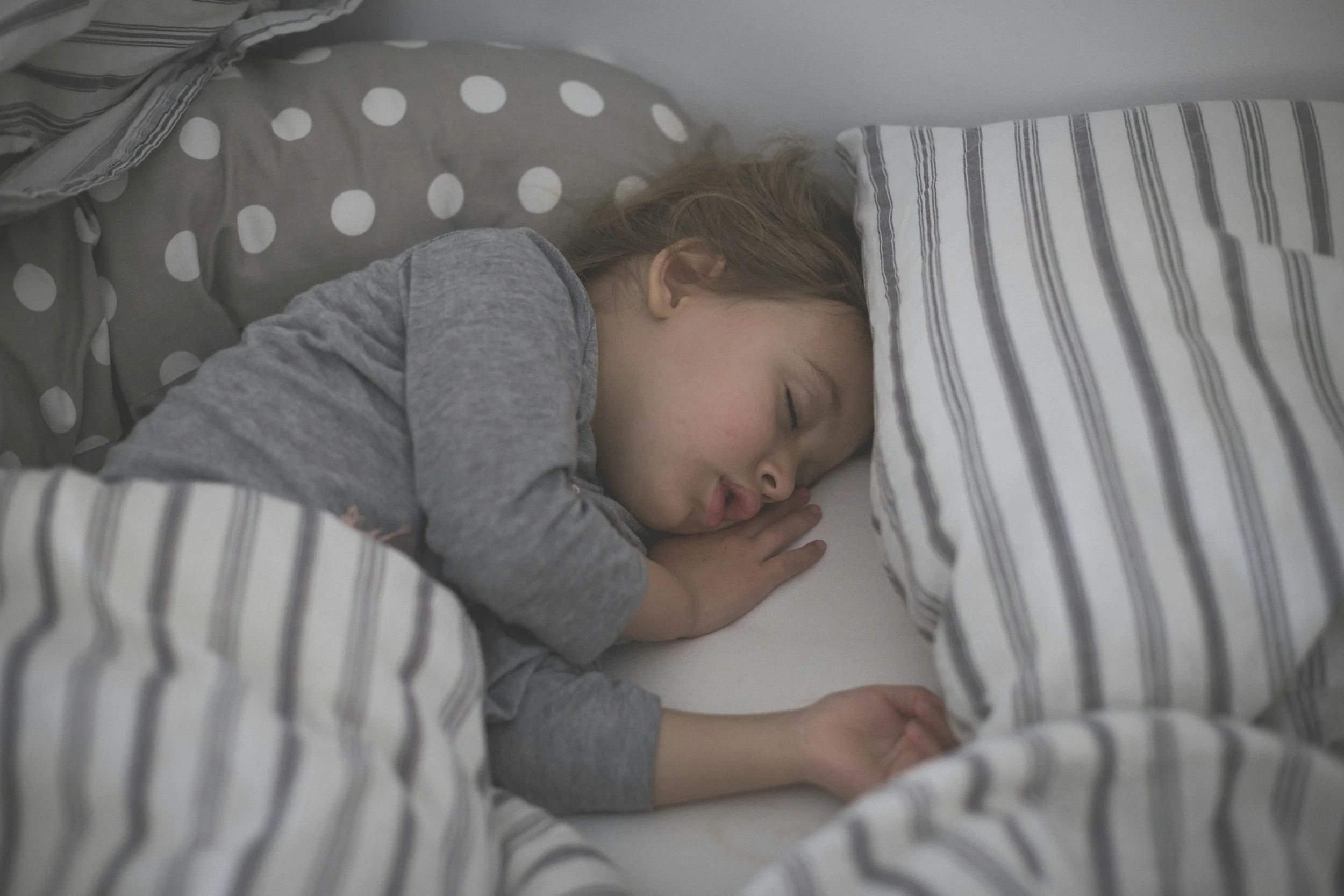
Two developmental forces are usually behind the bedtime standoff with toddlers: separation and independence.
It's 7:30 p.m., the third "one more book" just landed, and the kid who was rubbing their eyes 20 minutes ago is now doing laps around the living room. If your toddler fights sleep, you are not doing this wrong. You are parenting a typical 1- to 3-year-old.
Bedtime resistance is one of the most common things families bring to us, and the research backs up how normal it is. The Sleep Foundation reports that as many as 20 to 30% of babies and toddlers have real trouble sleeping.
Two developmental forces are usually behind the standoff. The first is separation: Your toddler is wired to want you close, and falling asleep means letting you go for the longest stretch of the day. The second is a brand-new drive for independence: A child who just learned to say "no" and "mine" will absolutely test those powers at bedtime.
Knowing how much sleep your toddler needs takes some of the pressure off. Children 1 to 2 years old need about 11 to 14 hours in a 24-hour period, naps included, and 3- to 5-year-olds need about 10 to 13, according to the American Academy of Pediatrics. That is a wide range on purpose and emphasizes what we always say in our classes: your kid is not a simplified metric on a chart and every child is different.
What a consistent toddler bedtime routine does for the brain and body
Here is the part worth holding onto on a hard night: A bedtime routine is one of the most studied, best-supported tools in all of pediatric sleep, and it does more than help your toddler fall asleep.
After reviewing the research, sleep scientists Jodi Mindell and Ariel Williamson concluded that a nightly bedtime routine supports healthy sleep and a much wider set of outcomes: language, early literacy, emotional and behavioral regulation and the parent-child bond. Their point is that the routine itself, the bath and the books and the song, packs in the warm, responsive moments young brains grow on.
The newer research keeps pointing the same way. In a 2026 pilot trial run right inside toddlers' 12-month checkups, families who started a simple bedtime routine saw their children sleep more soundly, with fewer and shorter night wakings. The clearest gains showed up for families with less formal education, the group least likely to already have a routine and the group most sleep studies leave out. It was a small pilot, so the findings are early. The direction is encouraging.
An earlier study from the same team followed toddlers through their regular pediatric visits. The toddlers with a steady bedtime routine at 12 months showed less emotional dysregulation a few months later. The toddlers without a routine at 15 months showed more behavior problems by age 2. These are associations, and they don't prove the routine itself is doing the calming. Predictable nights and steadier days reliably show up together, which is reason enough to keep one.
Why does the same order every night matter so much? Your toddler’s mind and body, along with your family’s dynamic, thrives on predictability. The Sleep Foundation's guidance is plain but worthwhile to mention: pick your activities, then do the same ones in the same order each night so your child always knows what comes next. Zero to Three makes the developmental case, explaining that consistent routines give babies and toddlers security and emotional stability, because knowing what happens next helps them trust that you will give them what they need. A toddler who can predict the next step has a lot less to fight about.
A simple toddler bedtime routine you can actually keep
The best toddler bedtime routine is the one you can repeat when you're tired, traveling or down to one parent on duty. Keep it short and sweet! The Sleep Foundation suggests around 20 to 30 minutes and three or four calm activities. The AAP boils a great toddler version down to three words: brush, book, bed.
Here's a sample wind-down flow you can adjust to your family:
Start the dimming early: About an hour before lights out, turn down the lights, lower your voice and shift to slower play. Bright, busy rooms tell a toddler's body it is still daytime.
Warm bath or a quick wipe-down: Water is a reliable signal that the evening is turning toward sleep, even on a rushed night.
Pajamas and teeth: Pair them every night so they become one automatic step.
Two books, chosen in advance: Decide the number before you start, so "one more" already has a clear answer.
One song or a few quiet minutes of cuddle: The same song nightly works like a lullaby cue. Our Baby Sing & Sign families often reuse the calming songs from class here, and there's even a bedtime-themed session every season specifically to help with this.
A short, predictable goodbye: Same words, same kiss, and same exit. Try a line you can repeat: "I love you, it's sleep time, I'll see you in the morning."
For a printable-style toddler bedtime routine chart, draw or photograph each step and post it at your child's eye level. Toddlers can't read a clock, but they can "read" pictures of bath, then teeth, then book, and then bed. A chart turns you from the bad guy into the messenger. Bedtime becomes the chart's idea, which makes the whole handoff easier.
Two small moves make the whole thing easier. Put your toddler down drowsy but awake when you can, since the Sleep Foundation notes this is how children learn to fall asleep on their own. Offer tiny choices inside the fixed routine. Zero to Three suggests language like, "It is bedtime. Would you like to brush teeth now or after we get your pajamas on?" Bedtime itself stays fixed, while the order of two small steps can flex. That scrap of control can defuse a standoff before it starts.
The wind-down hour: screens, light and lowering the energy on purpose
The piece most routines miss happens before the routine even starts, specifically the hour leading up to it. A calm wind-down can't compete with a tablet handed over at 7 p.m.
The AAP recommends powering down screens about an hour before bed, and the reason goes beyond the content. Bright light in the evening makes it harder for any body to feel sleepy, and fast, stimulating shows leave a toddler revved up right when you want them slowing down. If you want the fuller picture on little kids and devices, we walk through what the screen time research really says in a separate piece. For the last hour, the simplest swap is the most effective one: trade the screen for something with a slower heartbeat, like books, blocks, a warm bath or quiet songs.
Set the room up to do some of the work for you. Keep it cool, dark and quiet. A nightlight is fine if your toddler wants one. A steady, boring sound environment, the same fan or white noise each night, helps mask the dishwasher and the neighbors so a light sleeper stays down.
When your toddler won't go to bed
Even a great routine breaks down sometimes, and that is not a sign it stopped working. A few patterns are worth naming.
Sleep regressions and developmental leaps: Right when your toddler is learning to walk, talk or master a new skill, sleep can fall apart for a week or three. The skill-building brain has trouble clocking out. Hold the routine steady and wait it out. New habits you invent this week tend to become habits you have to undo later.
Travel and illness: Both blow up the schedule, and both are temporary. Bring the portable pieces of your routine with you (the same book, the same song, the same goodbye words). Rebuild the rest once you are home or your child is well.
The endless-requests loop: One more drink, one more hug, the light, the blanket, the other blanket. This stalling is classic toddler independence, and the Sleep Foundation suggests heading it off by letting your child make small choices earlier, like which pajamas or which book. Try folding the predictable requests into the routine itself so they lose their power. A few sips of water and a last bathroom trip become fixed steps you do every night, right before the goodbye, so they stop working as bargaining chips.
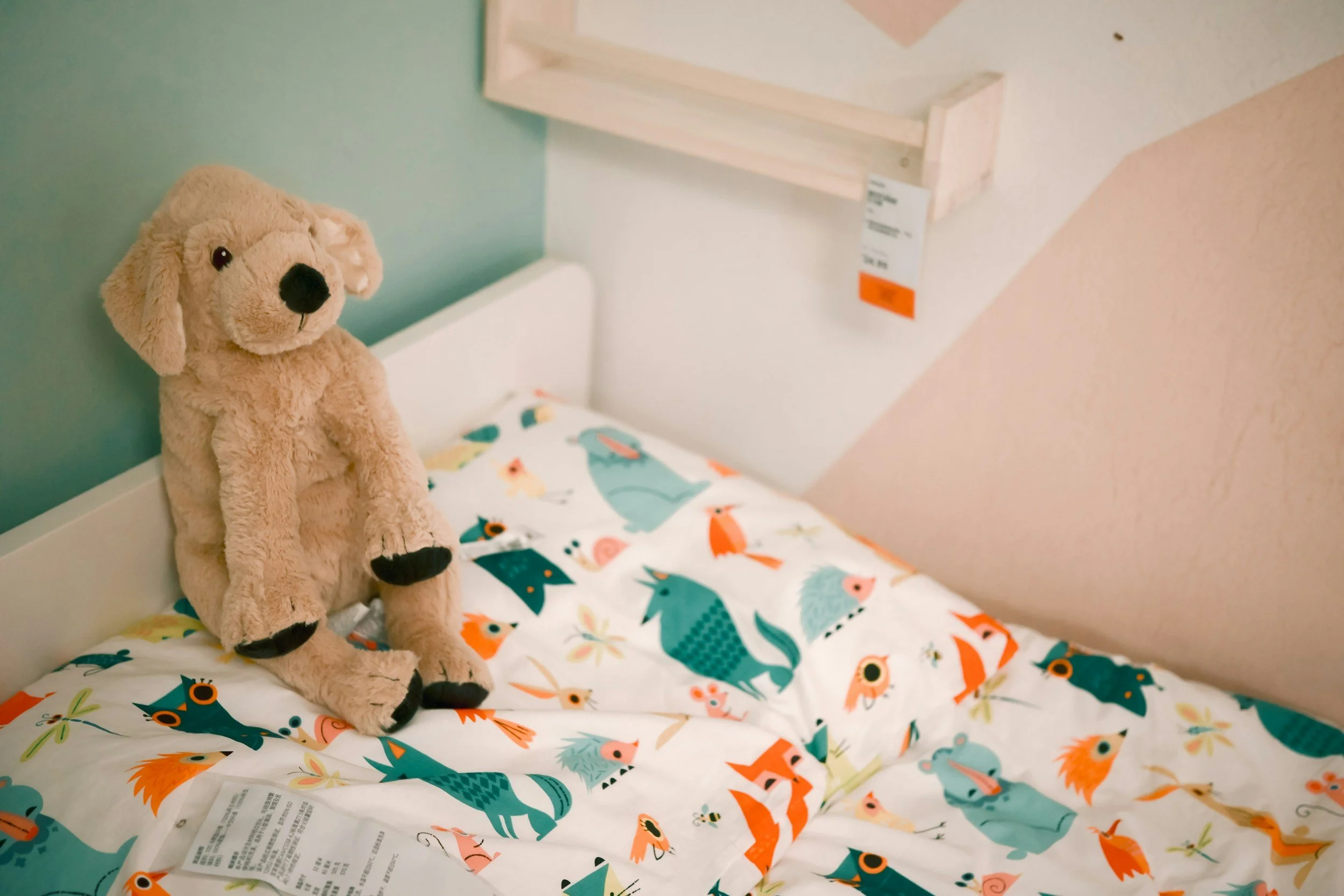
For separation, a comfort object earns its keep. The Sleep Foundation points to a stuffed animal or a special blanket as real reassurance for a toddler deep in separation anxiety. A lovey is a piece of safety your child can hold when you've left the room.
Your calm is part of the bedtime routine
Here's the part almost no bedtime chart includes: YOU are in the routine. After a long day, you arrive at bedtime with your own frayed nerves, and your toddler reads every bit of it.
Young children settle by borrowing a calmer nervous system from the adult next to them. The Center on the Developing Child at Harvard University describes the back-and-forth between you and your child, the serve and return, as the interaction that shapes a developing brain and helps a child feel safe. At bedtime that mostly looks like a slower voice, softer movements and a face that says this is fine, we do this every night.
When you can feel your own frustration climbing at the bedroom door, that is the moment to slow your breath before you say anything. Your calm becomes their calm, which is exactly why we tell parents that the grown-up is the active ingredient. We dig into the how of that in our piece on calming your own stress first.
When to talk to your pediatrician about toddler sleep
Most toddler bedtime battles are normal and pass with a steady routine. A few signs are worth a conversation with your pediatrician. Loud, regular snoring or pauses in breathing during sleep deserve a look. Bedtime resistance or night wakings that are severe, that keep getting worse or that don't budge with a consistent routine are worth raising. Daytime exhaustion, or a child who seems to need far more or far less sleep than the typical range, is also worth mentioning. You know your kid best.
Toddler bedtime routine questions parents ask
How long should a toddler bedtime routine be?
About 20 to 30 minutes is the sweet spot, with three or four calm activities. This is long enough to wind down and short enough that it doesn't sprawl into a second bedtime.
What time should a toddler go to bed?
Most toddlers do well with an early bedtime, often between 7 and 8 p.m., but the better question is whether your child is getting enough total sleep across naps and night. Of course, this timeframe can be adjusted based on your family’s schedule. Work backward from your wake-up time and the 11-to-14-hour range.
How do I handle bedtime resistance?
Keep the routine identical every night, offer small choices inside it, and fold the predictable stalls (water, one more hug) into fixed steps before the goodbye. Calm consistency beats a new trick every night.
Is it okay to lie down with my toddler until they fall asleep?
It is your call, and plenty of families do it happily. The one tradeoff to know: if your toddler only falls asleep with you there, they may need you back when they wake in the night. If everyone is sleeping, keep going. If the night wakings are wearing you out, slowly shifting toward drowsy-but-awake can help.
A predictable bedtime is one of the kindest things you can build for your toddler, and for yourself. If you're in Staten Island or Bergen County, our Grown-Up & Me classes are where families pick up the calming songs and steady rhythms that travel straight home to bedtime. They're walk-in, one price per family, with no commitment, so you can try one without the pressure of a long contract or a registration fee. Come for the bubbles, leave with a slightly tired toddler.
Key takeaways
- A consistent toddler bedtime routine is one of the best-supported tools for better sleep, and the research links it to more than rest: steadier emotions, stronger language and a closer parent-child bond.
- Same steps, same order, every night matters more than the exact activities. Predictability is what signals your toddler's brain that sleep is coming.
- Bedtime resistance, stalling and night wakings are normal at ages 1 to 3. They come from separation anxiety and a healthy, growing push for independence.
- Your own calm is part of the routine. A toddler borrows your nervous system to settle, so a slower, quieter you helps them wind down too.
Sources & further reading 7
- Mindell, J. A., & Williamson, A. A. (2018). Benefits of a bedtime routine in young children: Sleep, development, and beyond. Sleep Medicine Reviews. View on PubMed
- Mindell, J. A., Lam, J. T. Y., Salih, Z., Heere, M., & Williamson, A. A. (2026). A pilot bedtime routine intervention for toddlers in primary care: variation by caregiver educational attainment. Frontiers in Sleep. Read the study
- Lam, J. T. Y., Williamson, A. A., Salih, Z., Heere, M., & Mindell, J. A. (2023). Bedtime routines, development, and caregiver educational attainment in toddlerhood. Frontiers in Sleep. Read the study
- American Academy of Pediatrics. Healthy sleep habits: How many hours does your child need? HealthyChildren.org. Read the guidance
- Sleep Foundation. Perfecting your child's bedtime routine. SleepFoundation.org. Read the guide
- Zero to Three. Creating routines for love and learning. ZeroToThree.org. Read the resource
- Center on the Developing Child at Harvard University. How-to: 5 steps for brain-building serve and return. Harvard University. View the resource
About this article
Every article on Happy Day Play is written by Kaitlynn Blyth herself, then checked against our published standards before it goes live. You can read exactly how we research, verify, and fact-check our work, and how we use and limit AI, in the policies below.
Last fact-checked June 13, 2026
Read More About Sleep