Toddler Separation Anxiety at Drop-Off: How to Make Goodbyes Easier
Tears at goodbye are one of the most normal things a toddler does. Here's what's behind separation anxiety at drop-off, and gentle, evidence-based ways to make the morning easier.
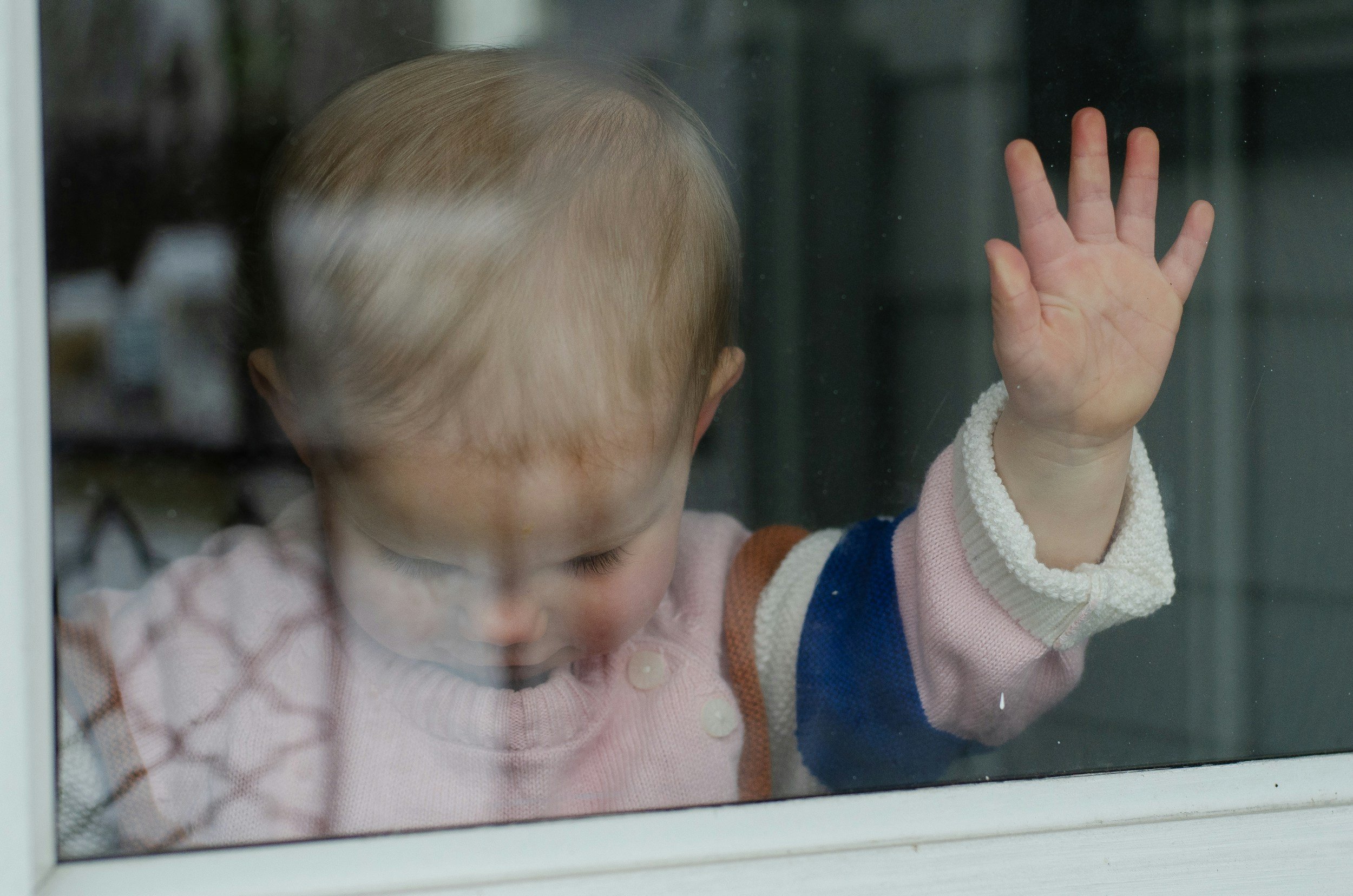
Separation anxiety is a normal, expected phase of early development. Knowing that doesn’t make it easier though.
A toddler spots the classroom door and the crying starts before the diaper bag is even off your shoulder. Arms go up and the protest is loud and completely sincere. If that's your morning right now, here's the reassurance worth hearing first: a hard goodbye is one of the most ordinary things a toddler does, and it usually points to something going right.
Separation anxiety is a child's distress at being apart from the people they're most attached to. It isn't a behavior problem, and it isn't proof you've made your child too dependent. The American Academy of Pediatrics treats it as a normal, expected phase of early development, tied closely to the bond a child has with the people who care for them. So those tears are evidence of a relationship that's working.
The timing catches a lot of parents off guard. Many babies sail through the first year, then start protesting goodbyes hard somewhere around 15 or 18 months, right as they're testing independence in every other corner of life. Your toddler is holding two real feelings at once. They want to go explore. They also need to know you'll still be there. For most kids, the sharpest part eases over a few weeks to a few months, as they collect enough evidence that goodbyes are followed by reliable hellos.
Why your toddler gets separation anxiety at drop-off
Your child treats you as a secure base. In attachment research, that's the home a child ventures out from and circles back to, over and over. When you're close, a busy room feels safe enough to explore. When you leave it, that base seems to vanish, and a toddler's alarm system does exactly what it's built to do.
There's also a memory piece. An older child can tell themselves that Mom always comes back after lunch. A 1-year-old can't hold you in mind that steadily yet, so out of sight can genuinely feel like gone. That's why the boring, repeatable stuff matters so much. Every time you leave and come back when you said you would, you're helping build the memory that eventually calms the whole thing down.
And your child borrows calm from you. Early childhood educators call it coregulation, and writers for the National Association for the Education of Young Children describe how a steady adult presence settles a distressed child long before that child can settle alone. Your face and your voice at the door are part of the intervention. A drawn-out, anxious goodbye quietly tells your toddler that this moment really is scary. A warm, quick one tells them you trust this place.
How to set up an easier drop-off before you leave home
A lot of how drop-off goes is decided earlier in the morning.
Ensure they are fed and well-rested: A tired or hungry toddler has almost nothing left for a big transition, so aim for drop-offs after sleep and food rather than in the cranky window right before either one.
Say what's coming, in small words: Even a young toddler takes in more than they can say back. Something plain works: after we eat, we'll go to your class, you'll sing and play, and I'll be back after snack. Keep it the same each time.
Warm up to the room first: Guidance from NAEYC and Zero to Three points the same way: let a child get familiar with a new space before they're asked to separate in it. If the program allows a visit, go together, meet the teacher, and let your child poke around the toys while you're still right there.
Send a little piece of home: A small lovey, a family photo tucked in a pocket, a scrap of fabric that smells like the couch. For a lot of toddlers, that object is a real bridge back to you.
Build a goodbye ritual your toddler can count on
Educators talk about good goodbyes, which is just a short, loving routine a child can count on. Zero to Three describes rituals as repeated little practices that help a child handle the loaded moments of the day, and separation is one of the biggest. A few things make the ritual work.
Don't sneak out: Slipping away while your toddler is distracted feels gentler in the moment and tends to backfire. A child who turns and finds you already gone learns that you might disappear at any second, and that's what cranks the clinging up next time. A clear goodbye, even a teary one, is easier to trust.
Use the same short script every time: Pick a tiny sequence and run it on repeat: a hug, a kiss, one phrase that belongs only to the two of you and the same promise about when you'll be back. Plenty of families land on something like big hug, big kiss, see you after snack. The sameness is the active part, not the cleverness of the words.
Then hand off and actually go: Pass your child to a caregiver you trust, finish your line, and leave. Doubling back for one more hug stretches the hardest part and raises the stakes. Walking out steadily is a kindness, even when it doesn't feel like one.
What happens after you leave at drop-off
This is the part you don't get to watch, and it's usually the reassuring part. A lot of kids who sob at the door are settled into play within a few minutes once a caregiver helps them shift gears. If it's eating at you, ask the teacher how long the crying actually lasted. The answer is often two minutes.
A strong program with good teachers offer a lap, a familiar song or the activity your child loves, and they bring a child back to steady. When you're sizing up a class or a care setting, ask them straight out how they handle goodbyes. What they say tells you a lot.
Then, keep pickup low-key and warm. A calm, predictable hello closes the loop the goodbye opened. You don't need a big, dramatic reunion but rather a simple, reassuring one (with a big hug and/or kiss, of course!)
When toddler separation anxiety is extra hard
Some children need more time to feel safe in anything new, and that's a temperament to work with, not a flaw to fix. These kids do best with extra warm-up, more previewing, and patient adults. The job isn't to toughen them up. It's to keep pace with them.
Regressions are normal too. A new sibling, a move, an ear infection, a wobble of a developmental leap, any of these can bring separation anxiety roaring back in a child who'd been fine for months. Go back to the ritual, add a little extra closeness, and it usually settles again.
There's a point where it's worth a call to your pediatrician: distress that's severe, that drags on well past the toddler years, that shows up intensely across lots of settings, or that's genuinely interfering with daily life. The CDC's milestone tracker can help you see where your child sits (but please keep in mind that every child is different and that a tracker is not the end all be all, but rather a starting point based on averages). Asking for help isn't an overreaction.
How a Grown-Up & Me class eases separation anxiety
Going straight from your arms to a closed classroom door is a big leap. There's a softer on-ramp.
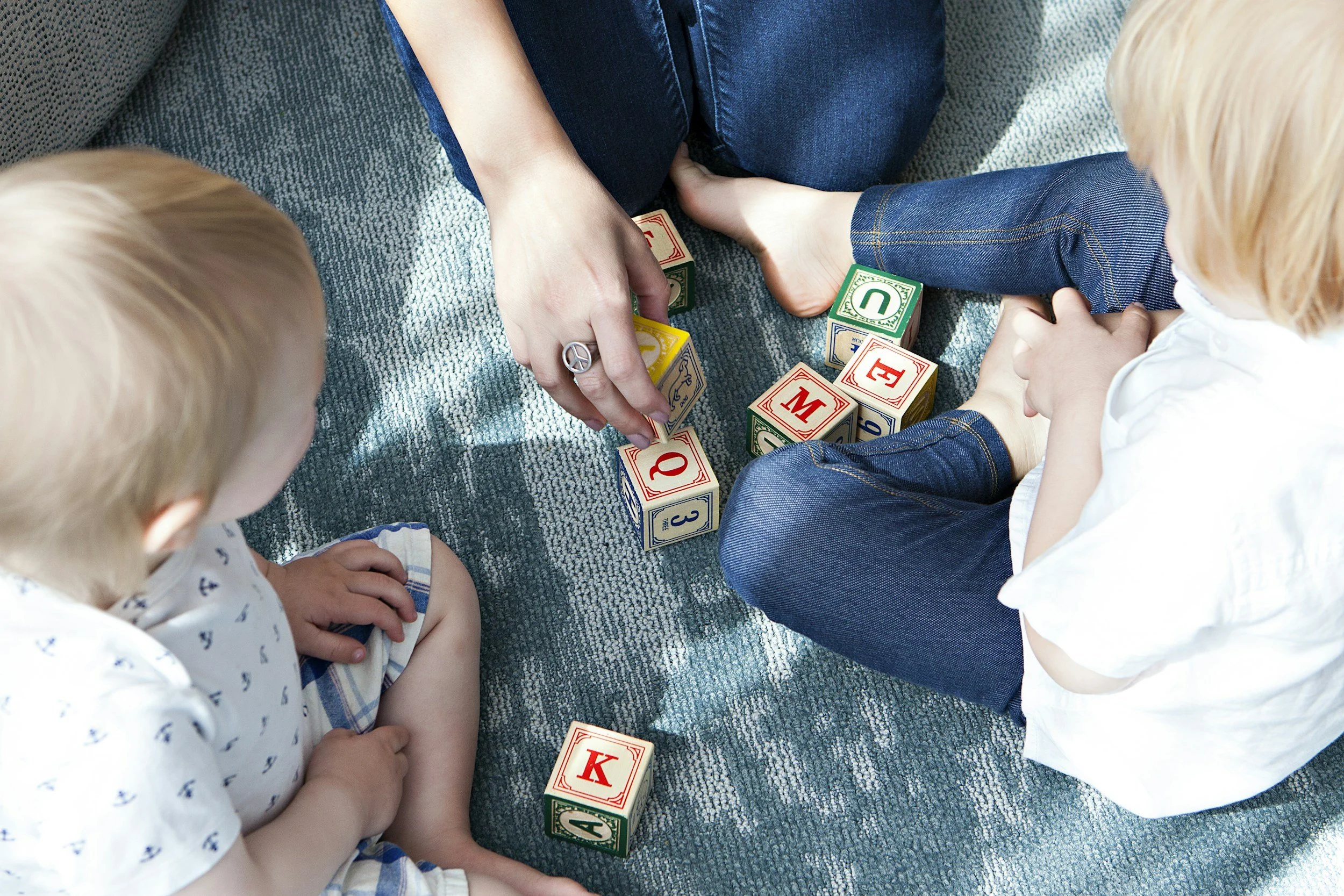
In a Grown-Up & Me class, you stay in the room, and your child practices separation in doses they can handle: a few feet away to investigate a drum, a glance back to find your face, a return to your lap to top up. The faces, the songs and the order of the morning all get familiar while you're still right there as the secure base. One of our regulars spent three weeks parked on his dad's knee, watching the shaker basket like it might bite, before he ever reached in. Nobody rushed him. By the spring he was running the hello song.
That groundwork is what makes a later, more independent goodbye feel possible instead of abrupt. Family Life Education is the framework underneath it, which is a fancy way of saying the program is built around your relationship with your child, not around keeping your child busy. The grown-up in the room is the point.
If big feelings are a theme at your house lately, you might also like our calm take on another rough patch and our piece on what effective, warm parenting actually looks like.
Toddler separation anxiety: questions parents ask
Should I stay longer if my toddler cries at drop-off?
Usually not. A long goodbye tends to raise the temperature in the room rather than lower it. A warm, short, predictable one, even through tears, helps a child settle faster.
Is it bad to leave daycare while my child is upset?
Leaving after a clear, loving goodbye, into the arms of a caring adult who'll help, isn't harmful. The thing to avoid is vanishing with no goodbye at all.
How long does it take for a child to adjust to daycare? How long until it gets easier?
For a lot of toddlers, a few weeks of steady routines and dependable reunions. Slow-to-warm kids may take longer, and that's fine.
My toddler was fine at drop-off and now suddenly isn't. Why?
Regressions usually trail a change, like a new sibling, a move, or illness. Return to the ritual and add a little extra connection.
Key takeaways
- Separation anxiety at drop-off is a normal phase of toddler development, not a sign your child is too dependent or that you've done something wrong.
- It often spikes around 15 to 18 months and eases over a few weeks to a few months as your toddler learns that goodbyes are followed by reliable hellos.
- A short, predictable goodbye ritual works better than sneaking out or dragging the goodbye out.
- A Grown-Up & Me class lets a toddler practice separation in small doses while you're still in the room, which makes a later, more independent goodbye feel less abrupt.
Sources & further reading 7
- American Academy of Pediatrics. (2026). How to Ease Your Child's Separation Anxiety. HealthyChildren.org. healthychildren.org
- National Association for the Education of Young Children. (2020). Rocking and Rolling. Difficult Goodbyes: Supporting Toddlers Who Are Coping with Separation Anxiety. Young Children. naeyc.org
- National Association for the Education of Young Children. (2024). Rocking and Rolling. Sharing Our Calm: The Role of Coregulation in the Infant-Toddler Classroom. Young Children. naeyc.org
- ZERO TO THREE. (n.d.). Separation Anxiety. ZERO TO THREE. zerotothree.org
- ZERO TO THREE. (n.d.). Rituals and Routines: Supporting Infants and Toddlers and Their Families. ZERO TO THREE. zerotothree.org
- Centers for Disease Control and Prevention. (n.d.). Learn the Signs. Act Early.: Developmental Milestones. CDC. cdc.gov
- National Council on Family Relations. (n.d.). Family Life Education. NCFR. ncfr.org
About this article
Every article on Happy Day Play is written by Kaitlynn Blyth herself, then checked against our published standards before it goes live. You can read exactly how we research, verify and fact-check our work, and how we use and limit AI, in the policies below.
Last fact-checked June 1, 2026