Is My Baby Too Young for Music Class? What New Research Says About Babies and Music
New brain research shows infants are wired for music from as early as 3 months, responding to it in the brain and the body. Here's what that means for baby music classes, and how to choose one that fits how babies actually learn.
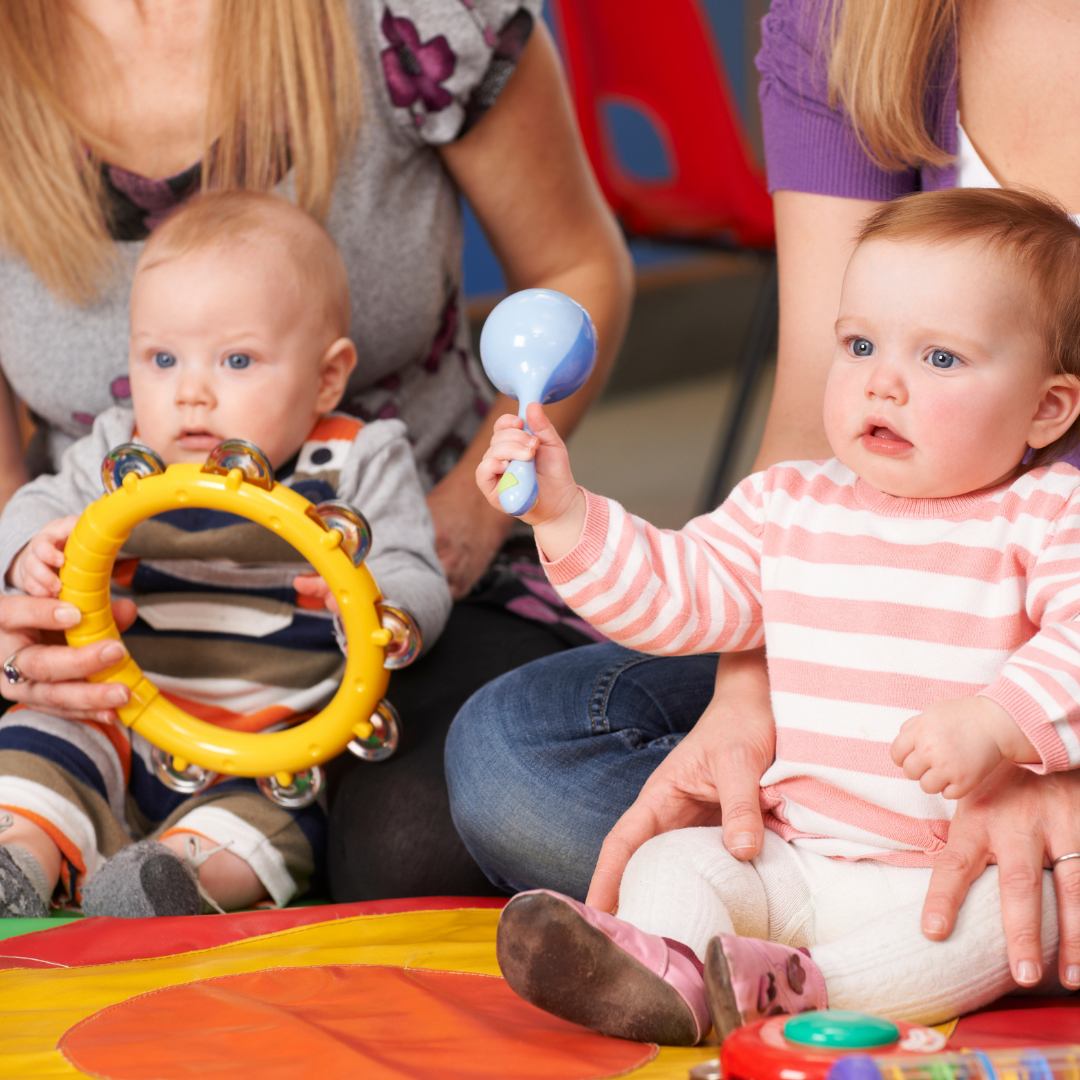
Is your baby "too young" to get anything out of music? If you've ever put on a song in the kitchen and watched your 3-month-old's legs start kicking, you've seen the answer in real time, and new brain research backs it up.
A 2025 reviewed preprint in eLife, "Development of Auditory and Spontaneous Movement Responses to Music over the First Year of Life," recorded both brain activity (EEG) and full-body movement in 79 infants at 3, 6 and 12 months while they listened to children's songs. The headline finding is simple and a little wonderful: babies' brains respond to real music from the very start, and their bodies are already in on it.
So no, your baby isn't too young. For NYC and NJ parents weighing a music and movement class or a baby sing and sign class, that's the answer to the question we hear most in our Staten Island and Bergen County classes. The newest evidence says infants are exactly the right age.
What the new baby music research actually found
The study looked at two things at once, which is what makes it unusual: how a baby's brain processes music, and how the body moves to it.
On the brain side, infants at every age, including the 3-month-olds, showed a stronger neural response to real music than to a scrambled version of the same song. In plain terms, their brains could tell structured music apart from noise from very early on. On the movement side, the researchers found what they call coarse auditory-motor coupling at all ages: a baby's movement tracked the changes in the music, not the scrambled sound. By 12 months, that movement got richer and more music-specific, with more rocking, swaying and arm motion when real music played.
Does this mean my baby can dance?
Here's the honest part, because it's easy to oversell. The same study found that babies in the first year did not yet move on the beat. True coordinated, synchronized dancing develops later, into toddlerhood and beyond. What's present in infancy is the foundation underneath it: a brain that registers musical structure and a body that's already starting to answer.
That foundation is the whole point. Your baby doesn't need to clap on beat to be doing real developmental work with music. The wiring comes first, the moves come later.
Why music does so much developmental work
Music is one of the rare experiences that engages several systems in a single moment: hearing, movement, attention and emotion all at once. Few activities do that together. Zero to Three's guide to using music with infants and toddlers walks through how a single song can support language, motor skills, thinking and social-emotional growth at the same time.
There's a relational layer too, and it's the one a Family Life Educator cares about most. When you sing live to your baby, they read your face, your breathing and your body alongside the sound. The Center on the Developing Child at Harvard University describes this back-and-forth, attentive presence as serve-and-return, the single most important developmental input a young child can get. A simple hello song turns an ordinary moment into exactly that kind of exchange.
How to choose a good baby music class
Here's what we tell families trying a Grown-Up & Me class for the first time.
Pick a class with live singing: Decades of caregiver research, and the eLife study's focus on real musical structure, keep landing in the same place: a live, in-person caregiver voice is more engaging for a baby than a recording, because the baby reads the singer's face and body, not just the melody. At Happy Day Play, class leaders sing in real time and we encourage caregivers to sing along, even shyly.
Look for movement built in: The auditory-motor coupling the researchers identified shows up when babies get to actually move. Classes with bouncing, swaying, gentle dancing and shared movement engage exactly that pathway.
Trust predictable rituals: A specific hello song, a familiar goodbye song and a transition song each week build expectation, attention and early language at the same time. That's Family Life Education in practice.
Choose a themed environment: Themed weeks give your baby something new to absorb while the structure of the class stays the same. A jungle theme one week and a beach theme the next layers fresh vocabulary and sensory input on top of a predictable rhythm. We design our classes around themes for this reason.
Take the class home: Sing the hello song when your baby wakes up. Hum the goodbye song at bedtime. Music's developmental benefits compound when it becomes a daily pattern, not a once-a-week event.
Why a Family Life Educator cares so much about baby music
Happy Day Play is built entirely around Family Life Education, which means the whole approach centers the family system, not just the child. Music is one of the most useful tools we have precisely because it serves more than one person at once. It calms a fussy baby. It gives a tired caregiver a bright spot to anchor the day. It builds the kind of shared, attuned moments the research keeps pointing to as developmentally protective. Family Life Education is the professional practice of strengthening family well-being and relationships through education, and music is one of its easiest on-ramps. You can read how the National Council on Family Relations defines the field.
The benefits don't stop in infancy. A 2025 scoping review of school-aged children and adolescents in Research Studies in Music Education found that learning music supports social, emotional and educational well-being well into the school years. The case for music starts in the first months and keeps paying off.
Common questions about music classes for babies
Is my baby too young for a music class?
No. The newest brain research shows infants respond to music from as early as 3 months. A calm, caregiver-led class with live singing suits even the youngest babies.
What's the best age to start?
There isn't a wrong one. A newborn benefits from your voice and closeness. A 6-month-old is tuning in to the sounds and faces around them. By their first birthday, babies start moving more clearly to real music. Any point in that first year is a good time to begin.
Is live singing really better than playing recordings?
For a baby, yes. A recording is just sound. Live singing is sound plus your face, your voice and your attention, which is what turns music into connection. Recorded music at home is still lovely, it just isn't a replacement for you.
Key takeaways
- Babies are wired for music from the start. In a 2025 eLife study, infants' brains responded more strongly to real music than to a scrambled version as early as 3 months.
- Movement comes in stages. Babies' bodies already track music in the first months, richer music-specific movement shows up around 12 months, and true on-the-beat dancing develops later in toddlerhood.
- Live caregiver singing beats recorded music. When you sing face-to-face, your baby reads your voice, face and body together, turning a song into serve-and-return connection.
- A good baby music class has live singing, built-in movement, predictable hello and goodbye songs, and songs you can take home. And no, your baby isn't too young.
Sources & further reading 5
- Nguyen, T., Bigand, F., Reisner, S., et al. (2025). Development of Auditory and Spontaneous Movement Responses to Music over the First Year of Life. eLife (reviewed preprint). elifesciences.org
- Zero to Three. Beyond Twinkle, Twinkle: Using Music with Infants and Toddlers. zerotothree.org
- Center on the Developing Child at Harvard University. Serve and Return. developingchild.harvard.edu
- Goopy, J., & MacArthur, S. L. R. (2025). Music learning and school-aged children's and adolescents' wellbeing: A scoping review. Research Studies in Music Education. journals.sagepub.com
- National Council on Family Relations. What Is Family Life Education? ncfr.org
About this article
Every article on Happy Day Play is written by Kaitlynn Blyth herself, then checked against our published standards before it goes live. You can read exactly how we research, verify, and fact-check our work, and how we use and limit AI, in the policies below.
Last fact-checked June 3, 2026