Developmentally Appropriate First Birthday Party Tips
Planning a first birthday party at home, or weighing a venue? This is how to plan a first birthday party that stays warm, calm and right for a 1-year-old, from a family life educator who runs these celebrations every week.
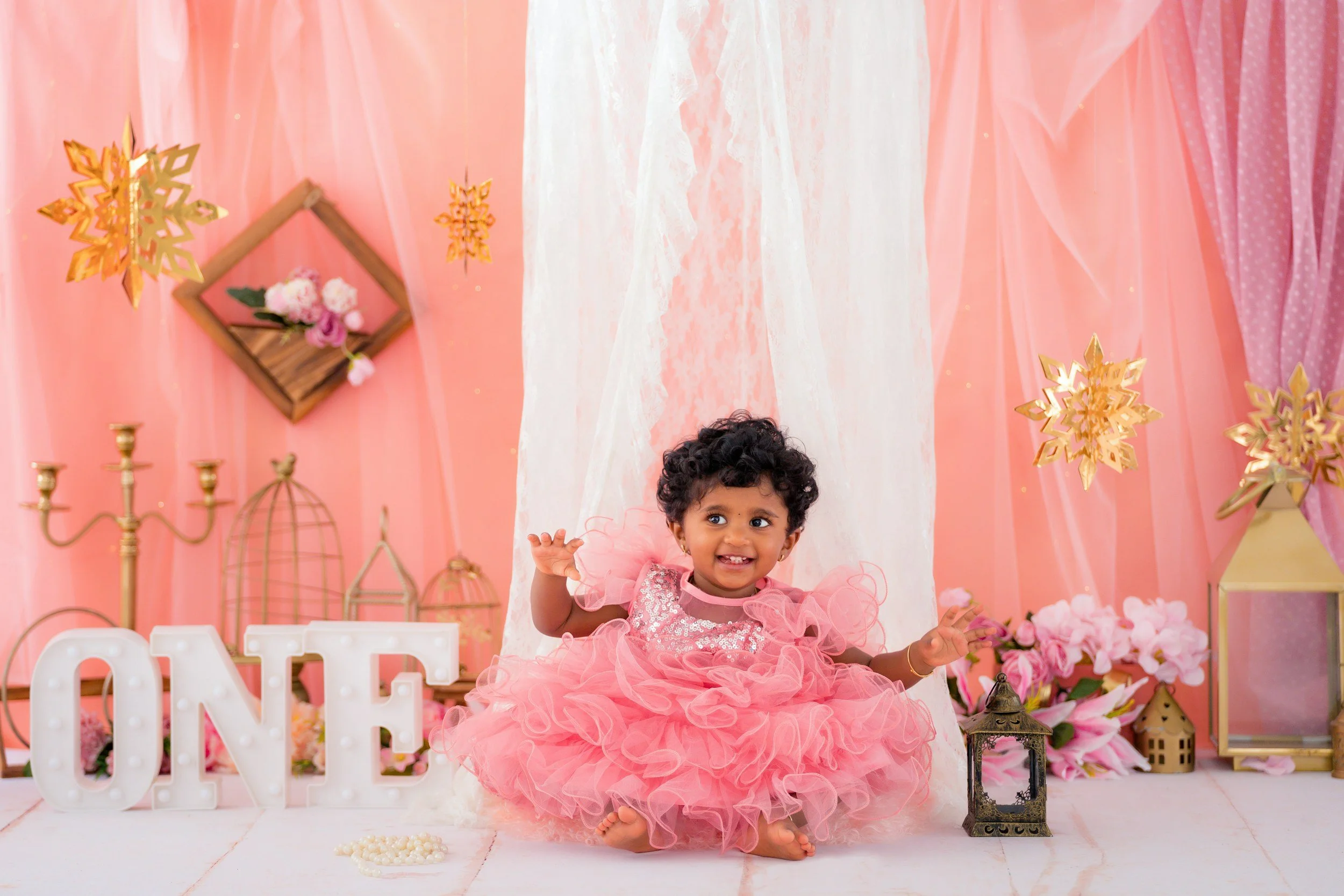
A 1-year-old stays genuinely active and engaged for upwards of 60 to 90 minutes when the celebration is executed properly, so plan the party around that stretch of engagement and let the rest be easy.
You've been picturing their first birthday since before they were born. The high chair pushed up to a tiny cake, a paper crown sliding sideways, a dozen phones aimed at one very small person who has no clue what the fuss is about. Real first birthdays don't always follow the picture, and that's fine. One freeing fact sits underneath this whole milestone: your baby will not remember a second of the day. That takes the weight off the balloon arch and puts it back where it belongs: on a calm afternoon your child feels safe inside.
If you want the short version, focus on the window that matters. A 1-year-old stays genuinely active and engaged for upwards of 60 to 90 minutes when the celebration is executed properly, so plan the party around that stretch of engagement and let the rest be easy. You can absolutely celebrate longer, with food and grown-up time on either side. It all comes down to planning, execution and expectations: how to make that engaged window land, plus how to avoid your child crying through cake and what to do if it happens, which is so common.
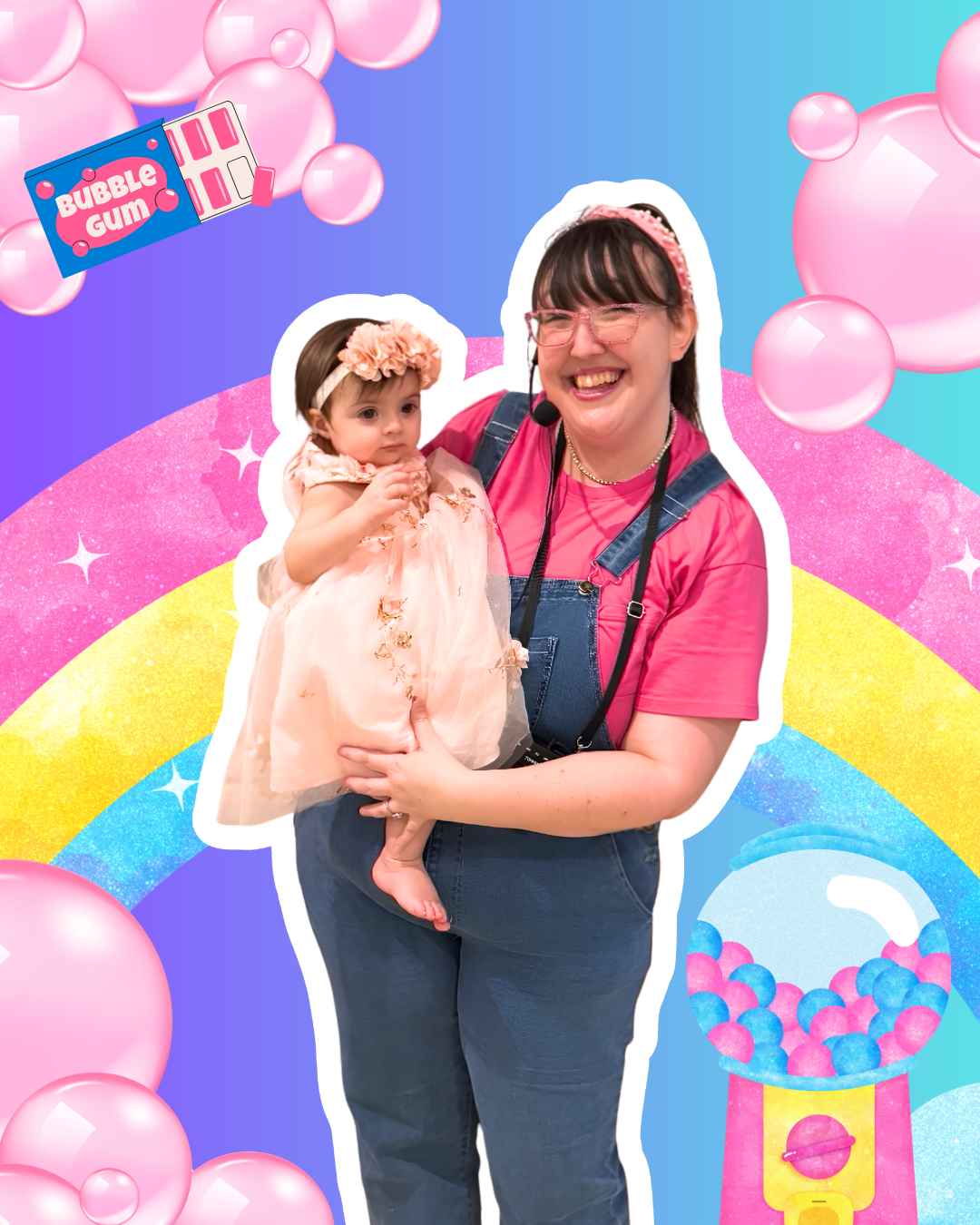
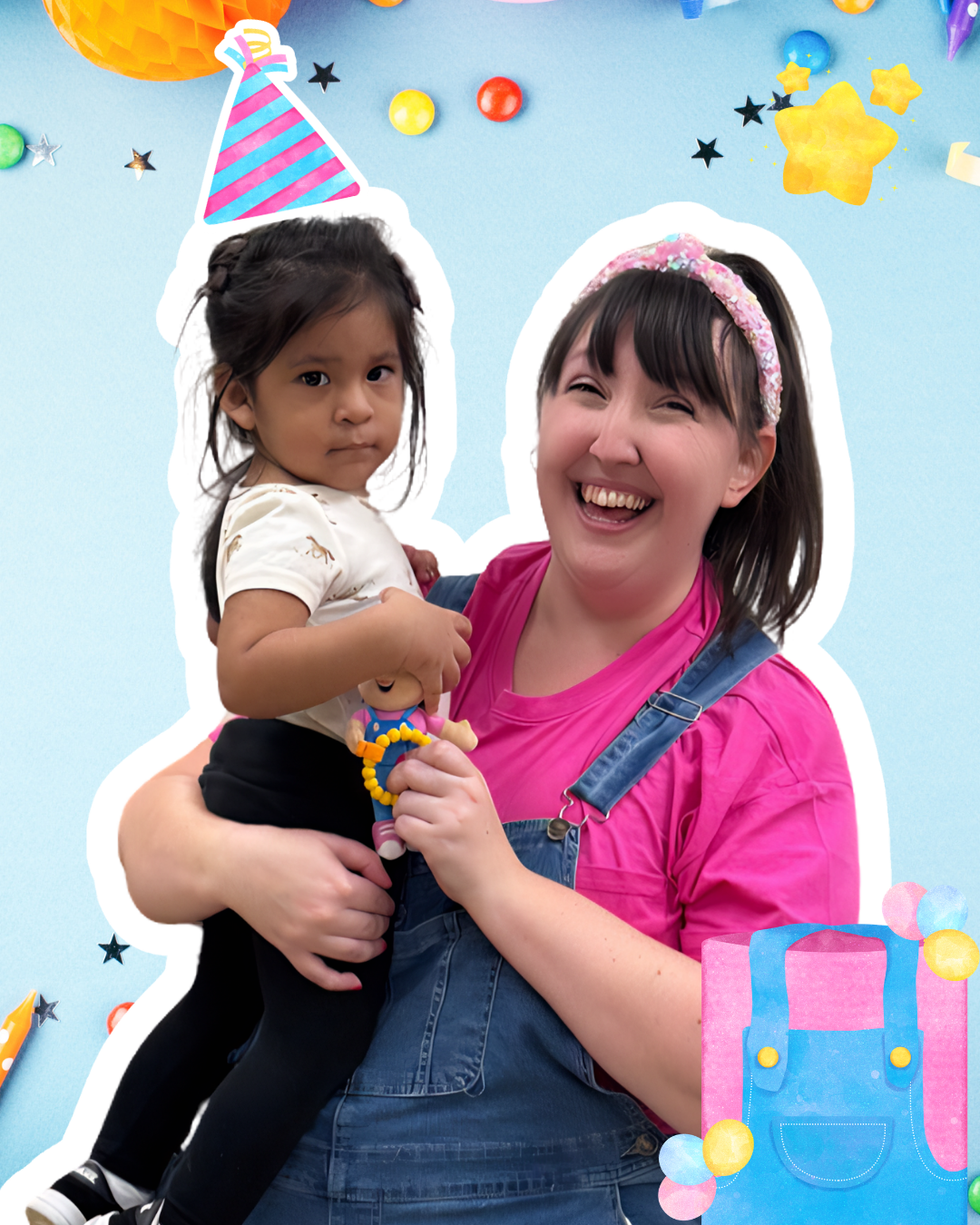
Happy Day Play runs birthday entertainment for children across Staten Island, NYC and New Jersey, specializing in 1st birthday parties. Everything we do is developmentally appropriate and genuinely engaging, the kind of celebration where a small child and their guests actually stay happy, engaged, and in tune with what’s going on. The parties that land are the ones that fit the child in front of you, so we ensure each party is a reflection of them.
What a 1-year-old can actually handle at a first birthday party
At 12 months, your baby is busy. Most are cruising along the couch or taking first wobbly steps, waving bye-bye and saying a word or two like "mama" or "dada," according to the CDC's milestones for 1-year-olds. They love to drop things into a container and dig them back out. They also notice the moment you leave the room, which is why a sea of unfamiliar faces can tip a happy baby into tears fast.
Two things shape almost every choice you'll make. First, a 1-year-old plays alongside other children rather than with them, so structured group games at birthday parties tend to fall flat. Second, your baby still borrows calm directly from you. ZERO TO THREE calls this co-regulation: a baby feels safe, calm and understood through your responses long before they can settle themselves. The party that respects both of those facts is the one your child enjoys. We always recommend a parent stay close and join in the planned activities for this exact reason.
The day is also, quietly, for you. You made it through a first year of feedings, growth spurts and not-enough-sleep. A first birthday is a chance to exhale and mark that, with your baby as the guest of honor who may well nap through the highlight reel. ZERO TO THREE notes that sensitive, responsive relationships in these early years shape a child's sense of safety and confidence, and a warm, low-key party is one more deposit in that account. Getting to sit back, join in and let someone else handle entertaining the guests is something you deserve.
How long should a first birthday party be, and how many guests
How long should a first birthday party be? Think in two layers. The active, engaged part for a 1-year-old runs about 60 to 90 minutes, and that's the stretch worth planning with care. The whole celebration can run longer around it, with arrivals, food and grown-up catch-up on either end. For an at-home party, about 90 minutes total tends to hit it, and rarely more than two hours. That's long enough for arrivals, a song, cake and a few photos, and short enough to end before your baby hits empty.
Keep the guest list small too. For a 1-year-old, a handful of the people they see every week feels far safer than a living room packed with adults they've never met. A smaller crowd means fewer hands reaching for them, a quieter room and space to crawl.
Got a big extended family? Try a wave. Invite grandparents and the closest few for the first stretch, then a second set after cake, so the room never swells into a crowd.
Build the whole thing around sleep and food. The CDC notes that babies this age need 12 to 16 hours of sleep across the day, naps included, and an overtired baby has nothing left for candles. Mid-morning after the first nap, or mid-afternoon after the second, tends to hit the sweet spot. Feed your baby something normal beforehand so cake isn't landing on an empty, cranky stomach.
A larger party at a venue with more guests will run longer overall, and the engaged window stays the same. That's why our party entertainment runs one hour: it's the active, tuned-in core a 1-year-old can handle, and we build it entirely around what your child loves. In that hour we capture keepsake photos of the moments you'll want to remember, like bubble and parachute time, and sing your child's favorite songs so there is familiarity and routine built in. We pull the rest of the guests into a large group activity, a limbo or a dance contest with the adults, that shifts the spotlight off your child and onto the fun, and we leave plenty of room for the smash cake after we leave. A calm story or mess free craft can even settle everyone down near the end. The whole hour flows while we read each child's cues and the energy of the room. That's why our parties are never cookie cutter. Everything is planned around your child and the things they love, with food, mingling and goodbyes happening around that engaged hour.
Plan the flow around your baby's day
Skip the minute-by-minute schedule. A loose flow that bends to your baby's mood will serve you better than a timeline you have to enforce. One simple shape:
A soft landing: Let guests arrive into open play, with a few toys out and the music low. There's no receiving line and no pressure for your baby to perform.
A song moment: A single familiar song or a quick circle works. If your baby takes a music or Grown-Up & Me class, use a song they already know so the room feels like home.
Cake and the famous smash: Keep this part short and low key. Sit your baby in the high chair, set the cake down and let whatever happens happen.
A calm wind-down: Dim the lights, slow the music and let goodbyes be gradual, so your baby moves from a loud peak to the car seat gently.
Crowds love a birthday baby, and all those eager arms can overwhelm one fast. Give yourself a line to use, warmly, on repeat: "She does best staying near me today, so come get your snuggles right here." Most relatives take the cue happily.
Set the scene to lower the sensory load
A first birthday can pile on sound, light and motion until a baby's system simply taps out. A few small choices keep the room gentle:
Softer music and lighting: Keep the volume conversational and let in natural light instead of a strobe of party effects.
A quiet corner: Set up a blanket or a familiar floor seat in a low-traffic spot where you can take your baby for a two-minute reset.
Simple toys your baby can explore: Put out a few non-electronic favorites. The AAP's Power of Play report points out that simple objects a child explores freely are powerful brain-builders, no batteries required.
Calm decor that still photographs well: A pretty banner, a few balloons in your palette and good daylight will look lovely in pictures while keeping the room easy on little eyes.
There's a reason this works. The CDC reminds parents that babies learn to calm down from caregivers who stay calm and make them feel safe. Your steady voice in a softer room is the best regulation tool on the table.
Smash cake ideas for a first birthday that stay low stress
Smash cake ideas are everywhere, and most are built for the photo. A few ways to keep the moment good for your baby:
Go light on sugar: A 1-year-old typically does fine with just a small piece of cake or a few nibbles of the smash cake. A lot of people may push for them to finish, and it's fine to let your baby explore it at their own pace.
Keep mess manageable: A high chair on a wipeable mat, an easy-clean outfit or simply diaper cover and bib, and a warm cloth within reach will save your floors and your sanity.
Make it allergy-aware and first-foods-friendly: If your baby is new to certain foods, stick to ingredients they've already tried, and tell your baker about any allergies in the room.
Carry zero expectations: Plenty of babies poke the frosting once and look at you like you've lost it. That reaction is normal. One trick of the trade is to scatter a few puffs or Cheerios on top of the cake, a familiar snack that invites them in, so you'll catch the photo of those little hands diving into it.
If your baby hates the smash, you're in excellent company. Some babies dislike sticky hands. Others are simply too tired, or not interested in performing on cue. That moment is a completely normal one for a 1-year-old. Snap a picture of the suspicious little face and move on.
First birthday party ideas for a room of babies and toddlers
The best first birthday party ideas suit a floor full of different ages at different stages. The same activity can land for everyone when you choose it well:
Bubbles: Newborns track them with their eyes, crawlers chase them and big siblings pop them.
Scarves and shakers: Babies mouth and wave them while toddlers dance, and you get instant music with no setup.
A contained sensory bin: A shallow bin of taste-safe materials or large wooden pieces keeps little hands busy and stays easy to supervise. This one is perfect for an at-home celebration and can be set up ahead of time.
This is the heart of how Happy Day Play runs a room, and it comes straight from the family science behind our classes. In a mixed-age group, one activity meets each child at their own stage, which mirrors how real families and real life actually work. A familiar song settles the whole room in seconds, because the babies who take our Family Music classes already know exactly what comes next.
Play like this is brain-building. The AAP describes play with parents and peers as a powerful way to build language, social and self-regulation skills in the early years, and it costs you nothing but your attention.
When the tears come (because they might)
The cake comes out, everyone sings, phones go up, and your baby's lip wobbles and then crumples. Take a breath: an overwhelmed cry at a first birthday is one of the most normal things a 1-year-old can do.
Your baby has spent awhile taking in more faces, noise and excitement than any ordinary day holds. Scoop them up, step into your quiet corner, lower your voice and let them reset against your chest. The Center on the Developing Child at Harvard University describes this back-and-forth, reading your baby's cues and responding, as serve and return, the everyday exchange that builds a child's brain and helps settle their stress response.
You can head this off, too. Hold your baby close while everyone sings "Happy Birthday," rather than setting them alone in the high chair under all those eyes.
Protect the non-negotiables. Guard the nap and the feed as fiercely as you guard the guest list, because a fed, rested baby has a buffer and an overtired one has none. If the party runs into nap time, slip away, put your baby down and let guests linger over coffee without you.
First birthday party at home or book a space
A first birthday party at home has real advantages. Your baby knows the smells and the floor, the crib is steps away for a rescue nap, and you can keep the guest list as tight as you like. The trade-off is that you become host, photographer, cake-server and parent all at once, which leaves little of you for the baby who needs you most.
Whether you stay home or book a space, bringing in party entertainment changes that math. A good entertainer runs the active part of the party so you can be present, comes with age-appropriate activities and knows how to read a room of overstimulated little ones. Before you book anyone, ask a few questions:
What do the activities look like for a 1-year-old, specifically? You want real, baby-specific answers, with activities built for a 1-year-old's stage.
How do you handle a baby who gets overwhelmed or starts crying? A thoughtful host will have a calm, practiced answer ready.
Are mixed ages and siblings welcome? Cousins of every age usually come to a first birthday, so everyone should have something to do.
What's the cost, and how do you hold the date? Clear pricing and terms upfront save you stress later.
At Happy Day Play, we bring the party entertainment to you. We come into your home, or a venue you've booked, anywhere across Staten Island, NYC and New Jersey, and we run the engaged hour so you can stay in the moment with your baby. You can add a Ms. Rachel style character or live children’s musician with ukulele your little one adores. We hold your date with a $100 retainer that applies to your party total, and we keep the planning warm and low-pressure from the first message. You can see the full party packages here.
Common questions parents ask
How long should a first birthday party be?
It can be however long you want it to be, but plan for about 60 to 90 minutes of active, engaged time with your child, which is what a 1-year-old can comfortably handle. This means any photos, key moments, activities you want them to participate in should be done within that short timeframe. At home that usually means a party of about 90 minutes, and two hours is plenty. You can celebrate longer with food and grown-up time around the edges while your child is napping. End the busy part before your baby runs out of steam, even if the room still has energy left in it.
How many guests is too many for a 1-year-old?
There's no magic number, though smaller is kinder. A baby does best with the people they see often, so a dozen familiar faces feels safer than 50 near-strangers (unless they’re a social butterfly who loves attention). If your list is long, use the wave approach and stagger arrivals.
What time of day is best?
Work around naps and meals. Mid-morning after the first nap or mid-afternoon after the second usually catches your baby at their happiest. Avoid the hour right before a normal nap.
Key takeaways
- Your baby won't remember the party, so plan for their comfort first and let yourself off the hook.
- Keep it short and small: about 90 minutes to two hours, timed around naps and meals, with a guest list your baby actually knows.
- Lower the sensory load with softer music, calmer lighting, a quiet corner and simple toys, since your baby borrows calm directly from you.
- A refused smash cake or a few tears are both developmentally normal for a 1-year-old, and the photos turn out wonderful anyway.
Sources & further reading 6
- Yogman, M., Garner, A., Hutchinson, J., Hirsh-Pasek, K., & Golinkoff, R. (2018, reaffirmed 2025). The power of play: A pediatric role in enhancing development in young children. Pediatrics. American Academy of Pediatrics
- American Academy of Pediatrics. (2018). The power of play: How fun and games help children thrive. HealthyChildren.org. HealthyChildren.org
- Centers for Disease Control and Prevention. Milestones by 1 year. Learn the Signs. Act Early. cdc.gov
- Center on the Developing Child at Harvard University. Serve and return interaction shapes brain circuitry. Harvard University. developingchild.harvard.edu
- ZERO TO THREE. Supporting brain development in the first three years. ZERO TO THREE. zerotothree.org
- ZERO TO THREE. Your calm is their calm: Co-regulation strategies for infants and toddlers. ZERO TO THREE. zerotothree.org
About this article
Every article on Happy Day Play is written by Kaitlynn Blyth herself, then checked against our published standards before it goes live. You can read exactly how we research, verify, and fact-check our work, and how we use and limit AI, in the policies below.
Last fact-checked June 15, 2026
Read More About Birthdays